One of America’s pioneering filmmakers had nothing to do with Hollywood but nevertheless left his mark on the emerging industry. Oscar Micheaux was a homesteader, who then turned his attention to making movies in the early 1900s. He was a Black man who made movies for Black audiences at a time when they weren’t allowed into mainstream, white-only theaters. And for several pivotal years in the 1920s, he operated out of Roanoke, Virginia.
In the aftermath of a disaster, people search for assistance and answers.
Since a rural Ohio train derailment sent toxic material into the air, soil and water earlier this year, people in East Palestine have needed help. Some look to the government for that support, while others aren’t sure who to trust.
In this episode of Us & Them, host Trey Kay hears from residents who face daunting challenges. Some say government agencies are doing their best at ongoing cleanup, while others say delays and inconsistent information leave them uncertain about their safety and unclear about whether they can go home.
This episode of Us & Them is presented with support from the West Virginia Humanities Council and CRC Foundation.
Subscribe to Us & Them on Apple Podcasts, NPR One, RadioPublic, Spotify, Stitcher and beyond.
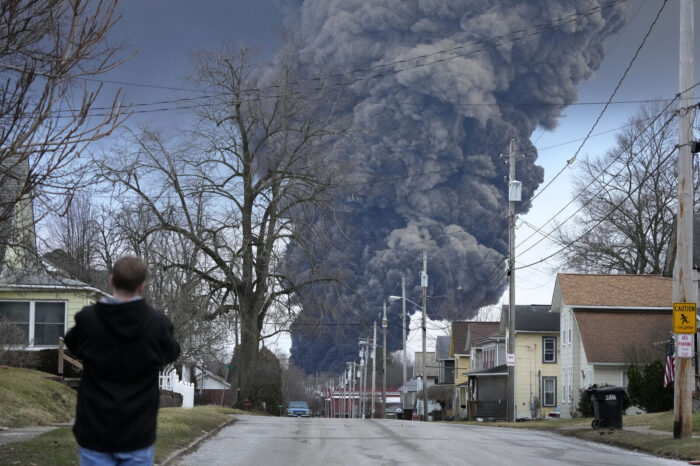
An East Palestine, Ohio resident watches a black plume rise over his town, in February 2023, after a controlled detonation of derailed Norfolk Southern tank cars filled with vinyl chloride.
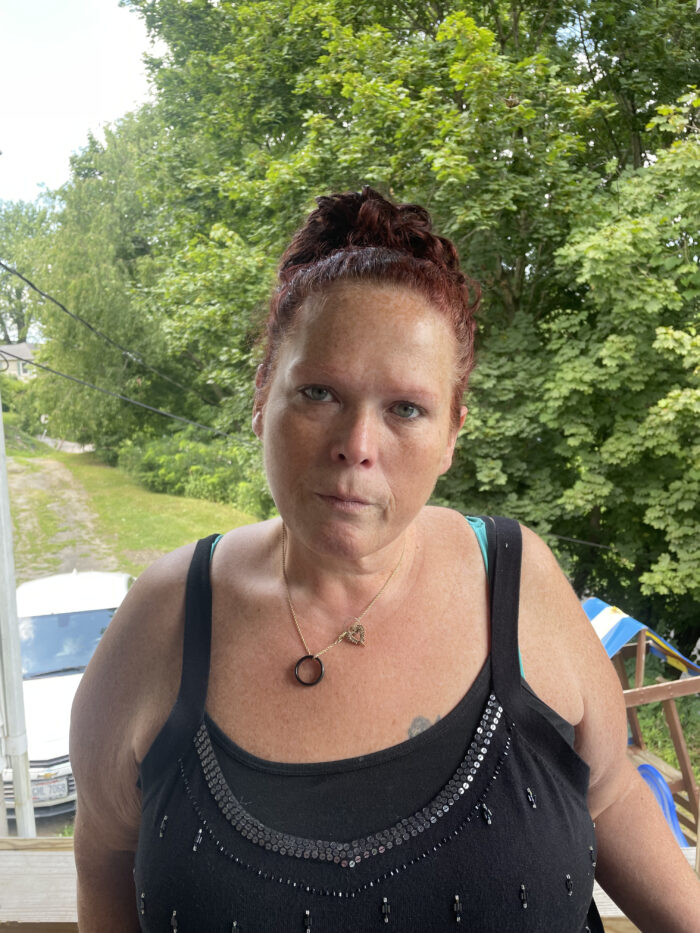
Credit: NPRUntil the Norfolk Southern derailment, Jami Wallace was an East Palestine resident. She lived just over a mile from the accident site. Now, she’s moved with her family to East Liverpool — about 30 minutes away. She has a law degree and a background in Political Science and Public Administration. Now, as president of a response group for her community — the Unity Council — she finds herself a de facto spokesperson for a town still in crisis.
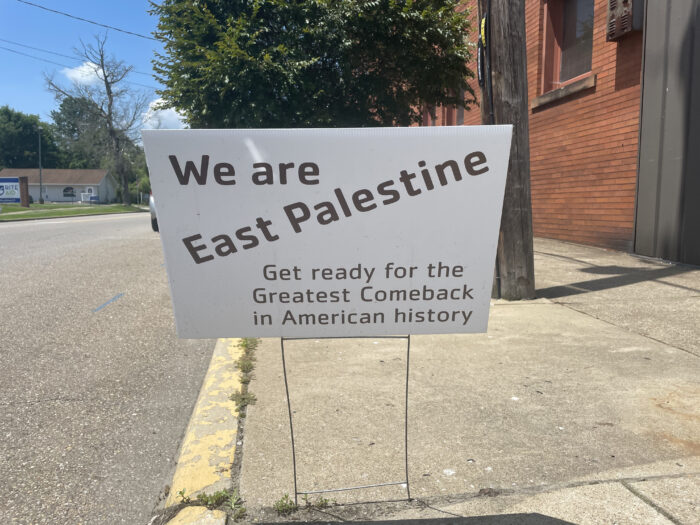
Credit: Trey Kay/West Virginia Public BroadcastingA yard sign near the center of East Palestine.
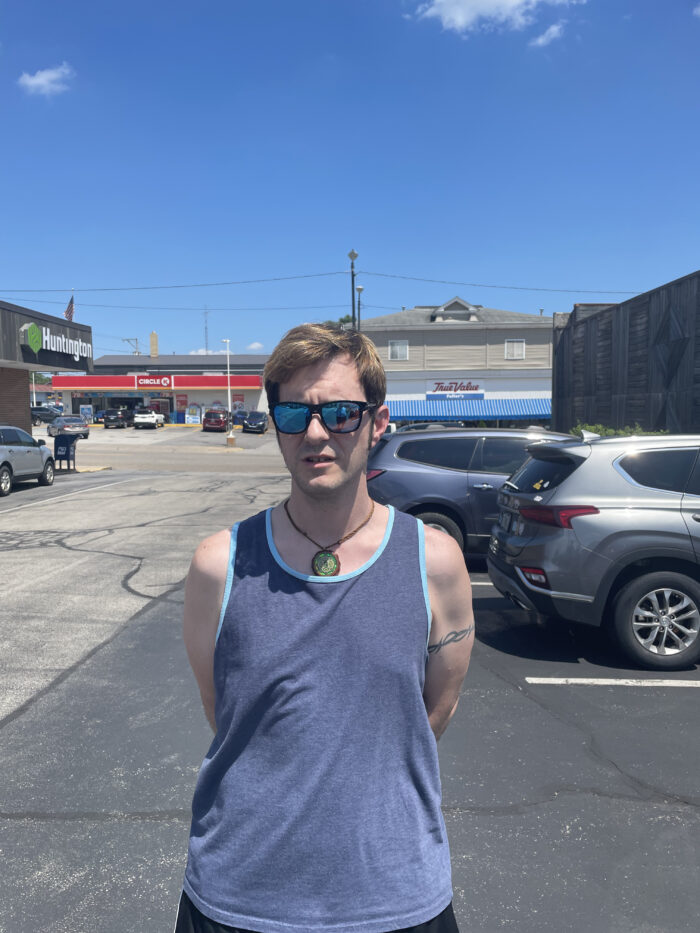
Credit: Trey Kay/West Virginia Public BroadcastingMacklain Hersman works in IT and says he lives within the official disaster area. He has history in East Palestine. In fact, his house has been in the family for three generations.
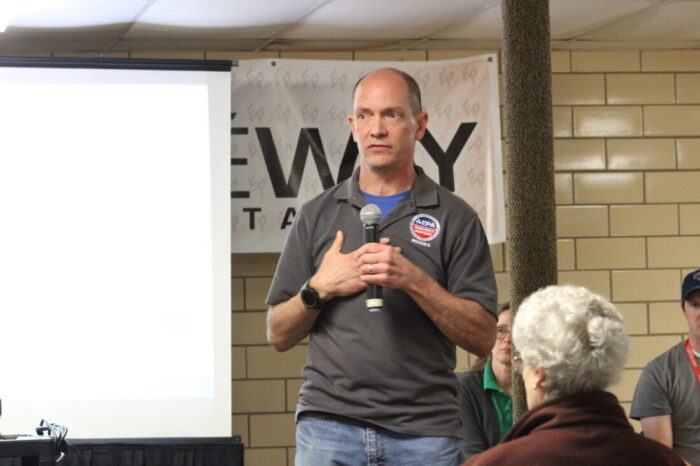
Credit: Trey Kay/West Virginia Public BroadcastingMark Durno, an EPA response coordinator, takes questions from concerned East Palestine residents.
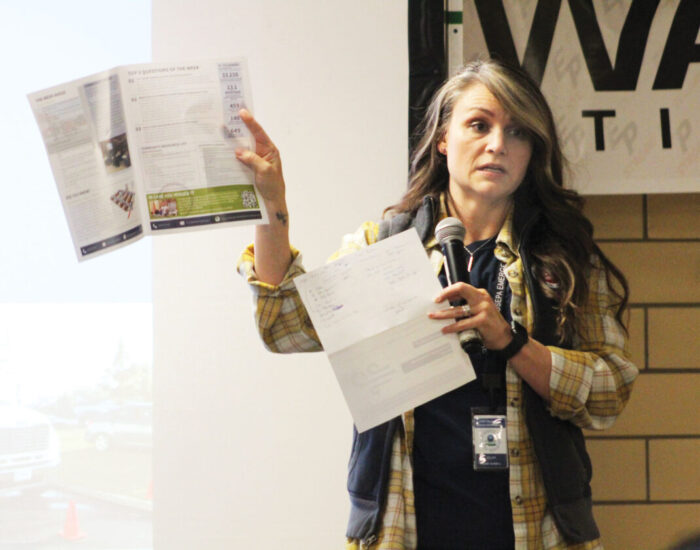
Courtesy Stephanie ElverdEPA Community Involvement Coordinator Diane Russell discusses the air monitoring data that the EPA has collected for the East Palestine area.
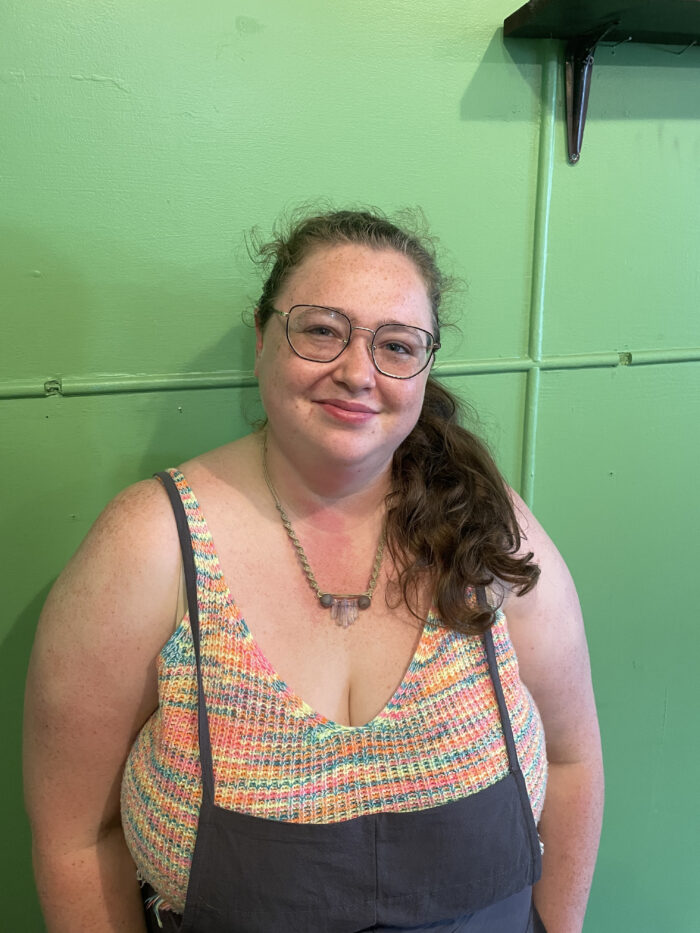
Courtesy Stephanie Elverd“East Palestine is quite a conservative area, but what I saw whenever things happened was I saw people who were on the right, who were on the left, who were somewhere in the middle, and some people who didn’t care at all, come together to demand answers and demand justice. Personally, I was proud of that, and that’s part of the reason why I’m here…that beauty in coming together, that solidarity, is what everyone should have all the time.” — Timothea Deeter, East Palestine resident
Credit: Trey Kay/West Virginia Public Broadcasting
Add WVPB as a preferred source on Google to see more from our team
Hope Gas is moving forward with a $250 million pipeline project that will expand access and energy reliability to manufacturing facilities in Mason County.
WVPB will be screening excerpts of Ken Burns’ recent PBS documentary series "The American Revolution" this week at Marshall. Us & Them host Trey Kay will moderate the event, and he spoke recently with WVPB News Director Eric Douglas about why revisiting the nation’s founding story matters today. Also, a bill to temporarily delay moving a child to homeschooling during an active case of abuse or neglect hit a snag in the Senate on Monday.
One of America’s pioneering filmmakers had nothing to do with Hollywood but nevertheless left his mark on the emerging industry. Oscar Micheaux was a homesteader, who then turned his attention to making movies in the early 1900s. He was a Black man who made movies for Black audiences at a time when they weren’t allowed into mainstream, white-only theaters. And for several pivotal years in the 1920s, he operated out of Roanoke, Virginia.
This week, in the 1920s, Oscar Micheaux was an entrepreneur filmmaker in western Virginia. He became a world-renowned director and producer. Also, Kentucky’s poet laureate lives down the road from what has been called the country’s most lethal cryptid. Attempts to spot it have led to deaths. And, we talk soul food with Xavier Oglesby, who’s passing on generations of kitchen wisdom to his niece.