Alert (09/29/2026): Our Parkersburg TV transmitter is still undergoing maintenance and remains temporarily inoperative. We apologize for the inconvenience.
All our programming is available via our TV livestreams on our website and WVPB Passport. Thank you for your patience!
This week, Barbara Kingsolver’s new novel takes on issues of class and classical music. Also, kudzu warriors band together to fend off invasive plants and take back the land. And, it’s pawpaw season, but a new bug could be harming the trees.
Writing And Talking About Disaster With Poet Doug Van Gundy
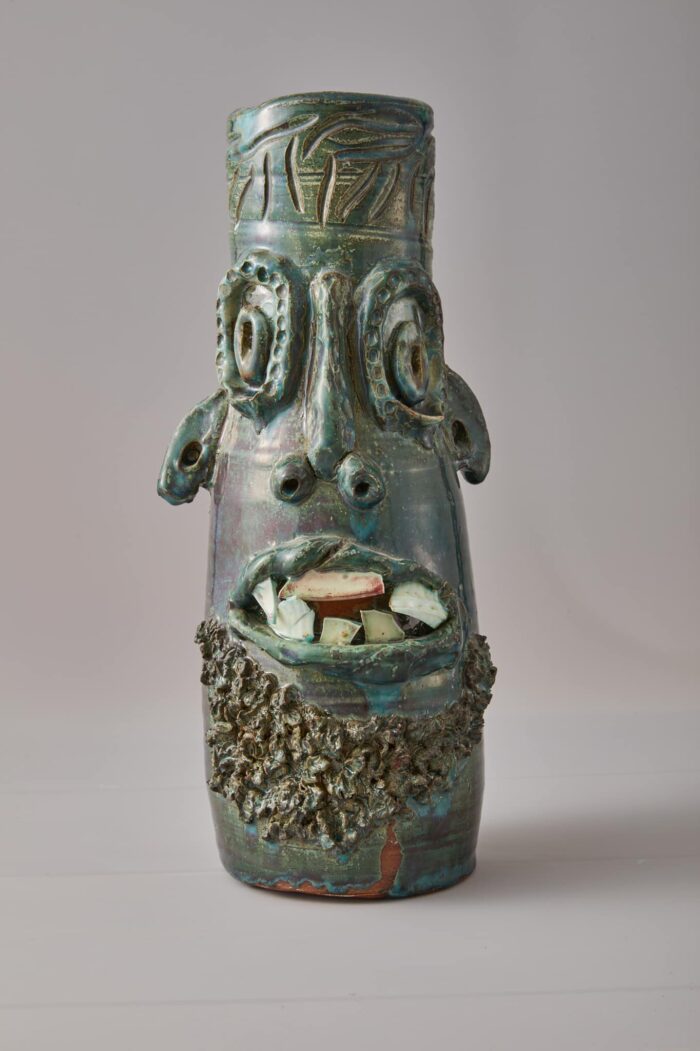
The Twisted Path That Brought African Face Jugs To Appalachia
You’ve probably seen pottery with a face on it – maybe a decorative teapot or an odd-looking milk bottle with a toothy grin.
Examples of this type of art turn up everywhere, but some of them are connected to African Face Jugs, an art enslaved people brought with them to America.
Folkways Reporter Zack Harold traced the story of Face Jugs, which began in a basement pottery studio in West Virginia.
Flying On The Wings Of The Cicada
Many of us who live in the eastern half of the U.S. can instantly identify the distinctive droning of the cicada. We don’t get them every year. Cicadas have a very long life cycle with different broods emerge from underground every 13 to 17 years.
In the spring of 2016, a massive brood of cicadas emerged in northern West Virginia. Their appearance inspired a West Virginia University professor to take a closer look at their wings.
This led to a discovery that may be helpful to humans.
WVPB’s Assistant News Director Caroline MacGregor has the story.
African Face Jugs came to America through slavery. Artist Jim McDowell uses the art form to speak about the African American experience. Courtesy
Hindman, Kentucky Making Progress On Recovery
Last July, thousands of residents in southeastern Kentucky endured historic flash flooding that took lives and devastated communities. One of the hardest hit towns was Hindman in Knott County.
Stu Johnson from WEKU has this update about the town’s recovery.
Writing And Talking About Disaster With Poet Doug Van Gundy
One of the places struck by those Kentucky floods was the Hindman Settlement School, home to the Appalachian Writers Workshop. Poet Doug Van Gundy was at the workshop during the flood.
Bill Lynch spoke with Van Gundy about poetry, disasters and tattoos.
------
Our theme music is by Matt Jackfert. Other music this week was provided by Frank George, Amythyst Kiah, Gerry Milnes, Chris Knight and Born Old.
Bill Lynch is our producer. Zander Aloi is our associate producer. Our executive producer is Eric Douglas. Kelley Libby is our editor. Our audio mixer is Patrick Stephens.
You can send us an email: InsideAppalachia@wvpublic.org.
This week, Barbara Kingsolver’s new novel takes on issues of class and classical music. Also, kudzu warriors band together to fend off invasive plants and take back the land. And, it’s pawpaw season, but a new bug could be harming the trees.
Barbara Kingsolver is one of Appalachia’s foremost writers. She’s written a string of bestsellers, like "The Poisonwood Bible" and "Demon Copperhead," which won her the Pulitzer Prize. Inside Appalachia’s Mason Adams met Kingsolver at her home outside Abingdon, Virginia, to talk art, writing and her latest book, "Partita." We listen to an excerpt from that interview.
West Virginia has seen the largest population decline in the nation - nearly 1.5% - and many of those leaving are young people. In an episode that aired last month, Us & Them host Trey Kay heard from some young people who think they may stay in the state to launch their futures. This month, Kay talks with those who say living their dreams may well require moving away from the Mountain State. We listen to an excerpt from the latest Us & Them.
They love West Virginia, but love alone may not be enough to keep them here. In the second of two Us & Them episodes, Trey Kay talks with young West Virginians who say they may need to leave in search of careers, community and a place where they can imagine their futures. Their decisions reveal what the Mountain State risks losing when young people cannot see a place for themselves at home.