Alert (09/10/2026): Our Parkersburg TV transmitter is undergoing maintenance for a few days and will not be operational. We apologize for any inconvenience.
All our programming is available via our TV livestreams on our website and WVPB Passport. Thank you for your patience!
This week, one thing about Appalachians: we can get competitive. We’re proud of our local food. Love a good hunt. And enjoy competition with friends. We learn the rules and celebrate our victories. You'll hear these stories and more this week, Inside Appalachia.
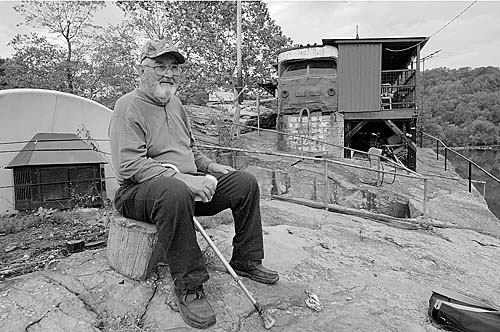
Walter “Bruiser” Cole, 81-year-old Gauley Bridge resident, enjoys the view from his “Bus on a Rock” fishing camp at the confluence of the New and Gauley rivers.
Photo Credit: Michael Keller/Goldenseal Magazine
Spend enough time on any river, and you’ll see a lot of unexpected things. Like at the confluence of the New and Gauley rivers in West Virginia, where a school bus sits on a rock out in the middle of the water.
In 2005, Anna Sale was a reporter for West Virginia Public Broadcasting. She’s since gone on to become the host of the popular podcast Death Sex and Money. But back then, she was curious about the old bus that sits in the rivers near the town of Gauley Bridge. Anna traveled by boat to learn more about the man behind it.
Spilling Some Tea About The World’s Largest Tea Pot
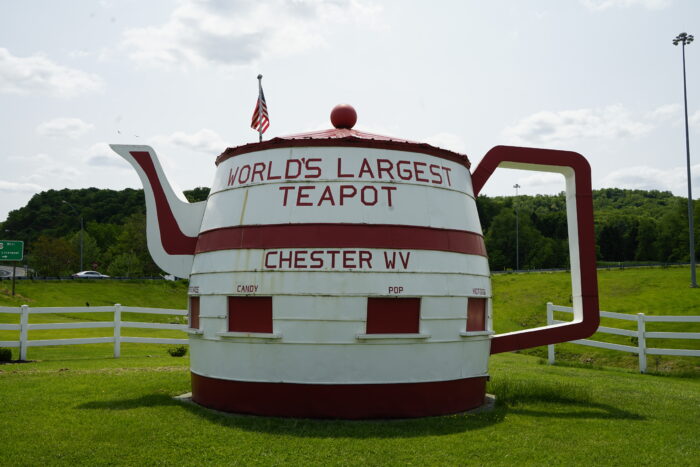
The World’s Largest Teapot in Chester has been an attraction for generations.
Photo Credit: Zander Aloi/West Virginia Public Broadcasting
In 2023, Inside Appalachia’s Associate Producer Zander Aloi took a trip to Chester, West Virginia, to learn the story behind a classic roadside attraction there – a souvenir stand known as the World’s Largest Teapot.
Camp Cranium Uplifts Children With Traumatic Brain Injuries
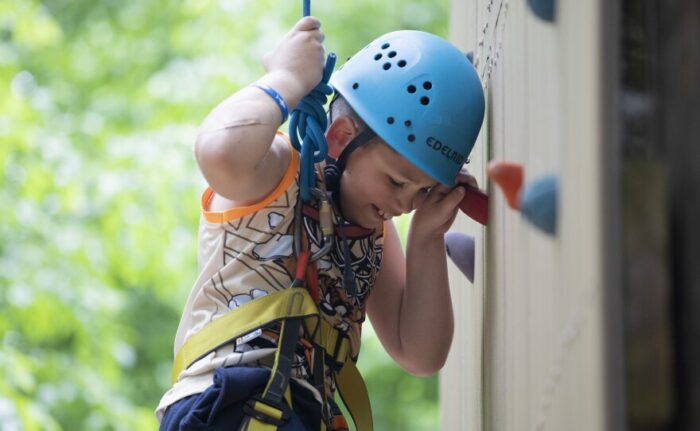
Christopher Currid climbs the rock wall at Camp Cranium, held at Camp Victory at in Columbia County, Pennsylvania.
Photo Credit: Sarah Hofius Hall/WVIA News
Every year, millions of kids head off to summer camp. It can be a life-changing experience. Camp Cranium in central Pennsylvania is a camp for children with traumatic brain injuries. Every June, the week-long camp provides community, encourages independence and builds kids’ confidence.
WVIA’s Lydia McFarlane reports from the campground in Columbia County.
Roadside Plants Used For Natural Dyes
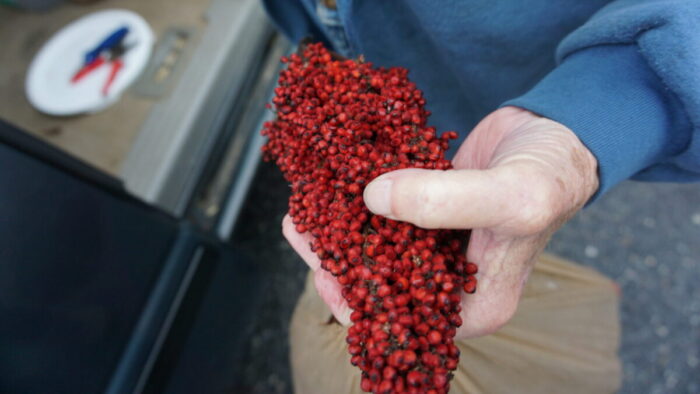
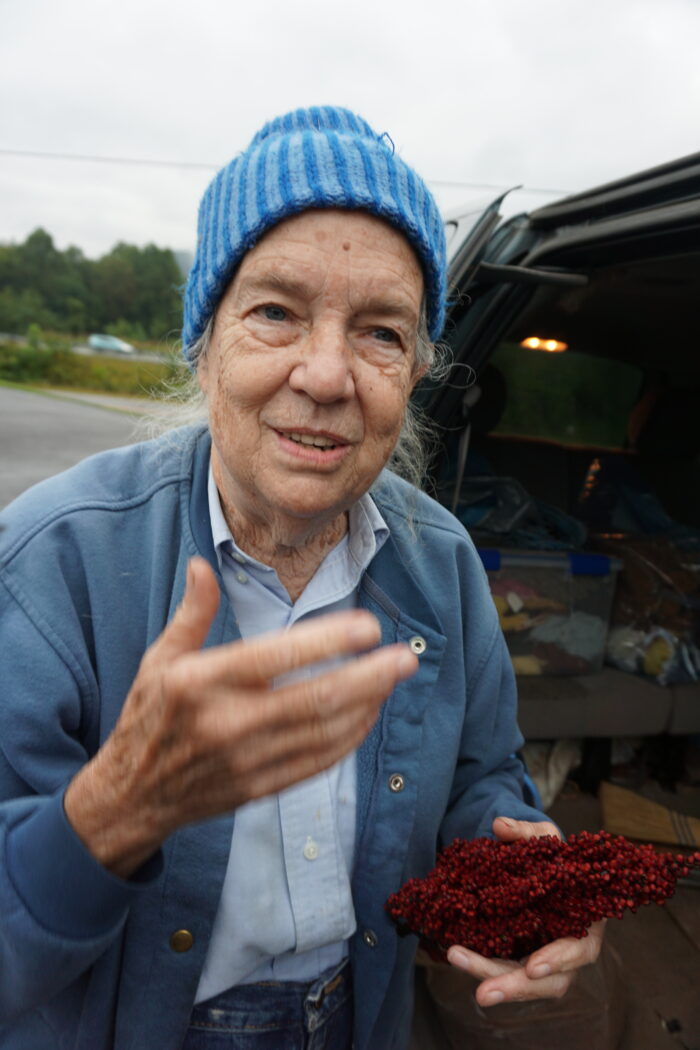
Dede Styles after gathering sumac berries from a highway median.
Photo Credit: Rebecca Williams/West Virginia Public Broadcasting
A lot of people spend their summers fighting weeds. Whether in gardens or yards, nobody loves them. Well, almost nobody.
Dede Styles is passionateabout weeds. Using common roadside plants, Styles makes natural dyes for fabrics and teaches others to do the same. And it’s part of a mission much bigger than brightly colored yarn.
In 2024, Folkways Reporter Rebecca Williams brought us this story from Swannanoa, North Carolina.
Native Bamboo Species Restoration
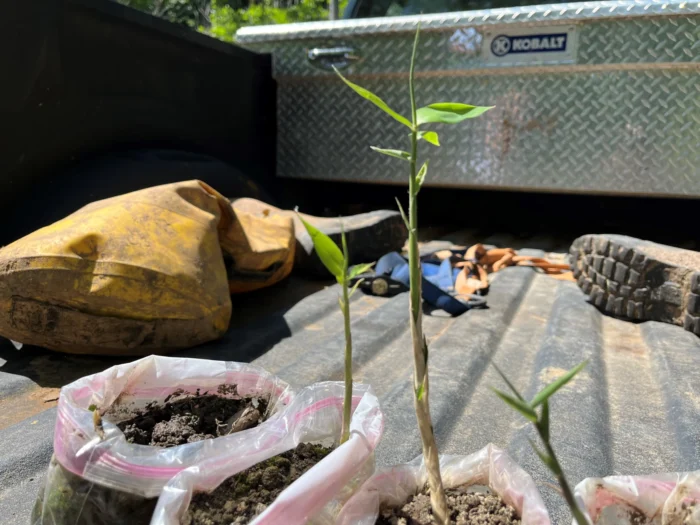
Three young rivercane plants growing inside sandwich bags.
Photo Credit: Roxy Todd/Radio IQ
Certain kinds of invasive bamboo, like Golden or fishpole bamboo, can be a nuisance. If it gets on your property, you might find yourself spending a lot of time trying to keep it from taking over.
But there are more than 1400 different plants in the bamboo family.Ranging from tiny, scrub-like plants only a few inches tall, to others that top out around 130 feet.
North America has a native species of bamboo, too. It was once commonly found in Appalachia near rivers and streams but was nearly wiped out.
In 2024, Radio IQ’s Roxy Todd reported on efforts to restore the plant in southwestern Virginia.
Wild Clay Spun Into Pottery
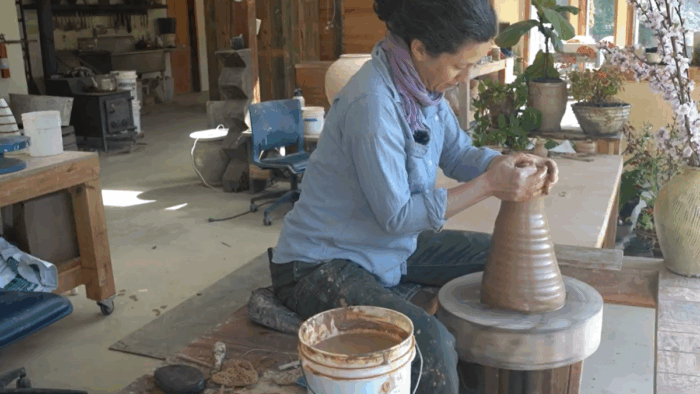
Dalglish and Hunt work in their studio. Using local clay bodies requires that potters ‘listen’ to the limitations, and possibilities, presented by the clays, Hunt said.
To make pottery, one needs clay. Most professional and hobby potters rely on store-bought clay for their projects, but not everybody. In western North Carolina, some folks prefer to work with wild clay – that is, clay that’s dug right out of the ground. They say using this traditional material gives the pieces particular character.
Anya Petrone Slepyan from the Rural Remix Podcast has this story.
--
Our theme music is by Matt Jackfert. Other music this week was provided by Blue Dot Sessions, Hello June and Harvey & Copeland.
Bill Lynch is our producer. Abby Neff is our associate producer. Our executive producer is Eric Douglas. Irina Zhorov is our editor. Our audio mixer is Patrick Stephens. We had help this week from Folkways Editor Nicole Musgrave.
You can send us an email: InsideAppalachia@wvpublic.org.
This week, one thing about Appalachians: we can get competitive. We’re proud of our local food. Love a good hunt. And enjoy competition with friends. We learn the rules and celebrate our victories. You'll hear these stories and more this week, Inside Appalachia.
In southern Ohio, there’s a musical tradition that goes back nearly 1,000 years and 4,000 miles. For Inside Appalachia, Folkways Reporter Capri Cafaro has this story.
The student-led team that produces the news for WMUL radio at Marshall University learned in August that they won a collegiate Edward R. Murrow award for Outstanding Newscast for the second year in a row.