Alert (09/29/2026): Our Parkersburg TV transmitter is still undergoing maintenance and remains temporarily inoperative. We apologize for the inconvenience.
All our programming is available via our TV livestreams on our website and WVPB Passport. Thank you for your patience!
This week, Barbara Kingsolver’s new novel takes on issues of class and classical music. Also, kudzu warriors band together to fend off invasive plants and take back the land. And, it’s pawpaw season, but a new bug could be harming the trees.
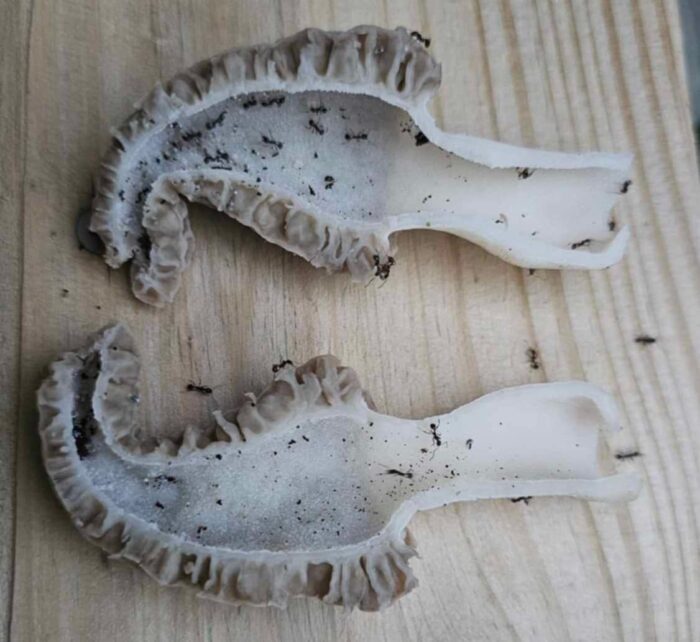
A morel sliced lengthwise will resemble a gutted fish. Note its characteristic hollow stem, a final safety check on whether you have a true morel, and the reason for its nickname of “dry land fish.” Also note that unclean morels can house ants as well as snails. Courtesy Adam Boring.
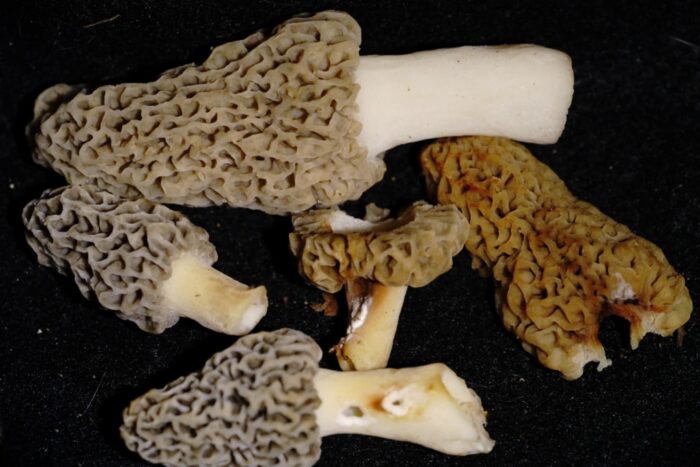
Every spring, morel hunters head to the woods in search of mushrooms that look like little wrinkled Christmas trees. Some folks freeze them for later. And even add them to their holiday menus.
Folkways reporter Wendy Welch spoke with foragers and chefs in Virginia about how to safely harvest and prepare these beloved fungi.
Raising Flood Relief With A River Song
Four months after Haddox appeared on stage at the Southeast Regional Folk Alliance festival in Black Mountain, North Carolina, Hurricane Helene tore through the conference location, where recovery efforts are ongoing. Courtesy Chris Haddox.
In 2016, torrential rains resulted in one of the deadliest floods in West Virginia. It inspired songwriter Chris Haddox, called “O, This River.”
Since Hurricane Helene, Haddox has been using that song to raise money for people in North Carolina affected by Hurricane Helene.
Folkways reporter Connie Bailey Kitts spoke with him about the story behind the song.
Smashing Pumpkins For Science!
The crowd looks on at a package with a parachute falls to the ground at the 35th Annual WVU Pumpkin Drop Oct. 25, 2024. Photo Chris Schulz.
Mason: Just because Halloween is over, doesn’t mean pumpkin season is done. At West Virginia University, the big orange gourds are part of an annual challenge that takes a lot of guts –pumpkin guts.
WVPB’s Chris Schulz had more.
-----
Our theme music is by Matt Jackfert. Other music this week was provided by Christian Lopez, The Appalachian Road Show, Tim Bing, Caleb Caudle, Chris Haddox and John Inghram.
Bill Lynch is our producer. Zander Aloi is our associate producer. Our executive producer is Eric Douglas. Kelley Libby is our editor. Our audio mixer is Patrick Stephens. We had help this week from folkways editor Nicole Musgrave.
You can send us an email: InsideAppalachia@wvpublic.org.
On this West Virginia Week, a mine operation in Kanawha County gets a WARN Notice, three Wyoming County Schools will remain closed until next week, and we learn the origins of the Flatwoods Monster.
This week, Barbara Kingsolver’s new novel takes on issues of class and classical music. Also, kudzu warriors band together to fend off invasive plants and take back the land. And, it’s pawpaw season, but a new bug could be harming the trees.
Barbara Kingsolver is one of Appalachia’s foremost writers. She’s written a string of bestsellers, like "The Poisonwood Bible" and "Demon Copperhead," which won her the Pulitzer Prize. Inside Appalachia’s Mason Adams met Kingsolver at her home outside Abingdon, Virginia, to talk art, writing and her latest book, "Partita." We listen to an excerpt from that interview.
West Virginia has seen the largest population decline in the nation - nearly 1.5% - and many of those leaving are young people. In an episode that aired last month, Us & Them host Trey Kay heard from some young people who think they may stay in the state to launch their futures. This month, Kay talks with those who say living their dreams may well require moving away from the Mountain State. We listen to an excerpt from the latest Us & Them.