


Aluminum Plates For Deep Space Win W.Va. 'Coolest' Contest
Aluminum plates that helped keep astronauts on the Artemis II rocket safe won the first ever Coolest Thing Made In West Virginia competition.
Continue Reading Take Me to More NewsAlert (09/29/2026): Our Parkersburg TV transmitter is still undergoing maintenance and remains temporarily inoperative. We apologize for the inconvenience.
All our programming is available via our TV livestreams on our website and WVPB Passport. Thank you for your patience!




To Educate, Inform, and Inspire by Telling West Virginia's Story
Mountain Readers Week will be held Oct. 5-9, 2026! Celebrate and foster a love of reading in children across West Virginia.
Nominate an exceptional West Virginia K-12 teacher today!

On Demand

On Demand

Stream original productions from WVPB

Watch locally produced documentaries & more.

On Demand

On Demand






West Virginia Morning

Inside Appalachia

West Virginia Week

Mountain Stage

Us & Them

The Legislature Today

The Legislature This Week

Send us your comments and questions.

Stream our board meetings.

Check out the latest WVPB news.

Sign up for our newsletter and get weekly updates.

Meet the WVPB staff.

WV Educational Broadcasting Commission, the WVPB Foundation, and the Friends of WVPB.

Come work with us!

Read our annual report and learn how we educate, inform and inspire with your support.

Sponsor impactful and engaging media and entertainment.

Use your IRA to make a gift to WVPB.

Become a member with your gift of $1,000 or more.

Make WVPB part of your legacy.

Manage your membership account.

Learn how you can Protect and Sustain West Virginia Public Broadcasting.

This week on Inside Appalachia, amid recent hospital closures, Appalachian women are having to travel farther and farther to give birth.
We also learn how seed libraries and community gardens are helping to protect heirloom seeds from being lost.
And we hear more from our series on greyhound racing. This year, West Virginia will be home to the last two remaining greyhound racetracks in the United States. This week, we learn about the government policies that sustain dog racing.
In This Episode:
We’ll talk with reporter Clarissa Donnelly-DeRoven about maternal health care deserts in western North Carolina and hear a report from Crystal Good, about what options Black families in West Virginia have for finding birth workers that look like them.
Following one of the opinions written in the U.S. Supreme Court’s Dobbs decision, state legislatures across the Ohio Valley are considering anti-LGBTQ policies, while people across Appalachia took part in celebrations during LGBTQ Pride Month in June. Katie Myers with the Ohio Valley ReSource got reactions and spoke to residents.
High schoolers with Indigenous backgrounds came from all over the country to the Eastern Panhandle this summer for a leadership congress. They talked about conservation, Native identity, and the growing effects of climate change. Shepherd Snyder has the story.

In 2023, West Virginia will be home to the last two remaining greyhound racetracks in the United States.
Reporter Randy Yohe breaks down the government policies that sustain dog racing, and considers its future in the state at a time when it’s dying everywhere else.
As old coal mines are restored, they’ve been repurposed for an increasingly broad number of new uses. In Pennsylvania, reclaimed mine land is being used for an art project involving birds.
Kara Holsapple and Jacqui Sieber of The Allegheny Front have more.
Supply chain issues and rising gas prices are making it harder for people to get food. As David Adkins reports, local entrepreneurs are looking to meet the demand.
Mountain View Solar, a solar installation company in Berkeley Springs, West Virginia, is training and hiring people in recovery from substance use disorder. Shepherd Snyder has this story.
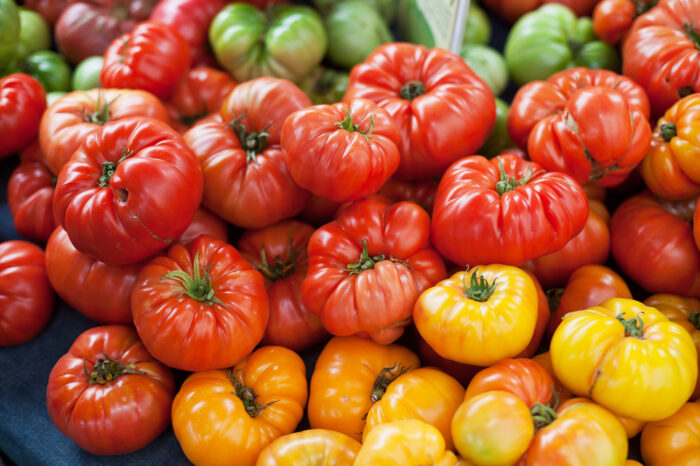
During the pandemic, millions of Americans turned to gardening. In Appalachia, people have long saved heirloom seeds that have been passed down for generations. Today, that tradition continues, partly through organizations like seed libraries and community gardens that collect these seeds to save them from being lost.
Folkways reporter Rachel Greene spent time in Ashe County, North Carolina — talking to the people giving new life to old seeds.
——
Our theme music is by Matt Jackfert. Other music this week was provided by Marisa Anderson, Michael Howard, Josh Woodward, the Hillbilly Gypsies.
Bill Lynch is our producer. Alex Runyon is our associate producer. Our executive producer is Eric Douglas. Kelley Libby is our editor. Our audio mixer is Patrick Stephens. Zander Aloi also helped produce this episode.
You can send us an email at InsideAppalachia@wvpublic.org.
You can find us on Instagram and Twitter @InAppalachia.
And you can sign-up for our Inside Appalachia Newsletter here!
Inside Appalachia is a production of West Virginia Public Broadcasting.
Add WVPB as a preferred source on Google to see more from our team

The West Virginia Extension service is asking volunteer firefighters why departments are struggling to recruit and maintain members and what support firefighters need.
Continue Reading Take Me to More NewsHuntington is one of eight communities nationwide to be awarded a $3-million federal grant to strengthen efforts to help struggling residents.
Continue Reading Take Me to More NewsWest Virginia Health Right (WVHR) will host its third annual #WeCareWV Day on Oct. 17, a free walk-in medical, dental, and vision clinic for anyone in need.
Continue Reading Take Me to More NewsDirect-to-consumer tests like full-body scans are marketed as a way to catch diseases early and establish a baseline. But there are financial, physical and psychological risks to all medical tests — and in some cases, not getting a test could be better for your health. From the Appalachia + Mid-South Newsroom, HealthQ hosts Cara Anthony and Blake Farmer speak with UCSF Cardiologist Dr. Rita Redberg.
Continue Reading Take Me to More News