In the North Carolina foothills, a common dessert in the fall is a sonker. Folkways Reporter Amanda Goins first heard that name when she moved to Surry County, North Carolina. She got curious and shares what she learned about this local dessert whose history goes back centuries.
Home » Stories » East End Energy Efficiency Contest Names Winners
Published
East End Energy Efficiency Contest Names Winners
Listen
Share this Article
Residents on Nancy and Lewis Streets in Charleston are the big winners of a contest that pitted block against block on Charleston’s East End. The prize was a more energy efficient home.
The contest is called E4 – Energy efficiency in the east end, a Charleston neighborhood with older homes and apartment buildings.
For two years, homeowners signed up to have their homes undergo an energy audit and make improvements to use less power. Emmett Pepper, the Executive Director of Energy Efficient West Virginia says the competition was a great success.
“I’m definitely impressed by how many people participated. We jumped in participation each year. And that’s why this year we’re going to be expanding the program to a city wide program where it’s neighborhood versus neighborhood and not just block versus block.”
Residents on Nancy Street saved 30 percent on their energy bills. Residents on Lewis Street saved the most money, an average $81.21 between June, 2014 when the contest began and May, 2015.
Beth Vorhees
/
West Virginia Public Broadcasting
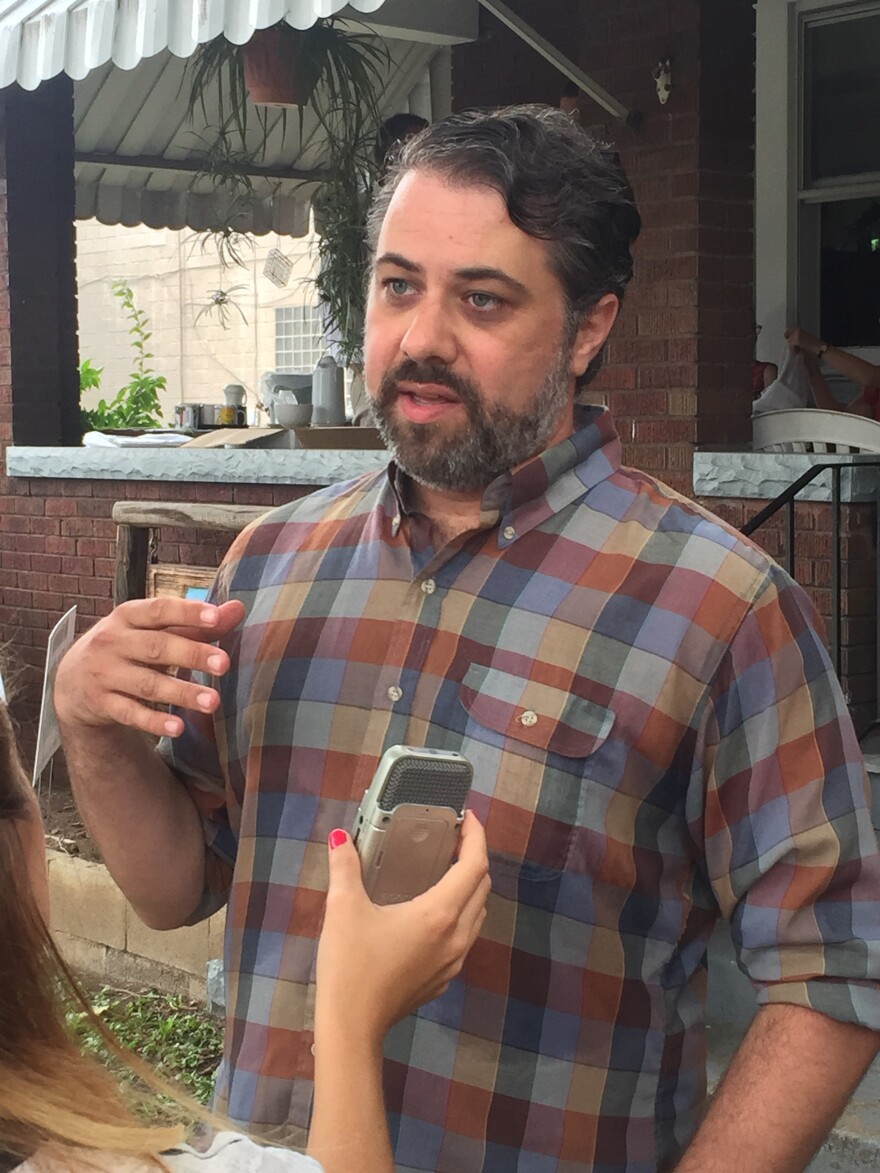
Emmett Pepper, Executive Director of Energy Efficiency West Virginia speaks with reporters about the results of the contest on Thursday, July 30, 2015.
Credit Beth Vorhees / West Virginia Public Broadcasting
/
West Virginia Public Broadcasting
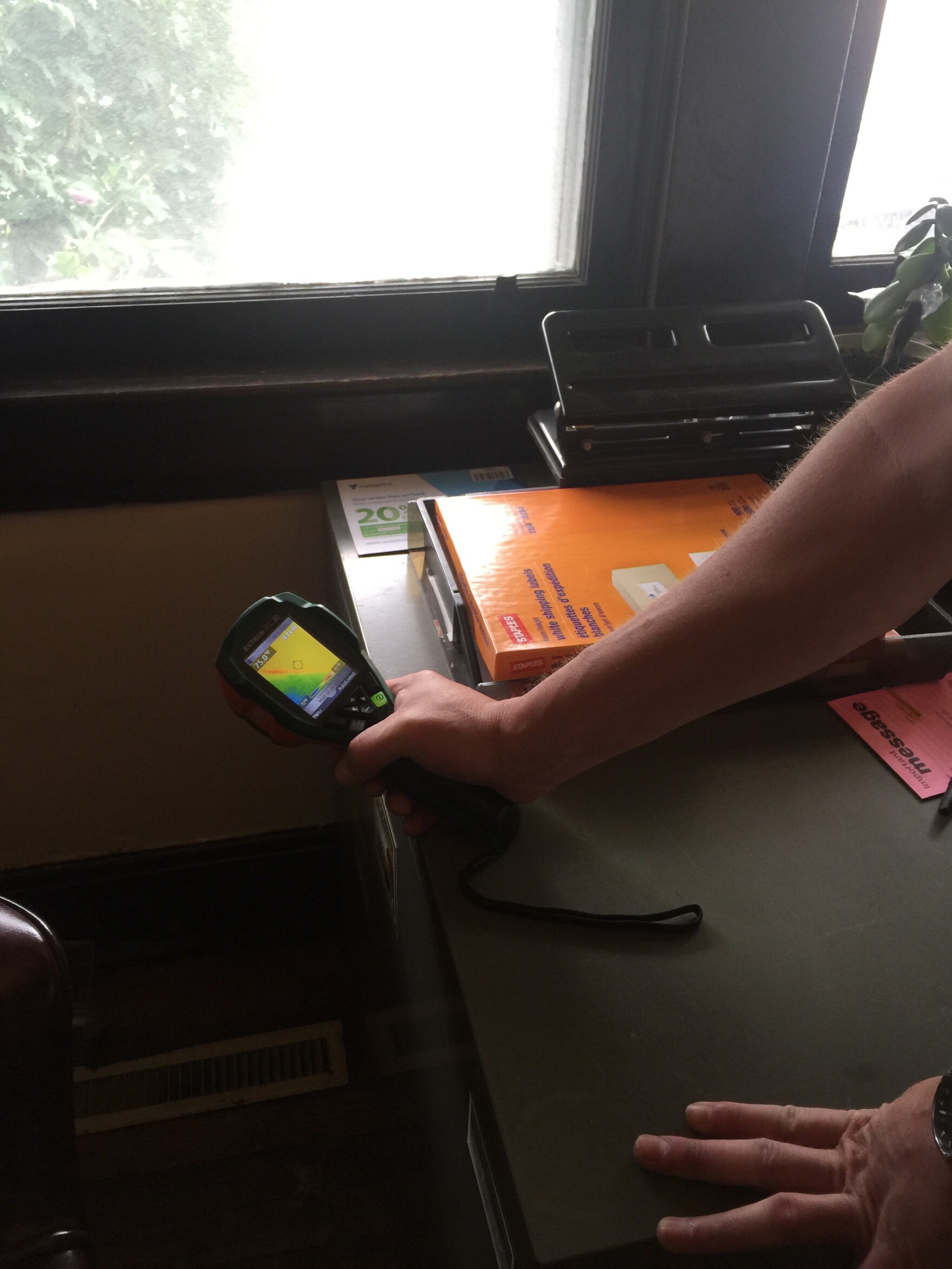
An energy audit begins by depressurizing the house so leaks can be identified and repaired to save energy.
Add WVPB as a preferred source on Google to see more from our team
On this West Virginia Week, the board of education is in charge of rulemaking for schools according to a ruling from the Court of Appeals of West Virginia, Sen. Jim Justice is admonished and a rule to weaken silica limits in mines is proposed.
On this West Virginia Morning, a Marshall University historian discusses documenting previously unknown underground railroad sites throughout the region.
Appalachian Power will spend $17 billion to construct three new natural gas-fired power plants across the state, and $7.5 billion to upgrade its West Virginia coal-fired power plants.
On this West Virginia Week, former governor and longtime U.S. senator Jay Rockefeller has died, West Virginia voted in the general election, and a new anthology explores science fiction and fantasy in Appalachia.