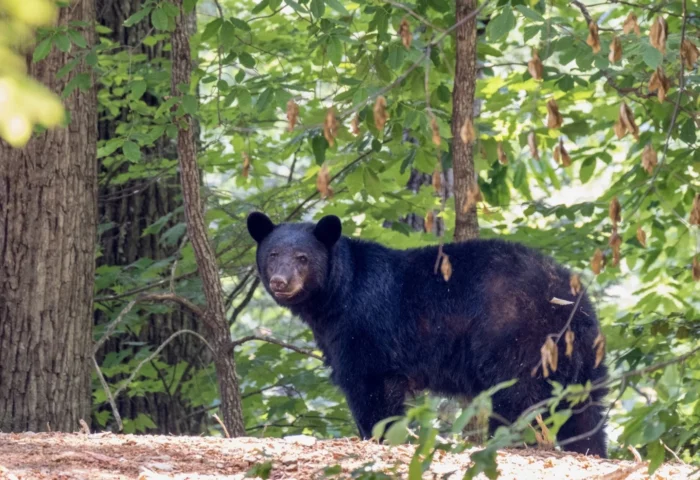
A young bear that was shot and killed in downtown Charleston Monday night is the latest example of bear encounters that are on the rise in West Virginia.
Colin Carpenter, the Black Bear Project Leader for the Division of Natural Resources, said the bear probably made his way into downtown Charleston in the dark, then came out near the Charleston Town Center Mall and the Coliseum in search of food.
“If these bears are on the fringes of urban areas, we try to just give them space and let them get out on their own,” Carpenter said. “But that animal was a long way into a very heavily urbanized area, and I don’t know whether it would have found its way out on its own.”
Cubs typically stay with their mothers for two winters and then are on their own in the spring, when the mothers prepare for a new litter. The bear that was killed was about 18 months old and weighed roughly 60 pounds.
“We have a lot of that happening right now, family group breakup, so you have young bears that have never been really on their own, that are now exploring, trying to establish their own home range, and that’s when we see these bears a lot of times, showing up in odd places where they wouldn’t normally be,” Carpenter said.
Hunting laws in West Virginia were changed in the early 1970s in an effort to increase the black bear population, which was about 500 at the time. Today it’s estimated to be 12,000 to 14,000. The bears’ range is now also statewide, rather than confined to the eastern half of the state as before.
Bear sightings and encounters are more common in June.
“Then it drops off, because we get the berries that ripen in the summertime,” Carpenter said. “So we have blackberries, black raspberries, blueberries, things of that nature that are available to them in the summertime, and when those foods are available, the bears, you don’t hear from them.”
Carpenter recommended putting trash cans out the day of pickup rather than the night before, taking in bird feeders and giving outdoor pets just enough for themselves so there’s not an abundance of available food to attract a hungry bear.
For more information on co-existing peacefully with bears, visit bearwise.org.