


The Magnetism Of Appalachian Mystery Spot Attractions
Folkways Reporter Andrea “River” Peterson explored how “Gravity House” attractions keep luring new fans with vintage kitsch.
Continue Reading Take Me to More News


To Educate, Inform, and Inspire by Telling West Virginia's Story

Mountain Readers Week will be held Oct. 5-9, 2026! Sign up to read in your community!

Learn more about Be My Neighbor Day! And check out our recap from last year.

On Demand

On Demand

Stream original productions from WVPB

Watch locally produced documentaries & more.

On Demand

On Demand






West Virginia Morning

Inside Appalachia

West Virginia Week

Mountain Stage

Us & Them

The Legislature Today

The Legislature This Week

Send us your comments and questions.

Stream our board meetings.

Check out the latest WVPB news.

Sign up for our newsletter and get weekly updates.

Meet the WVPB staff.

WV Educational Broadcasting Commission, the WVPB Foundation, and the Friends of WVPB.

Come work with us!

Read our annual report and learn how we educate, inform and inspire with your support.

Sponsor impactful and engaging media and entertainment.

Use your IRA to make a gift to WVPB.

Become a member with your gift of $1,000 or more.

Make WVPB part of your legacy.

Manage your membership account.

Learn how you can Protect and Sustain West Virginia Public Broadcasting.
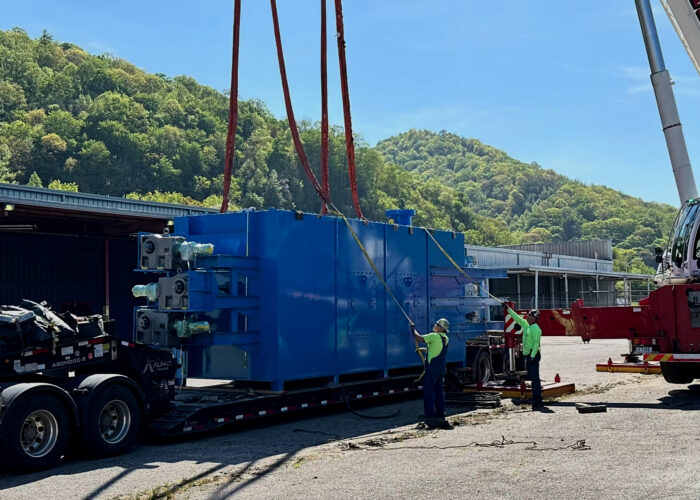
West Virginia Department of Environmental Protection Division of Air Quality granted Clean-Seas West Virginia a construction permit Thursday for a recycling facility in Belle.
The facility will use a high pressure, high temperature process known as pyrolysis to break used plastic down into various chemicals including components to create recycled plastic. According to the U.S. Environmental Protection Agency, the U.S. generated 35.7 million tons of plastic in 2018. Current estimates place U.S. recycling rates at only 5% to 6%, according to the World Economic Forum.
Residents like Laura Wellstead are concerned about air pollution from the new facility, especially with a high school, elementary school and the community’s Wal-Mart just across the train tracks from the site. Critics of the pyrolysis process like the National Resources Defense Council, a national environmental advocacy group, have found that it releases carcinogens like benzene and dioxins and gives off more greenhouse gases than making plastic from crude oil.
“There seems to be very little oversight, but they’ve got a lot of our taxpayer dollars already, and what they’re saying is it’ll bring something like 40 jobs,” Wellstead said. “We’re going to impact the health of all the children and all the people in this area for 40 jobs? It doesn’t make sense.”
An analysis published by ProPublica found that up to 20% of the pyrolysis product can be reused for plastics manufacturing. The other 80% becomes diesel fuel, hydrogen, methane and other chemicals.
“They’re not taking plastics and making them into garments or bags or something useful to people,” Wellstead said. “They’re making another polluting sort of liquid from the plastics that they’re bringing in from out of state.”
It is unclear when Clean Seas plans for the Belle facility to be operational. In a press release from Clean Seas’ parent company Clean Vision Corporation on Friday, CEO Dan Bates said Belle would be the foundation of a U.S. network of plastic-conversion facilities.
“This permit gives us the regulatory foundation to take the next step,” he said. “Our objective is not simply to operate one facility. Belle is intended to be the first U.S. hub in a broader plastic conversion network designed to turn difficult-to-recycle plastics into valuable products while creating industrial jobs and economic opportunity.”
Add WVPB as a preferred source on Google to see more from our team

The Project Tamarack data center represents an estimated $12 billion investment for Starwood Digital Ventures.
Continue Reading Take Me to More NewsEighty-six megawatts of renewable energy will be sourced from a Kanawha County solar project and delivered to Google's Putnam County data center via the energy grid.
Continue Reading Take Me to More NewsFollowing a medical incident Wednesday morning at the Supreme Court of Appeals of West Virginia, Justice William “Bill” Wooton has been released from a hospital.
Continue Reading Take Me to More NewsThe U.S. Department of Justice's Child Exploitation and Obscenity Section is offering free training and prevention resources to help schools and youth groups keep children safe online.
Continue Reading Take Me to More News