Alert (March 11, 2026): Our TV translator in Flatwoods is experiencing technical issues. Our engineers are troubleshooting the problem and expect it to be down for a couple days.
Thank you for your patience.
Secretary of State Kris Warner’s office organized a contest for eighth grade students to design a new "I Voted" sticker. Overall, there were more than 1,100 entries from 42 counties.
Concord Professor Uses Acid Mine Drainage for Pottery
Listen
Share this Article
If you see a body of water with an orange hue, it’s likely the result of acid mine drainage. This pollutant is left behind from abandoned mine shafts coming in contact with the water and it can harm aquatic life.
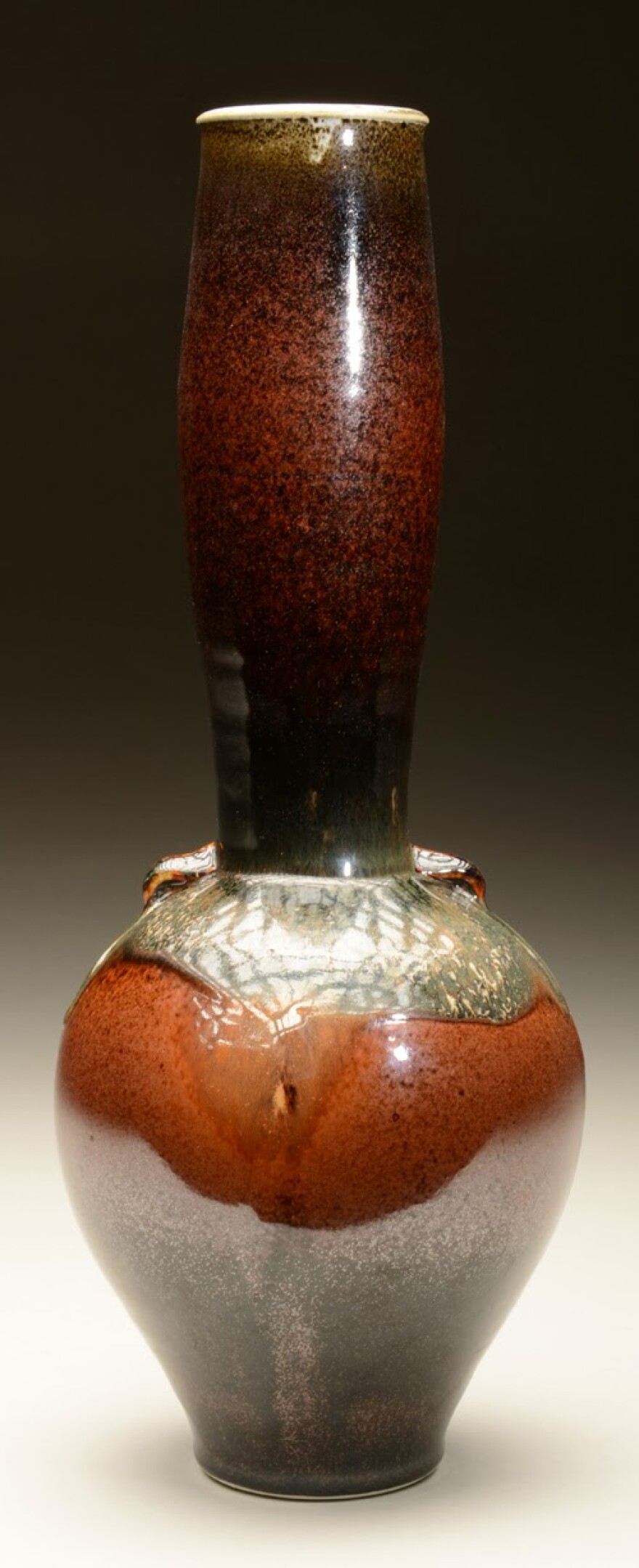
Steam Restoration Incorporated, a non-profit organization based out of Pennsylvania, has found an unexpected use for this pollutant – pottery. It turns out the iron oxide generated by this abandoned mine drainage cleanup effort can be used as a glaze.
Credit Courtesy Photo / Jamey Biggs
/
Jamey Biggs
Jamey Biggs, an art professor at Concord University, uses the unique substance while glazing pottery. He was first approached about the opportunity while showcasing his work at Tamarack.
“The discussion around ceramics usually seems to come back to materials,” Biggs said. “So as people move through in waves, I will find myself talking about materials and how that plays a part in it.”
That’s when a woman with the company offered him a free ten pound sample. And it was a success. The pottery that came out of the kiln showed the same results as the other glazes.
“So the idea of using this iron that is, you can produce the same results that is actually being generated as a byproduct of a stream recovering is a nice idea and it’s a nice use for the material that would otherwise be treated as waste,” Biggs said.
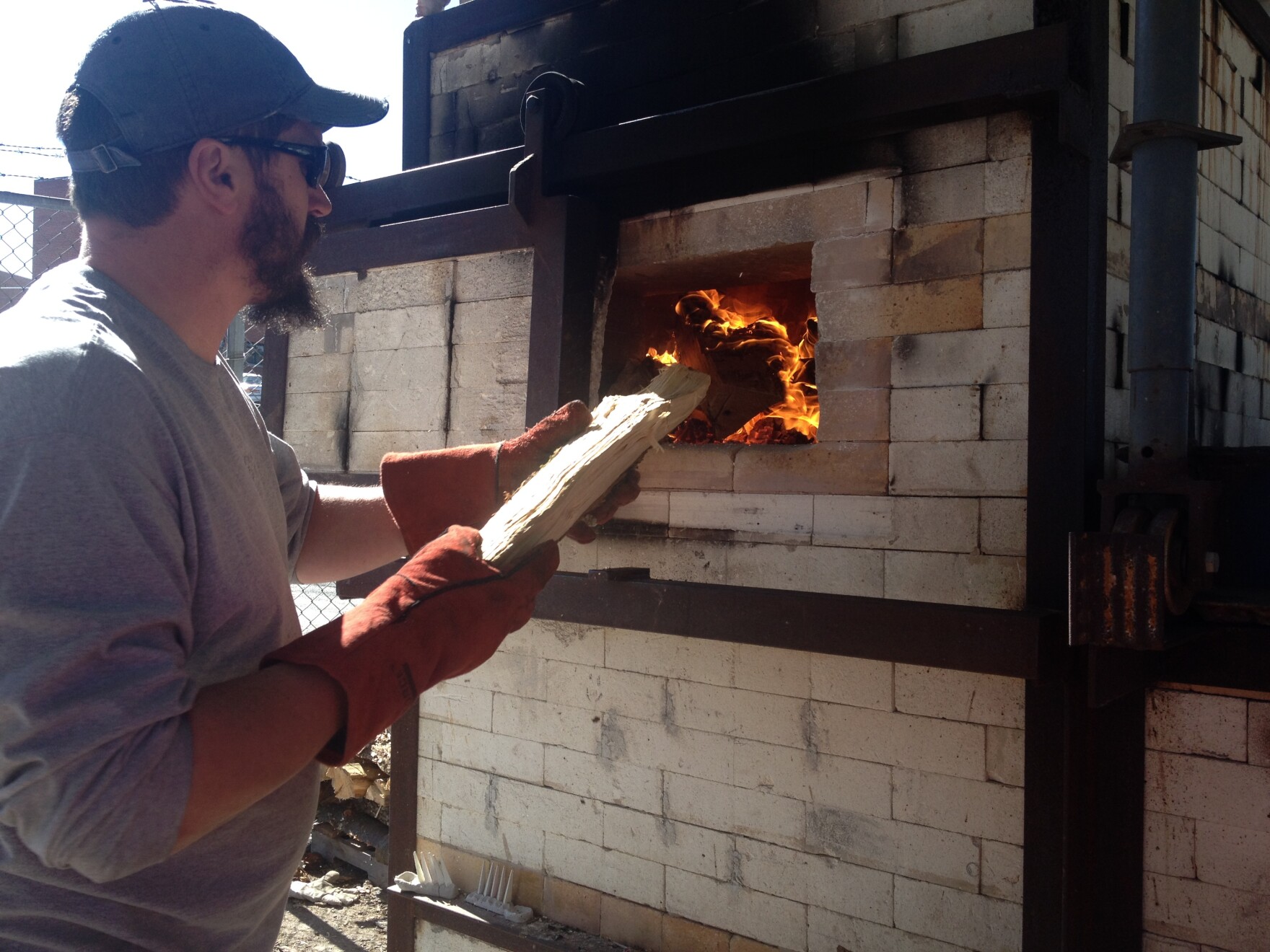
Biggs uses a wood kiln to fire his pottery. He uses a traditional Japanese method that lasts 44 hours.
“As it burns it produces ash, and the ash lands on the pots and through the high temperatures and the extended time period the ash melts and forms the glass on the outside of the pot as well as melting the glazes on the inside,” Biggs said, explaining the process.
Concord student Remington Radford has taken the current shift and loves the way the pottery looks once finished.
“Just the turn out, the ash that falls on it, there’s so much differentiation, you’re not going to get one piece that’s the same,” Radford said. “It’s all going to be slightly different, if not completely.”
Biggs grew up in Summersville and can remember when he was a child the few remaining strip mines before they were shut down. He doesn’t consider himself an environmentalist, but says the cleanup is necessary.
“You know, these landscapes are the way they are. We’re going to have to deal with this one way or another,” Biggs said. “These systems work and they’re very effective. The next step is maybe finding a purpose for these metals that are recovered.”
Biggs, along with fellow Concord professor Norma Accord, published their recipes in a catalog for making glaze out of acid mine drainage and held a presentation early last month. Biggs says the communication that is inspired by sharing the ingredients is what’s most important.
“If potters have access to these recipes, it’s a little easier to incorporate this new material,” Biggs said.
Credit Jessica Lilly
/
Fire burns in the kiln setting the glaze, a process which has Japanese roots
Add WVPB as a preferred source on Google to see more from our team
Secretary of State Kris Warner’s office organized a contest for eighth grade students to design a new "I Voted" sticker. Overall, there were more than 1,100 entries from 42 counties.
Online gambling commercials in the state seem to dominate the television and radio airwaves. Those messages are not lost on our college students. Marshall University Broadcast Journalism senior Abigail Ayes just completed an impactful story about student online gambling for the campus news program, MU Report. Randy Yohe, who is also Ayes’ instructor, spoke with the student reporter about her findings.
The annual Mothman Festival has a competition for the title of ‘most unusual Appalachian celebration.’ Bath County, Kentucky, celebrated a historic occurrence this week. The meat shower of 1876. That’s when pieces of meat mysteriously fell from the sky onto a farm.
On this West Virginia Week, the state budget is headed to Gov. Patrick Morrisey, a statewide public camping ban bill moves forward, and Inside Appalachia visits Good Hot Fish.