Kentucky Fried Chicken founder Colonel Sanders' iconic items earned big bucks at auction. For the Appalachia + Mid-South Newsroom, reporter Andrew Henderson went to the auction and hung around for the fried chicken.
The Cranberry Glades Botanical Area is a rare cluster of boreal bogs in Pocahontas County, West Virginia. Bogs are acidic wetlands with a spongy moss ground. With its five small bogs, the Cranberry Glades is the largest area of bogs in the state.
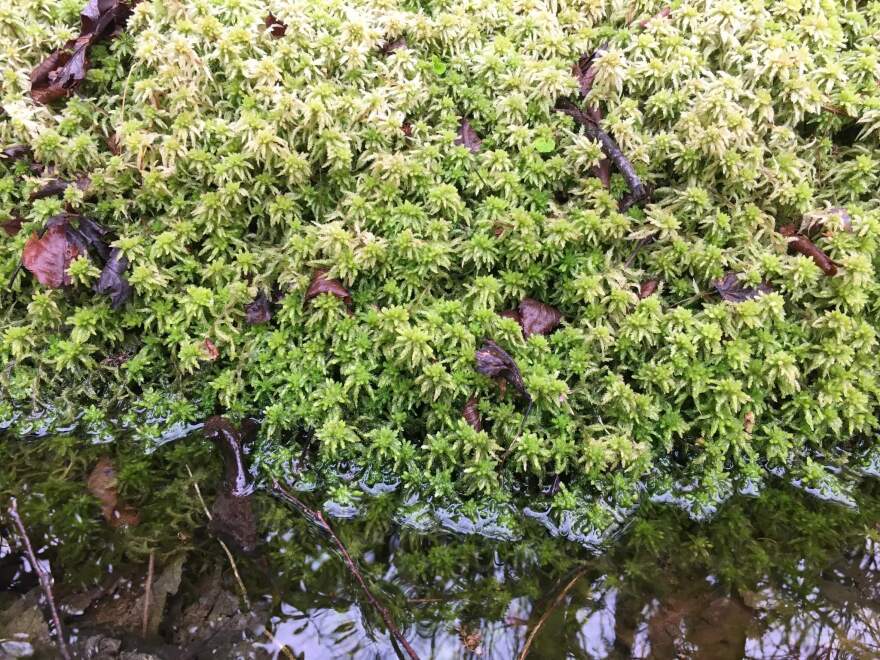
For the last 20,000 years, sphagnum moss has grown there. Under the top coat of the moss is partially-decayed plant material known as peat. These layers at the Cranberry glades are 10 to 20 feet deep.
Chuck Kleine
/
Cranberry Glades Botanical Area
Sphagnum is agenus of about 380 species of moss and there are a multitude of moss growing in the cranberry glades but it is the sphagnum that has made this special ecosystem.
Darrin Martin
/
A native carnivorous sundew plant
Sphagnum moss is considered a “habitat manipulator” because it creates a unique ecosystem of plants, including carnivorous plants, orchids and wild cranberries that are rarely found thriving this far south. Many of these plants were dumped here by glaciers at the end of the last ice age.
The layers of living and dead sphagnum can store large quantities of water inside their cells. It’s basically a giant sponge holding water even during dry spells, keeping the water-loving plants thriving.
Darrin Martin
/
Sphagnum moss
Sometimes called “camper’s pampers,” humans have used the moss for its absorption properties for thousands of years. Many cultures have used it as diapers. The smaller bits of moss work like baby powder while the moss absorption keeps skin dry. The antiseptic properties can even help and heal diaper rash.
Because it is so highly antiseptic, it has been used to dress wounds as late as the First World War. Other medicinal uses are insect repellent and as an application for a wide array of skin irritations.
The peat created by sphagnum moss has also had wide use throughout time. It is sold all over the world as a garden medium and peat blocks are used as fuel for fires.
Some of the most well preserved bodies from the past have been discovered in peat bogs. With Cranberry Glades being about 20,000 years old, there is no telling what kind of archeological treasures are hidden deep inside the layers of peat. But those will stay hidden, as any visitors to the glades must stay on the boardwalk. The ecology, though resilient, is fragile and easily disrupted. State park rangers and conservation officers implore all visitors to keep to the boardwalks that make this state gem accessible to visitors.
Add WVPB as a preferred source on Google to see more from our team
Kentucky Fried Chicken founder Colonel Sanders' iconic items earned big bucks at auction. For the Appalachia + Mid-South Newsroom, reporter Andrew Henderson went to the auction and hung around for the fried chicken.
This week, having a very specific talent can lead to a dream job. It’s how cartoonist John Rose got his foot in the door to draw the comic strip Snuffy Smith. Also, there are dos and don’ts for treating poison ivy. And, a young, old-time musician wants to save her family’s lost ballads.
For nearly 100 years, Snuffy Smith has been a staple of newspaper comic pages, though these days, it’s easier to find him online. Snuffy Smith was brought to life by Artist Fred Lasswell in the 1930s, but now the strip is written and drawn by John Rose, who lives in Virginia’s Shenandoah Valley. We hear from Rose about drawing the famous hillbilly.
Virginia writer Emilee Hackney has a complicated relationship with her home. She loves the place where she’s from, in Tazewell County — her friends, family, the swimming holes and mountains and wild places — but she also felt stifled. Her new memoir "All That’s Unseen: An Appalachian Memoir" explores this tension and her experience when she did leave. Inside Appalachia Host Mason Adams spoke with Hackney about the book.