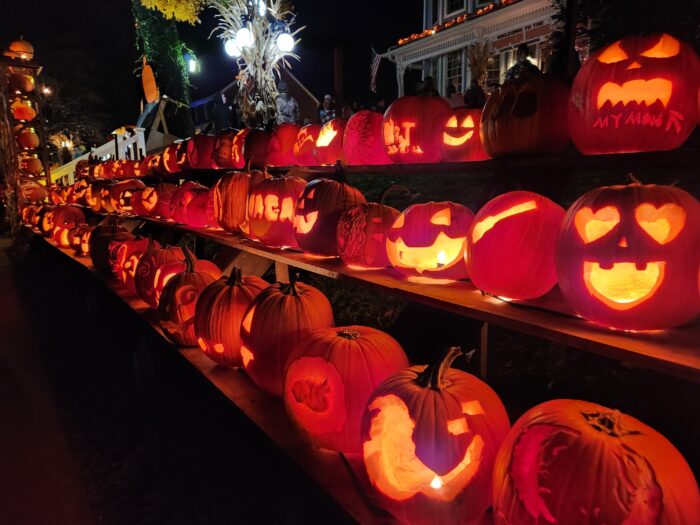
With Halloween over and Thanksgiving just a few weeks away, it’s time to start thinking about taking down fall decorations. Decorative pumpkins and jack-o’-lanterns can find a second life on your table and in the garden.
Roughly 1.4 billion pounds of pumpkins are grown across the country each year. The American Farm Bureau Federation estimates that almost 70% of those pumpkins are grown to harvest fresh and end up on front porches and stoops every fall.
But once they’ve served their prettifying purpose, those millions of pounds of decorations can mean tons of methane – a potent greenhouse gas – if pumpkins are sent to the landfill.
Hannah Fincham is a West Virginia University extension agent serving Randolph County and also a farmer that grows a lot of pumpkins.
“It’s really great. It has a lot of fiber, potassium, magnesium, iron, lots of vitamins and minerals,” she said. “Pumpkin is excellent for you. So it’s really a great thing to try and add to your diet, especially in the fall, when they are so prevalent.”
Fincham said any pumpkin is edible. You can eat a carving pumpkin as long as it’s not carved, but it won’t be as sweet as a smaller pie pumpkin that’s grown specifically for making puree and pies. And that’s OK, because pumpkins aren’t just for desserts.
“Pumpkin can be eaten in a lot of ways: pumpkin soup, pumpkin pasta,” Fincham said. “You can put pumpkin in cakes as a substitute for oil.”
Fincham said there are some basic safety considerations to keep in mind. If you plan on trying your hand at eating your fall decorations, you may want to bring it inside before the season’s first hard frost. Fincham said foods that have been allowed to freeze and thaw are no longer safe to consume.
“But if, if it’s been sitting on the porch and it hasn’t been completely frozen and thawed, you’re just looking for, making sure there’s no deep bruises or soft spots and it still has the stem on it,” she said. “So if the stem has fallen off or broken off, it’s most likely not going to be a good pumpkin for eating.”
If pumpkin isn’t on your menu in the coming weeks, freezing them in chunks is also a favorite in the Fincham household. But she said canning raises red flags.
“Pumpkins can be safely preserved by canning,” Fincham said. “But whereas we can purchase pumpkin puree that has been commercially canned, it’s not safe to can our own pumpkin puree, because the puree is too thick for the home canning process.”
Like canning puree, eating carved pumpkins is a nonstarter for Fincham. But that still doesn’t mean gourds should go into the trash can.
Joshua Peplowski, agricultural natural resource extension agent for Greenbrier County, said composting is a great option for those old jack-o’-lanterns or any pumpkin not suitable for consumption. He said composting not only provides nutrients for garden beds, it also helps keep food waste out of landfills.
“Anytime that we put food waste and material into an anaerobic environment where there’s no oxygen, we’re going to produce methane,” Peplowski said. “That methane is going to add to the overall detriment that it does produce within our environment. And we can easily avoid that by throwing those pumpkins out into our compost bins.”
According to the U.S. Environmental Protection Agency, landfilled food waste produces an estimated 58% of methane released to the atmosphere from municipal solid waste landfills.
If you or your neighbors don’t compost, Peplowski said pumpkins can still avoid the trash heap by being fed to animals as long as they haven’t been painted and are cleared of candlewax and other inorganic material.
“The pigs love them, the cows love them, and a lot of times the ones that end up on our compost pile at home, after a good snowfall, it seems like the deer and the wildlife seem to find those as well for a late winter snack,” he said.
Peplowski said your local extension office can help get you into contact with local farmers and producers to donate old pumpkins to feed animals or add to their compost.