This conversation originally aired in the Nov. 23, 2025 episode of Inside Appalachia.
Appalachians who buy health care through the federal marketplace are set to see big spikes in their premiums next year.
Depending on where you live in Appalachia, your premiums could rise as much as 40 percent. And that’s if Congress extends enhanced subsidies through the Affordable Care Act.
Ruby Rayner is a reporter for the Chattanooga Times Free Press who’s been covering this story as it plays out in Tennessee.
Inside Appalachia Host Mason Adams spoke with Rayner in late October, before the government reopened.
The transcript below has been lightly edited for clarity.
Adams: Your story in the Chattanooga Times Free Press is headlined, “I might die: Subsidy loss could affect half a million Tennesseans.” That is a striking headline. What’s going on there?
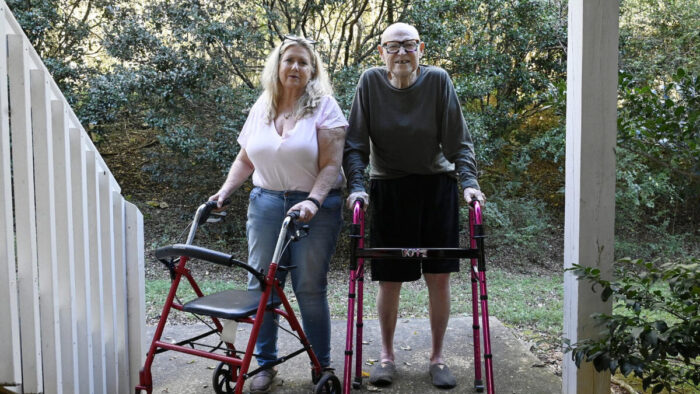
Rayner: There are half a million people in Tennessee who buy health insurance on the ACA — the Affordable Care Act marketplace, which is healthcare.gov — and most all of those people receive ACA subsidies, also called enhanced subsidies, also called premium tax credits. All of those names encapsulate these premium health subsidies which help people pay their health insurance premium every month and subsidize that through the federal government. Those are expiring at the end of this year, so that title refers to the amount of people in Tennessee who would lose that subsidy come the end of the year. For many people, like Cheri Roberts, who is a local to Chattanooga, she depends on that health care subsidy to pay her monthly health insurance premium and be able to afford her health insurance coverage. For her, she depends on her health care to get life-sustaining care, and so without the ability to be able to pay for her health care and then receive said health care, she’s really afraid for what’s at stake. And that’s true of many, many people.
Adams: This is an issue that people are facing across the U.S. and here in Appalachia, too, but it seems like an especially big deal for Tennessee. Why is that?
Rayner: Tennessee is … there’s a handful of states in a similar position. It didn’t expand with Medicaid in 2014. Many states expanded their Medicaid coverage so more people could get that federal subsidized health care coverage, and Tennessee wasn’t one of those states, so there isn’t as great of an ability for Tennesseans to access health care assistance from the government. That means that programs like the ACA enhanced premium subsidies are really vital, and a bigger portion of the pie in terms of assistance for people who might not necessarily be able to afford health care insurance. There’s just less people in Tennessee who qualify for Medicaid in general, and so there’s more people who might seek this program. With the end and expiration of the enhanced subsidies, it’s going to be a bigger chunk of that pie that Tennessee has in terms of federal assistance related to health care.
Adams: Half a million Tennessee residents receive federal health care subsidies to help pay for health insurance premiums. A lot of folks in Appalachia do, too. But your story suggests that rolling back these subsidies could have bigger implications for health care providers. How are they affected?
Rayner: I think there’s a couple of different larger implications beyond the actual increase in price that people might have to pay without the subsidies. One is that health insurance companies are expecting this expiration and with the expectation that people won’t be able to afford to continue to purchase health insurance on the marketplace without these enhanced subsidies, they are going to forego health insurance. They either can’t afford it, or another likely option is that they are pretty healthy, and it’s a big increase in money per month that you’re spending, and people are like, “It’s not quite worth it.” With that expectation, health insurance companies have raised the actual price, the rate that they’re charging for insurance, more than in past years with that expectation.
So there’s two things going on at the same time. There’s the actual enhanced subsidy that’s going to expire at the end of the year that would raise somebody’s monthly premium. And then there’s the actual rate of insurance that’s also going up more than in past years. For Tennessee, in 2025 from major insurance companies on the marketplace, rates increased from 1% to 3%, and in 2026 the proposed rates from these insurance companies, the same ones, range from 30% to 40%, so that’s a significant increase. That’s one of the other ripple effects of the enhanced subsidies. That estimate for Tennessee from KFF is that there’s going to be 200,000 people who will become uninsured without the enhanced subsidies.
The other thing is that health care experts expect there’s going to be an increase in the cost of uncompensated care, which means more people are going to forego care because they don’t have health insurance, and they’re going to wait longer to go to the doctor for smaller issues until they get maybe more serious, and then they’re going to seek help through the hospital system, which puts a greater weight on the hospital, and people then might not be able to pay those hospital bills. Then the hospital has to take that cost burden on themselves, which weighs on the hospital system in their own finances. Particularly in Tennessee, there’s been a high number of closures of hospitals. So that’s another aspect of how there’s concern over how that might continue to put weight on the hospital system and lead to potentially more closures in Tennessee.
Adams: What else haven’t we talked about? Are there other angles you think are important to bring up that we haven’t mentioned?
Rayner: Let’s say there was an agreement in Congress to permanently extend the subsidies, the actual rate increase that I talked about that’s significantly more in years past, because of the expectation that they’re ending that’s not going to likely change. Insurance companies submit their rates way in advance for approval, and so even if Congress is able to reach some type of agreement to permanently extend these subsidies, those rates are going to have that further increase because they were expecting this expiration. Secondarily, it’s unprecedented in which if there was a permanent extension, then how would the subsidies be retroactively given to people? That’s a kind of question mark. I talked to a couple of different insurance companies in Tennessee last week, and they’re not sure they follow what the federal government tells them in terms of how these processes work. That’s kind of a big unknown within the industry. It’s a wait-and-see type of situation of how that would be dealt with if it’s the case. So that’s a question mark.
I think the other thing that’s important is that I spoke to a lot of people who don’t know what insurance they have. So when you buy insurance in the marketplace, you’re buying from name brands that might feel like it’s not “government subsidized health insurance.” So it’s Blue Cross, Blue Shield, it’s Cigna, it’s names that you might recognize as private insurance, and so you might not even identify yourself or someone you’re friends with or your family as potentially being affected by this come open enrollment on November 1 or in the new year. There’s a lack of awareness. I spoke to a lot of people who didn’t know, who found out this would impact them, and are now kind of scrambling to figure out what they might do, because of the cost burden that it’s going to place on them.
——
Ruby Rayner is a reporter at the Chattanooga Times Free Press.