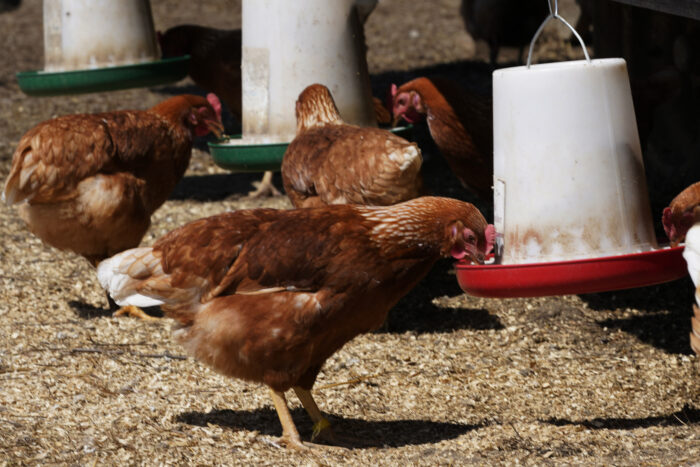
The state Department of Agriculture has confirmed a case of avian flu in a backyard chicken flock.
Following the death of a chicken in Kanawha County, samples that were collected on site tested positive for Highly Pathogenic Avian Influenza (HPAI). They’ve been sent to a national lab for confirmation of the results.
“While we’re waiting for the confirmation, the owner has voluntarily quarantined their birds,” Agriculture Commissioner Kent Leonhardt said. “So the owner has been very cooperative, following the quarantine procedures set down by the U.S. Department of Agriculture, and we think this will stop it right there.”
There have been only six cases in West Virginia since the global avian flu outbreak began roughly four years ago. But three of those were confirmed this year, in Greenbrier and Monongalia Counties in January and now in Kanawha County.
The case is a concern in part because the outbreak that started in 2022 sparked high egg prices that led to a sharp increase in the number of backyard flocks here. More people wanted to cut costs by collecting their own eggs, but more chickens can mean a greater chance for exposure.
The bigger concern, though, is the number of confirmed cases in nearby states. There have been multiple confirmations in Ohio and Maryland, and in Pennsylvania over 7.4 million chickens and commercial birds have been infected.
“Poultry is the number one agricultural industry in the state of West Virginia, so it’s very important to our agricultural figures and the economy of the state,” Leonhardt said. “There’s an awful lot of people that are employed, and our numbers are actually growing on the commercial side. So, an outbreak would be, obviously, very devastating.”
The Dept. of Agriculture urges poultry owners to:
- Keep backyard flocks enclosed or under cover to prevent contact with wild birds.
- Remove or secure outdoor feed that may attract wildlife.
- Limit and record movement of people, vehicles, and animals on the property.
- Restrict access to essential personnel only.
- Avoid visiting other poultry operations or mixing birds from different locations.
- Disinfect equipment, footwear, and tools after contact with birds.
- Isolate any ill animals and contact a veterinarian immediately.
The department also advises owners to report unusual deaths, a sudden drop in egg production, or any sick domestic birds to the WVDA Animal Health Division at 304-558-2214.
Much like the human flu, avian flu is a respiratory virus. It is spread primarily through wild migratory waterfowl like ducks and geese. There is no known impact on humans.
Add WVPB as a preferred source on Google to see more from our team