Alert (09/10/2026): Our Parkersburg TV transmitter is undergoing maintenance for a few days and will not be operational. We apologize for any inconvenience.
All our programming is available via our TV livestreams on our website and WVPB Passport. Thank you for your patience!
This week, one thing about Appalachians: we can get competitive. We’re proud of our local food. Love a good hunt. And enjoy competition with friends. We learn the rules and celebrate our victories. You'll hear these stories and more this week, Inside Appalachia.
Air Quality For Northern W.Va. Deemed Potentially Dangerous
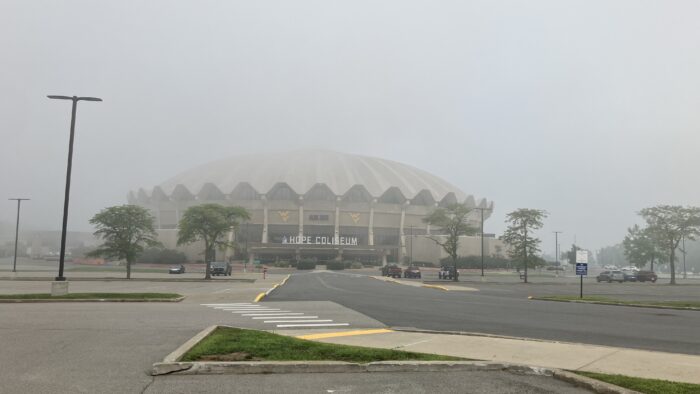
Wildfire smoke and fog obscure the Hope Coliseum in Morgantown July 17, 2026.Chris Schulz/West Virginia Public Broadcasting
Listen
Share this Article
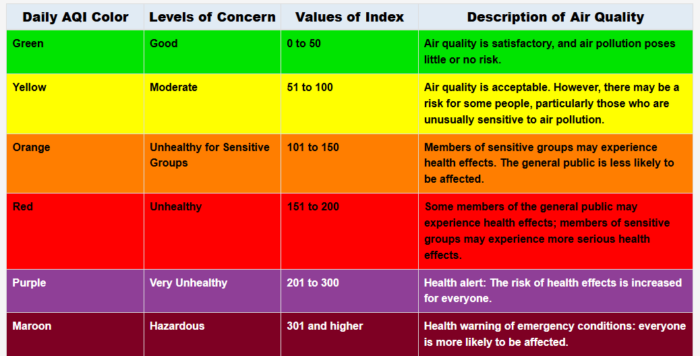
Air Quality Index (AQI) values in West Virginia are expected to reach into the Red (Unhealthy) or Purple (Very Unhealthy) categories Friday, with a limited potential for Maroon (Hazardous) conditions for brief periods in isolated locations.
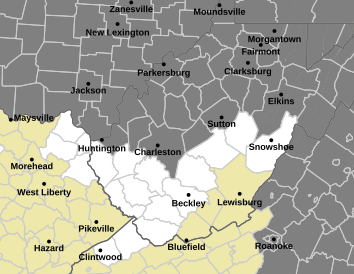
The West Virginia Department of Environmental Protection issued air quality alerts in Red and Purple for July 17.
Courtesy West Virginia Department of Environmental Protection
This alert is caused by smoke from Canadian wildfires with smoke traveling across Detroit, Chicago and the Great Lakes before heading into the MidAtlantic region.
The AQI is the U.S. Environmental Protection Agency’s (EPA) tool for communicating about outdoor air quality and health. It includes six color-coded categories, each corresponding to a range of index values. The higher the AQI value, the greater the level of air pollution and the greater the health concern:
Wildfire smoke contains fine particulate matter, known as PM2.5, which can affect anyone, especially sensitive populations: children, older adults, pregnant individuals, and people with heart or lung conditions such as asthma or COPD.
The West Virginia Department of Environmental Protection issued air quality alerts for the northern half of the state due to smoke from Canadian wildfires.
Courtesy West Virginia Department of Environmental Protection
The National Weather Service forecasts thunderstorms Friday afternoon and evening and into Saturday. They bring with them the chance of flash flooding but will improve the air quality as a cold front moves through.
If air quality worsens, federal health guidance recommends reducing time outdoors and limiting strenuous physical activity, particularly if air quality reaches the unhealthy category or higher. Individuals who experience symptoms such as coughing, shortness of breath, chest pain, or difficulty breathing should move indoors and seek medical attention if symptoms become severe.
Residents can monitor current air quality conditions and forecasts by visiting www.AirNow.gov or by using the AirNow mobile app.
WVDEP will continue working with the National Weather Service offices in the region to issue air quality alerts for affected areas of West Virginia as forecasts evolve.
Add WVPB as a preferred source on Google to see more from our team
U.S. Secretary of Education Linda McMahon told media in Cabell County she wants to transition federal education funding to a block grant model and eliminate the U.S. Department of Education completely.
U.S. Sen. Shelley Moore Capito is a co-sponsor of legislation she said would help protect athletes and bring college athletics back to what they were meant to be.
The West Virginia Council for Community and Technical College Education has secured a $15 million federal Educational Opportunity Centers grant, according to a press release from Gov. Patrick Morrisey.