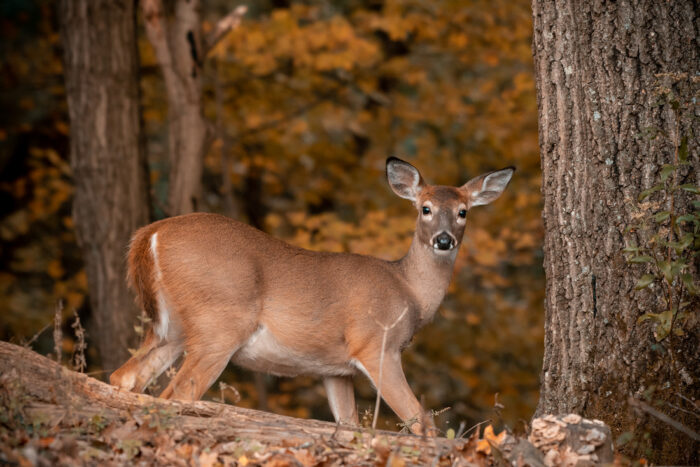
More than a third of all deer-vehicle collisions happen in October and November as cooler weather and shorter days mean more deer are out looking for food, according to new research from the AAA Foundation for Traffic Safety (AAAFTS).
The study showed that from 2020 through 2024, more than 1.7 million police-reported crashes involved animals. That meant about 350,000 per year – resulting in nearly 50,000 injuries and close to 300 deaths.
According to the Insurance Information Institute, West Virginians have the greatest likelihood in the country of hitting a deer at between 1 in 35 and 1 in 38, but in total volume, Pennsylvania records the most annual insurance claims for animal collisions at more than 141,300.
“This research shows that fall is a particularly hazardous time to be on the roads, especially in rural areas and motorists need to exercise extreme caution,” said Jim Garrity, director of public affairs, AAA East Central. “While these types of crashes might not always be avoidable, motorists should remember to wear a seat belt, remain alert, awake, and sober.”
Other Findings from the Foundation Study:
- The vast majority of animal-related crashes that lead to the death of a vehicle occupant involved other events more severe than striking the animal, such as hitting a tree, colliding with another vehicle, or rolling over. This finding suggests that in many instances, taking sudden evasive action to attempt to avoid striking an animal may be riskier than striking it.
- While a large number of these crashes were suspected to involve deer, a recommendation against taking evasive action may not be right in every situation, particularly when motorists encounter much larger animals such as moose or elk.
- Most people injured in animal-related crashes were riding in cars or trucks, but motorcyclists accounted for nearly half of all fatalities, highlighting the vulnerability of motorcyclists to severe injury or death in the event of a crash with an animal.
What Motorists Can Do
- Pay attention to road signs. Yellow, diamond-shaped signs with an image of a deer indicate areas with high levels of deer activity.
- Keep focused on the road. Ditching distractions is one of the easiest ways to be ready if a deer comes out of nowhere.
- Be especially attentive in early morning and evening hours. Many animals, especially deer, are most active from 5 to 8 a.m. and 5 to 8 p.m., prime commuting times for many.
- Use high beams when there’s no oncoming traffic. Animals can be spotted sooner and the light reflecting off their eyes will often reveal their location.
- Slow down and watch for other deer to appear. Deer rarely travel alone, so if there is one, more are likely nearby.
- Resist the urge to swerve. Keep both hands firmly on the wheel and don’t change lanes. Swerving away from animals can confuse them so they don’t know which way to run. It can also put motorists in the path of oncoming vehicles or cause the vehicle to crash into something.
- If the crash is imminent take your foot off the brake. During hard braking, the front end of a vehicle is pulled downward which can cause the animal to travel up over the hood towards the windshield. Letting off the brake can protect motorists from windshield strikes because the animal is more likely to be pushed to one side of the vehicle or over the top of the vehicle.
In the event of a deer strike, AAA recommends:
- Avoid making contact with the animal. A frightened or wounded animal can hurt people or further injure itself.
- Put the vehicle’s hazard lights on, whether it’s light or dark outside.
- If possible, immediately move the vehicle to a safe location, out of the roadway, and wait for help to arrive.
- Motorists should contact their insurance agent or company representative as quickly as possible to report any damage.
Add WVPB as a preferred source on Google to see more from our team