


Lease A Piece Of History In Thurmond
You can now submit a proposal to lease three historic structures in the historic town of Thurmond in the New River Gorge National Park and Preserve.
Continue Reading Take Me to More News



To Educate, Inform, and Inspire by Telling West Virginia's Story

Mountain Readers 2026 has concluded! Check out our classroom resources.

Nominate an exceptional West Virginia K-12 teacher today!

On Demand

On Demand

Stream original productions from WVPB

Watch locally produced documentaries & more.

On Demand

On Demand




West Virginia Morning

Inside Appalachia

West Virginia Week
Mountain Stage

Us & Them

The Legislature Today
The Legislature This Week

Send us your comments and questions.

Stream our board meetings.

Check out the latest WVPB news.

Sign up for our newsletter and get weekly updates.

Meet the WVPB staff.

WV Educational Broadcasting Commission, the WVPB Foundation, and the Friends of WVPB.

Come work with us!

Read our annual report and learn how we educate, inform and inspire with your support.

Sponsor impactful and engaging media and entertainment.

Use your IRA to make a gift to WVPB.

Become a member with your gift of $1,000 or more.

Make WVPB part of your legacy.

Manage your membership account.

Learn how you can Protect and Sustain West Virginia Public Broadcasting.
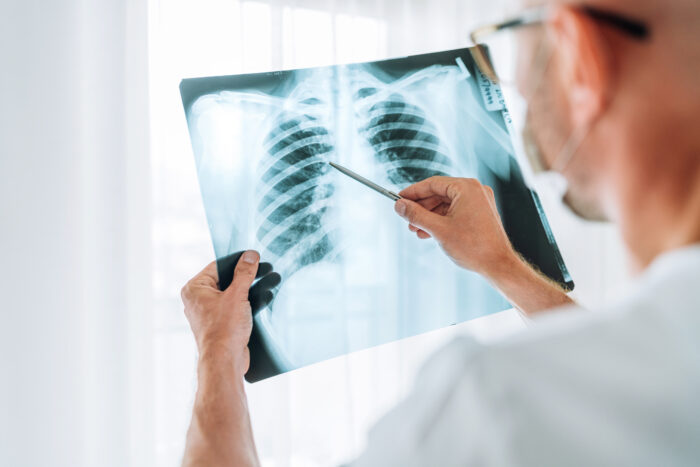
Lung cancer is diagnosed for 75.8 people out of every 100,000 each year in West Virginia, compared to the national average of 52.1, according to the American Lung Association’s annual State of Lung Cancer Report.
Of those new cases, 29.2% will be diagnosed with an early stage of the disease, when treatment is most effective and survival rates are significantly higher.
“While the new report shows that the five-year survival rate has increased to 31% now, versus just 18% in 2018, lung cancer is still the leading cause of cancer deaths all across the United States and in West Virginia,” Shannon Baker, director of advocacy, said.
West Virginia’s five-year survival rate is 26.4%, a 29% improvement in the last five years, but the report shows lung cancer is still the leading cause of all cancer deaths in West Virginia.
“Drilling down to West Virginia specifically, very significantly, the report finds that the state has the highest smoking rate in the nation,” Baker said. “Tobacco use is the leading risk factor for lung cancer, and that’s both smoking and secondhand smoke that have been shown to cause it.”
The second leading cause of lung cancer is radon exposure.
The biggest impact on survival rates in West Virginia is the lack of early screening. In its earlier stages, lung cancer is asymptomatic, so many cases don’t get diagnosed until the disease is in its later stages.
“Typically one doesn’t know they have it until it’s often in its most advanced stages and more difficult to treat. You can’t do what you’re unaware you need to do, right? Baker said.
The United States Preventive Services Task Force, a scientifically independent, volunteer panel of national experts in disease prevention, has a specific recommendation for lung cancer screening.
“Adults aged 50 to 80 years old who have a 20-year smoking history and currently smoke or have quit within the past 15 years are considered high risk. And those folks should speak to their physicians about being screened,” Baker said. “It’s critically important that we educate folks and that they understand that being screened is important to their treatment and their survival if they’re at high risk.”
The screening itself, Baker said, is quick and non-invasive.
Add WVPB as a preferred source on Google to see more from our team

Thursday, Nov. 19, marks the 50th annual Great American Smokeout.
Continue Reading Take Me to More NewsMoving is a daunting experience for most of us. In addition to the packing, searching for a new home and getting settled, there’s a lot to do. Something a lot of young people don’t put on the list: a series of health decisions that need to be made.
Continue Reading Take Me to More NewsParamedics are often the only emergency medical care available in rural communities. A new grant from the Rural Health Transformation Program is helping to train more of them.
Continue Reading Take Me to More NewsThe U.S. Mine Safety and Health Administration proposed a rule amending existing provisions for the sampling of silica dust in MNM mines and coal mines.
Continue Reading Take Me to More News