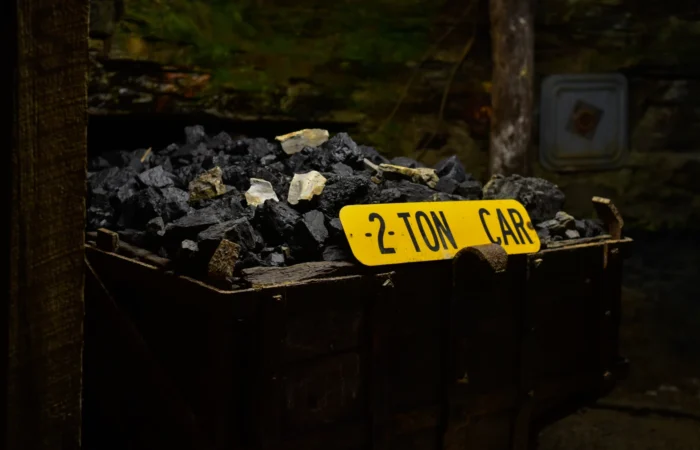
One third of all underground coal miners with 25 years of experience are suffering from black lung disease. That is largely brought on by exposure to silica dust in mines, which has increased due to the mining of smaller coal seams.
Earlier this week, PBS’s Frontline aired a documentary about black lung increases in coal miners, caused by silica dust. Tuesday, the U.S. Mine Safety and Health Administration (MSHA) proposed a rule, Respirable Crystalline Silica and Respiratory Protection, amending existing provisions in 30 CFR part 60 of the Agency’s respirable crystalline silica and respiratory protection standards applicable to both MNM mines and coal mines.
According to an MSHA statement, the changes add “practical, commonsense, risk-based improvements to compliance requirements, exposure monitoring, medical surveillance, recordkeeping, and respiratory protection based on OSHA standards. The proposal retains the permissible exposure limit for respirable crystalline silica at or below 50 micrograms per cubic meter of air and action level at 25 micrograms.”
In 2024, the Department of Labor proposed a new rule to limit silica dust exposure. It was immediately put on indefinite judicial hold after industry lawsuits.
The new version of the rule shifts away from periodic sampling to conduct silica sampling “as frequently as necessary” to evaluate mine conditions.
According to a statement from the United Mine Workers of America, the proposed rule also cuts funding for monitoring and medical surveillance.
Howard Berkes, the investigative reporter in the Frontline Documentary Coal’s Human Cost, the rate of black lung disease has not been this high since 1978.
“Even miners with less tenure underground, like 15 years to 20 years and 25 years, the rate of disease now, according to this study now from the National Institute for Occupational Safety and Health, takes us back to the 1980s. It’s been that long since there’s been a rate of disease that high,” he said. “When we reported in 2018, it was one in five. And to give you a little bit more perspective, in 1999, it was one in 10. So since 1999, there’s been this essentially sharp increase in the rate of black lung disease in West Virginia, in Kentucky, and in southern Virginia.”
According to Berkes, silica dust is 20 times more toxic than coal dust alone. The exposure limit has been the same since 1970.
United Mine Workers of America (UMWA) International President Brian Sanson issued the following statement Friday.
“While we are still reviewing the changes and will be submitting formal comments for the record, we have significant concerns about the changes that have been made to the unenforced 2024 rule.
“From what we have seen so far, the majority of the changes to the rule pander to the industry rather than strengthening protections for miners. For example, the changes give operators the ability to expose miners to levels above the exposure limit without any consequences.
“MSHA and industry will try to claim that the legal exposure limit hasn’t changed, but that argument ignores reality. The truth is that by allowing a sampling error factor of 21%, MSHA is effectively moving the goalposts, allowing operators to expose workers to higher toxic dust levels without facing citations.
“It is extremely troubling that MSHA refuses to issue citations for operator samples that come back over the limit. If a sample is over the limit, it must trigger a citation and mandatory corrective sampling.
“Instead, this proposal creates a massive enforcement gap while boasting about cutting nearly $25 million from monitoring and nearly $4 million from medical surveillance. It is outrageous that operator profits are going to be balanced on the backs of dying miners.
“Coming on the heels of recent research by the National Institute for Occupational Safety and Health showing that black lung rates have surged to their highest levels in nearly 50 years, this rollback is unconscionable. MSHA has forgotten that its only responsibility is to protect miners’ health and safety. Congress did not create it to pad operators’ bottom lines.
“The UMWA will submit comprehensive comments ahead of the Jan. 11, 2027, deadline. More importantly we will continue to fight any attempt to weaken the health and safety of miners throughout the nation.”
The comment period for the proposed rule will close on Jan. 11, 2027. Interested parties can provide comments on any aspects of the proposed rulemaking at Regulations.gov. Written comments must be received by midnight Eastern Time on Jan. 11, 2027. All submissions must include “RIN 1219-AC22” or “Docket No. MSHA-2026-0200.”
MSHA will hold a virtual-only public hearing that will begin on Dec. 15, 2026, at 9 a.m. Eastern Time. If necessary, the public hearing will continue on December 16, 2026.
During this public hearing, stakeholders will have the opportunity to present testimony, written comments, and other documentary evidence on the proposed rule. Click here for more information on the public hearing.