


Aluminum Plates For Deep Space Win W.Va. 'Coolest' Contest
Aluminum plates that helped keep astronauts on the Artemis II rocket safe won the first ever Coolest Thing Made In West Virginia competition.
Continue Reading Take Me to More NewsAlert (09/29/2026): Our Parkersburg TV transmitter is still undergoing maintenance and remains temporarily inoperative. We apologize for the inconvenience.
All our programming is available via our TV livestreams on our website and WVPB Passport. Thank you for your patience!




To Educate, Inform, and Inspire by Telling West Virginia's Story
Mountain Readers Week will be held Oct. 5-9, 2026! Celebrate and foster a love of reading in children across West Virginia.
Nominate an exceptional West Virginia K-12 teacher today!

On Demand

On Demand
Stream original productions from WVPB

Watch locally produced documentaries & more.

On Demand

On Demand






West Virginia Morning

Inside Appalachia

West Virginia Week

Mountain Stage

Us & Them

The Legislature Today

The Legislature This Week

Send us your comments and questions.

Stream our board meetings.

Check out the latest WVPB news.

Sign up for our newsletter and get weekly updates.

Meet the WVPB staff.

WV Educational Broadcasting Commission, the WVPB Foundation, and the Friends of WVPB.

Come work with us!

Read our annual report and learn how we educate, inform and inspire with your support.

Sponsor impactful and engaging media and entertainment.

Use your IRA to make a gift to WVPB.

Become a member with your gift of $1,000 or more.

Make WVPB part of your legacy.

Manage your membership account.

Learn how you can Protect and Sustain West Virginia Public Broadcasting.
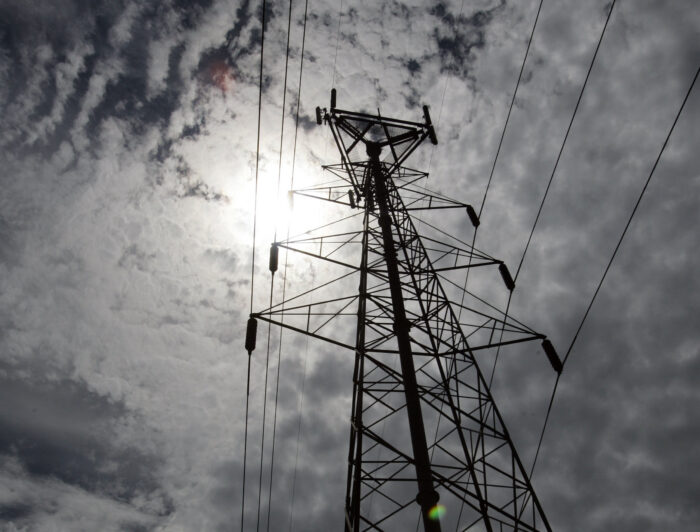
West Virginians Against Transmission Injustice (WATI) and the Lake O’ Woods Club both told the West Virginia Public Service Commission the application for the Mid Atlantic Resiliency Link should be delayed by at least 60 days.
Developer NextEra Energy applied Jan. 30 to construct a new 107.5-mile-long transmission line from Pennsylvania through West Virginia to Virginia. Public comment sessions were held in all four of the affected counties of Monongalia, Preston, Mineral and Hampshire in June. The PSC set regulatory hearing dates for late October and early November, with a deadline to file direct testimony by Sept. 8.
The citizen groups agree with commission staff that said last week the delay is necessary to allow proper response to changes to the transmission line’s 100-mile route submitted by developer NextEra Energy.
“(NextEra’s) route revisions are material, not minor. The route revisions add three newly affected landowners months after the initial filing of the application and after key procedural deadlines have passed,” WATI wrote. “Merely extending the intervention deadline cannot cure that prejudice. These landowners missed the public comment hearings, staffs investigation, discovery activity, and the early development of the record. Due process requires meaningful participation from the outset, not after the record has substantially developed.”
WATI’s letter also pointed out that one of the five route changes submitted by NextEra was not requested by a landowner but rather necessitated by “later recognition of terrain and routing issues.”
They argued that the late change “suggests the routing analysis underlying the application may not be complete or reliable.”
Staff also warned the application may need to be dismissed entirely after the Federal Energy Regulatory Commission ordered in June a review of the rules that govern how large energy users connect to the electric grid.
The West Virginia Energy Users Group (WVEUG) also submitted a letter supporting the application’s delay or dismissal due to the “potential for unfair cost allocation and cost shifting to West Virginia ratepayers.”
The group, a statewide association of large, energy intensive industry argued that the cost impact to West Virginia ratepayers cannot be known until the federal review is completed.
Add WVPB as a preferred source on Google to see more from our team

The West Virginia Extension service is asking volunteer firefighters why departments are struggling to recruit and maintain members and what support firefighters need.
Continue Reading Take Me to More NewsHuntington is one of eight communities nationwide to be awarded a $3-million federal grant to strengthen efforts to help struggling residents.
Continue Reading Take Me to More NewsDirect-to-consumer tests like full-body scans are marketed as a way to catch diseases early and establish a baseline. But there are financial, physical and psychological risks to all medical tests — and in some cases, not getting a test could be better for your health. From the Appalachia + Mid-South Newsroom, HealthQ hosts Cara Anthony and Blake Farmer speak with UCSF Cardiologist Dr. Rita Redberg.
Continue Reading Take Me to More NewsMany of the devices we use in our daily lives run on rechargeable lithium-ion batteries. Be aware that damaged or incorrectly charged batteries can overheat, start a fire, or even explode.
Continue Reading Take Me to More News