


'Haunted' Town Already Celebrating Spooky Season
Halloween is still several weeks away, but one West Virginia town is already celebrating the season.
Continue Reading Take Me to More NewsAlert (09/29/2026): Our Parkersburg TV transmitter is still undergoing maintenance and remains temporarily inoperative. We apologize for the inconvenience.
All our programming is available via our TV livestreams on our website and WVPB Passport. Thank you for your patience!




To Educate, Inform, and Inspire by Telling West Virginia's Story
Mountain Readers Week will be held Oct. 5-9, 2026! Celebrate and foster a love of reading in children across West Virginia.
Nominate an exceptional West Virginia K-12 teacher today!

On Demand

On Demand

Stream original productions from WVPB

Watch locally produced documentaries & more.

On Demand

On Demand






West Virginia Morning

Inside Appalachia

West Virginia Week

Mountain Stage

Us & Them

The Legislature Today

The Legislature This Week

Send us your comments and questions.

Stream our board meetings.

Check out the latest WVPB news.

Sign up for our newsletter and get weekly updates.

Meet the WVPB staff.

WV Educational Broadcasting Commission, the WVPB Foundation, and the Friends of WVPB.

Come work with us!

Read our annual report and learn how we educate, inform and inspire with your support.

Sponsor impactful and engaging media and entertainment.

Use your IRA to make a gift to WVPB.

Become a member with your gift of $1,000 or more.

Make WVPB part of your legacy.

Manage your membership account.

Learn how you can Protect and Sustain West Virginia Public Broadcasting.
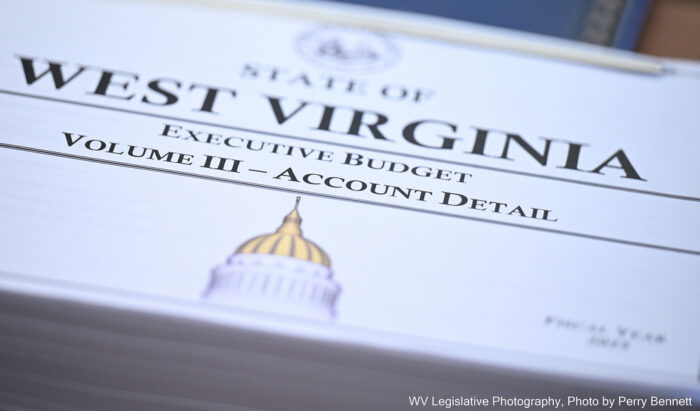
In his State Of The State address last month and again a few days ago, Gov. Patrick Morrisey made a case for a 10% cut in state income taxes. He proposed a 5% cut in his budget, and has challenged lawmakers to find another 5% to cut.
It’s a critical part of the state’s economic future, Morrisey has said, a pathway to attracting lucrative new businesses and jobs.
But Kelly Allen, executive director of the West Virginia Center on Budget and Policy, disagrees. She sat down with Assistant News Director Maria Young to explain why.
This interview has been lightly edited for clarity.
Young: Obviously you know the governor has proposed a 5% state income tax cut in his budget, but is also hoping that the legislature will approve another 5% for a total of 10%. What is your reaction to that and the impact on the state of West Virginia?
Allen: I find Gov. Morrisey’s pushing of an additional tax cut pretty shocking. We have a lot of pressing costs, a lot of cost growth, and things like the Hope Scholarship and Medicaid. We’re facing budget deficits in upcoming years, and we’re using one-time funds to pay for ongoing budget needs. So, you know, the money isn’t there for tax cuts if we want to meet the needs of our people and provide the public services that have been committed to people.
Young: What one-time funds are you referring to specifically?
Allen: In the governor’s budget, about $170 million of ongoing Medicaid costs are being proposed to be funded through a supplemental [appropriation]. So you know, typically, ongoing budget costs would be in the regular budget, so that’s the cost of the 5% tax cut right there, $170 million.
Young: We’re also looking at some cuts in terms of what have been traditional federal funds that we’ve been able to count on historically that I think are largely going away. And I’m speaking specifically of Medicaid. The Rural Health Transformation fund makes up for a portion of that, but not anywhere close to the full amount, right?
Allen: That’s right. So over the next two years, there are going to be a lot of changes phased in as a result of Congress’s One Big, Beautiful Bill. And a lot of those changes will hit individuals who rely on Medicaid and SNAP (Supplemental Nutrition Assistance Program).
But to your point, a lot of it will impact the state budget. So a lot of it is shifting Medicaid and SNAP costs that are federal now onto the state budget. There’s a potential of tens of millions of dollars a year in new SNAP costs hitting the budget starting next year, as well as, I mean, hundreds of millions of dollars in losses in Medicaid funds.
This seems very short-sighted to push a permanent tax cut that reduces our revenue when we are facing so much uncertainty around Medicaid and SNAP, which are programs that are important for the hundreds of thousands of people that rely on them in our state, but also for our economy.
Young: There’s a big push to get people off of the Medicaid rolls, to get them gainfully employed in positions that provide health care. And so when the governor makes the case for this income tax cut, I think he’s also saying that [an] income tax cut is necessary in order for the state’s economy to grow. You lose the state income tax, but you attract businesses that bring in a lot of revenue for the state.
Allen: Well, I think that’s a flawed premise as well. There is very little evidence available that income tax rates are a huge driver of business location decisions. There’s a wide body of research available that shows that the drivers of economic growth are things like public investments in education, educational attainment of the community, public transportation spending, as well as population growth, which I know is a goal of this.
And the problem that we’ve seen in other states that have done deep tax cuts is that when these tax cuts undermine those things, undermine investments in education, undermine investments in infrastructure, that’s when they actually backfire. They don’t have the impact of attracting businesses and people to a place.
There are a lot of things that are unmet needs right now. You know, I haven’t heard the governor mention unprecedented levels of public school closures across the state. These tax cuts would be coming at the cost of investments in those things that we know drive economic growth and we know are important to families and businesses.
Add WVPB as a preferred source on Google to see more from our team

The $26.5 million grant from the U.S. Department of Agriculture will help construct the West Virginia State University Agriculture Complex that will house laboratory space for the university, as well as the state Department of Agriculture.
Continue Reading Take Me to More NewsThe Public Service Commission of West Virginia wants to ensure that if discontinuation of the current landline system is approved, an adequate service will be continue to be available to both new and existing customers.
Continue Reading Take Me to More NewsFayette, Harrison and Kanawha counties have been approved for individual assistance from the Federal Emergency Management Agency (FEMA).
Continue Reading Take Me to More NewsWest Virginia has seen the largest population decline in the nation - nearly 1.5% - and many of those leaving are young people. In an episode that aired last month, Us & Them host Trey Kay heard from some young people who think they may stay in the state to launch their futures. This month, Kay talks with those who say living their dreams may well require moving away from the Mountain State. We listen to an excerpt from the latest Us & Them.
Continue Reading Take Me to More News