


Paranormal Trail Returns For Spooky Season
The West Virginia Paranormal Trail is back for another season, and there's even a new location this year.
Continue Reading Take Me to More NewsAlert (09/10/2026): Our Parkersburg TV transmitter is undergoing maintenance for a few days and will not be operational. We apologize for any inconvenience.
All our programming is available via our TV livestreams on our website and WVPB Passport. Thank you for your patience!




To Educate, Inform, and Inspire by Telling West Virginia's Story

Mountain Readers Week will be held Oct. 5-9, 2026! Celebrate and foster a love of reading in children across West Virginia.
Learn more about Be My Neighbor Day! And check out our recap from last year.

On Demand

On Demand

Stream original productions from WVPB

Watch locally produced documentaries & more.

On Demand

On Demand






West Virginia Morning

Inside Appalachia

West Virginia Week

Mountain Stage

Us & Them

The Legislature Today

The Legislature This Week

Send us your comments and questions.

Stream our board meetings.

Check out the latest WVPB news.

Sign up for our newsletter and get weekly updates.

Meet the WVPB staff.

WV Educational Broadcasting Commission, the WVPB Foundation, and the Friends of WVPB.

Come work with us!

Read our annual report and learn how we educate, inform and inspire with your support.

Sponsor impactful and engaging media and entertainment.

Use your IRA to make a gift to WVPB.

Become a member with your gift of $1,000 or more.

Make WVPB part of your legacy.

Manage your membership account.

Learn how you can Protect and Sustain West Virginia Public Broadcasting.

On Nov. 11, 1918, at 11 a.m. the guns of World War I fell silent with a lasting armistice between the warring sides. The war officially came to an end with the signing of the Treaty of Versailles the next summer.
President Woodrow Wilson proclaimed Nov. 11, 1919 as the first commemoration of Armistice Day: “To us in America, the reflections of Armistice Day will be filled with solemn pride in the heroism of those who died in the country’s service and with gratitude for the victory, both because of the thing from which it has freed us and because of the opportunity it has given America to show her sympathy with peace and justice in the councils of the nations…”
In 1938, Congress passed a law making the date an official federal holiday. In 1954, the name of the holiday was then changed from Armistice Day to Veterans Day to include veterans of World War II, the recently ended war in Korea and future conflicts.

Later that same year, on October 8th, President Dwight D. Eisenhower issued the first “Veterans Day Proclamation,” which stated: “In order to insure proper and widespread observance of this anniversary, all Veterans, all Veterans’ organizations, and the entire citizenry will wish to join hands in the common purpose. Toward this end, I am designating the Administrator of Veterans’ Affairs as Chairman of a Veterans Day National Committee, which shall include such other persons as the Chairman may select, and which will coordinate at the national level necessary planning for the observance. I am also requesting the heads of all departments and agencies of the Executive branch of the Government to assist the National Committee in every way possible.”
In recognition of the holiday, local communities across the state, and nation, celebrate with remembrance events and parades.
Watch WVPB’s award winning production of Woody Williams: An Extraordinary Life of Service.
This post is based on a history of Veterans Day from the U.S. Department of Veterans Affairs.
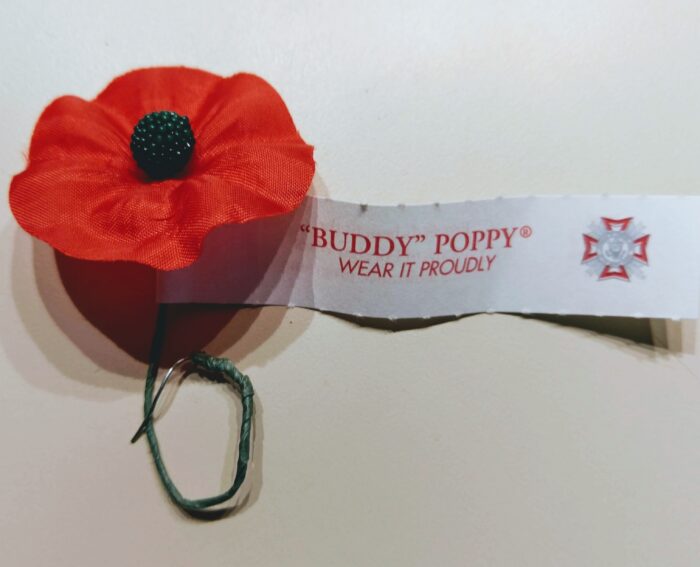
By John McCrae
In Flanders fields the poppies blow
Between the crosses, row on row,
That mark our place; and in the sky
The larks, still bravely singing, fly
Scarce heard amid the guns below.
We are the Dead. Short days ago
We lived, felt dawn, saw sunset glow,
Loved and were loved, and now we lie,
In Flanders fields.
Take up our quarrel with the foe:
To you from failing hands we throw
The torch; be yours to hold it high.
If ye break faith with us who die
We shall not sleep, though poppies grow
In Flanders fields.
Add WVPB as a preferred source on Google to see more from our team

Duties of poll workers can include delivering election supplies to polling places, verifying voter identities and registrations and securing the materials after polls close.
Continue Reading Take Me to More NewsThe West Virginia Paranormal Trail is back for another season, and there's even a new location this year.
Continue Reading Take Me to More NewsA series of storm systems moved across West Virginia earlier this week, bringing repeated periods of heavy rainfall and thunderstorms, overwhelming streams, creeks, drainage systems, and low-water crossings.
Continue Reading Take Me to More NewsIn the runup to the midterm elections, it’s time for a new Us & Them dinner party. Host Trey Kay brings West Virginians together from a range of political perspectives to share some family dishes, as well as their thoughts. This time around, the conversation included some new topics as well as some of the familiar issues that divide us. We listen to an excerpt.
Continue Reading Take Me to More News