This week, we remember the one and only Dolly Parton. Dolly used her musical success to help others. She started the Imagination Library, a free book program for children that included some of her favorites, like the "Little Engine that Could." And, Dolly’s kindness touched people from all walks of life.
Dean Williams can’t park his Subaru Outback in his garage anymore. He’s turned that space in his Huntington, West Virginia home into a makeshift tomato nursery.
Dozens of baby tomato plants stick out of plastic pots filled with Pro-Mix seed-starting soil. Those pots sit on a table made of plywood and sawhorses. Grow lights hover just above the plants, dangling on chains that reach to the ceiling.
Though Williams has gardened for years, this is the first time he has ever tried to raise anything from seed.
“It worried me because I started them and they say they are supposed to germinate within five and 12 days,” Williams said. “Well, day 12 arrived and nothing had come up yet.”
This disappointed Williams, because these aren’t just regular tomatoes. They are Estler Mortgage Lifters, a tomato developed in the 1920s by Williams’ grandfather-in-law, William Estler of Barboursville, West Virginia.
Courtesy Dean Williams
/
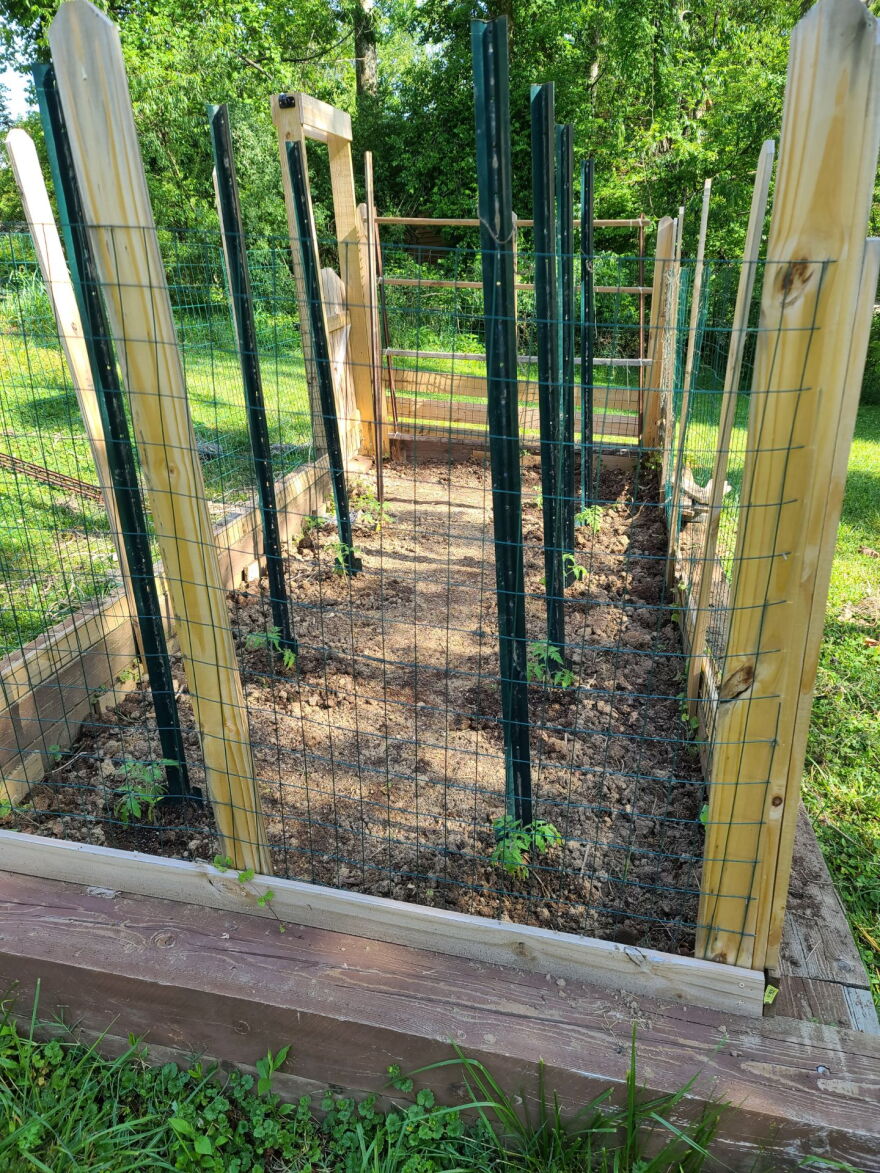
Williams planted his tomatoes in his garden in late May. According to his late father-in-law Bob Estler’s rule, they will be the only breed of tomato grown in his garden this year. Estler never grew other tomatoes for fear they would cross-pollinate with his Mortgage Lifters.
The plants are not to be confused with “Radiator Charlie” Mortgage Lifter tomatoes popular at farmers markets and in seed catalogs. Those Mortgage Lifters are better known, but the Mortgage Lifters in Dean Williams’ garage made their debut a decade earlier than the Radiator Charlie variety.
William Estler created his tomato by crossbreeding Ponderosa and Pritchard tomatoes, resulting in a pink and sweet fruit. He raised the plants for years until his death in 1968. His son Bob Estler then spent the rest of his own life raising the plants and attempting to raise awareness about his father’s tomato.
When Bob Estler passed away in 2012, Dean Williams — Bob’s son-in-law — appointed himself keeper of the family tomato tradition. He got seeds his mother-in-law, Mary Lou, kept from the last of Bob Estler’s tomatoes. That’s why he was so disappointed when it didn’t appear the plants would sprout.
But then came day 13. Just when Williams thought all hope was gone, seven plants sprouted from the soil.
“By that evening I had 20 up,” Williams said. “And by the next day I had 45. And it just kept exploding over the next three to four days.”
Williams eventually found himself with 185 tomato plants. But only a dozen are destined for his own garden. He’s providing the rest to local greenhouses — Hatcher’s Greenhouse in South Point, Ohio, and Joyce’s Greenhouse in Huntington — so local gardeners can grow Estler Mortgage Lifters in their own backyards.
Even this is a continuation of a long family tradition. Both greenhouses used to raise Mortgage Lifters for Bob Estler.
“It’s my wife’s legacy. Her family’s legacy,” Williams said. “I’d like to see this get some ground roots behind it and see other people find some interest and want it to move forward, too.”
Williams isn’t charging the greenhouses for the plants — just like his father-in-law Bob didn’t charge for the bushels and bushels of tomatoes and Mortgage Lifter seeds he gave away through the years.
“I look at this way,” Williams said. “I think Bob is watching over me a little bit. Without him, I don’t think I would be this successful.”
This story is part of the Inside Appalachia Folkways Reporting Project, a partnership with West Virginia Public Broadcasting’s Inside Appalachia and the Folklife Program of the West Virginia Humanities Council. The Folkways Reporting Project is made possible in part with support from Margaret A. Cargill Philanthropies to the West Virginia Public Broadcasting Foundation. Subscribe to the podcast to hear more stories of Appalachian folklife, arts, and culture.
Add WVPB as a preferred source on Google to see more from our team
On this West Virginia Week, a second data center is coming to Mason County, the Rural Health Transformation Program Funds are beginning to be distributed in the state, and remembering Dolly Parton.
This week, we remember the one and only Dolly Parton. Dolly used her musical success to help others. She started the Imagination Library, a free book program for children that included some of her favorites, like the "Little Engine that Could." And, Dolly’s kindness touched people from all walks of life.
Taylor Hankins of the West Virginia Mine Wars Museum said the Battle of Blair Mountain remains an important story of solidarity that exemplifies the Appalachian spirit.