Alert (09/10/2026): Our Parkersburg TV transmitter is undergoing maintenance for a few days and will not be operational. We apologize for any inconvenience.
All our programming is available via our TV livestreams on our website and WVPB Passport. Thank you for your patience!
This October, the Adaptive Climbers Festival will gather in Kentucky’s Red River Gorge for the fifth year. In 2023, Folkways Reporter Emily Chen-Newton covered the event for Inside Appalachia. Since then, the Adaptive Climbers Festival has grown. Organizers say they’re nearly at capacity, with 300 climbers, caregivers and volunteers. Ahead of the festival, the campground has made accessibility improvements. Volunteers with the ACF have also been sprucing up the trails.
Despite Jim Crow Laws and Segregation, Charleston W.Va.'s Nightclubs Were a Melting Pot
Listen
Share this Article
The 1930s, 40s, and 50s in Charleston- before the decline in mining jobs caused many African Americans to leave Kanawha County- those years were electric with music that could be found throughout the city on almost any night of the week. That’s what Hubert “Rabbit” Jones remembers.
Jones made his living as an accountant, but his love was playing improv jazz or the blues with so many of musicians who passed through the capital city. Back then, segregation was still officially law, but in Charleston’s night clubs, blacks and whites would often mingle. Jones played upright bass at many of the nightclubs in town, including many of the white bars, where officially, white people were not supposed to dance to music that was being performed by black musicians. “And of course sometimes the policemen would stop them and sometimes they wouldn’t. And then following the dances some of the whites wanted to come over to the triangle district for the rest of the night, listening to and dancing to black music.”
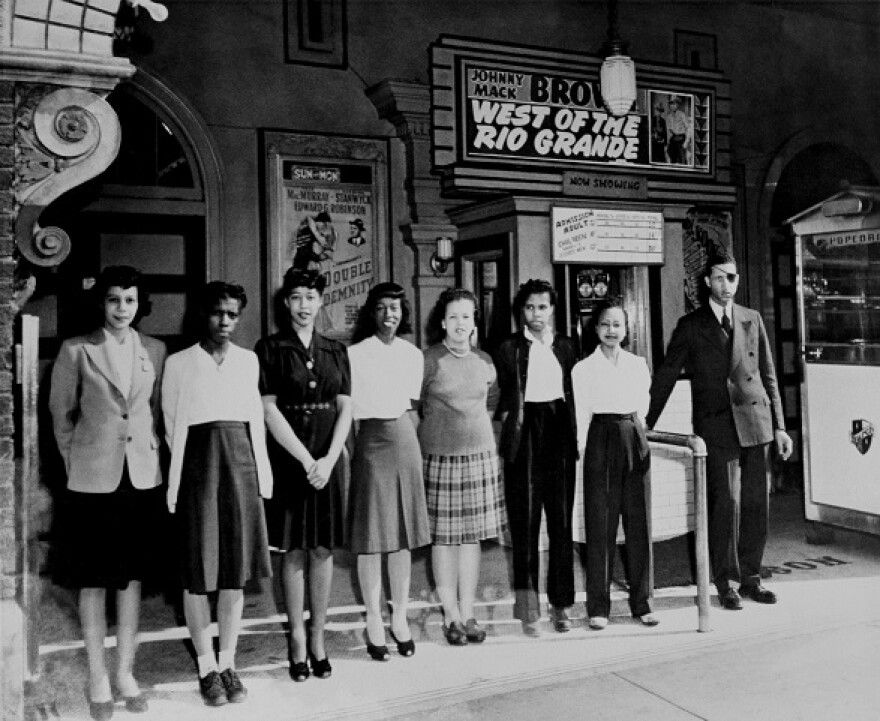
Credit Courtesy of the W.Va. State Archives, Bernidean Brown Collection
/
Workers outside the Ferguson Theater, 1939.
By “the triangle district”, Jones is referring to The Block, a neighborhood in downtown Charleston that once flourished with many black owned businesses. Today, most of what can be found in The Block is a post office, and an interstate exit. both of which were built right on top of this once vibrant and ethnically diverse community.
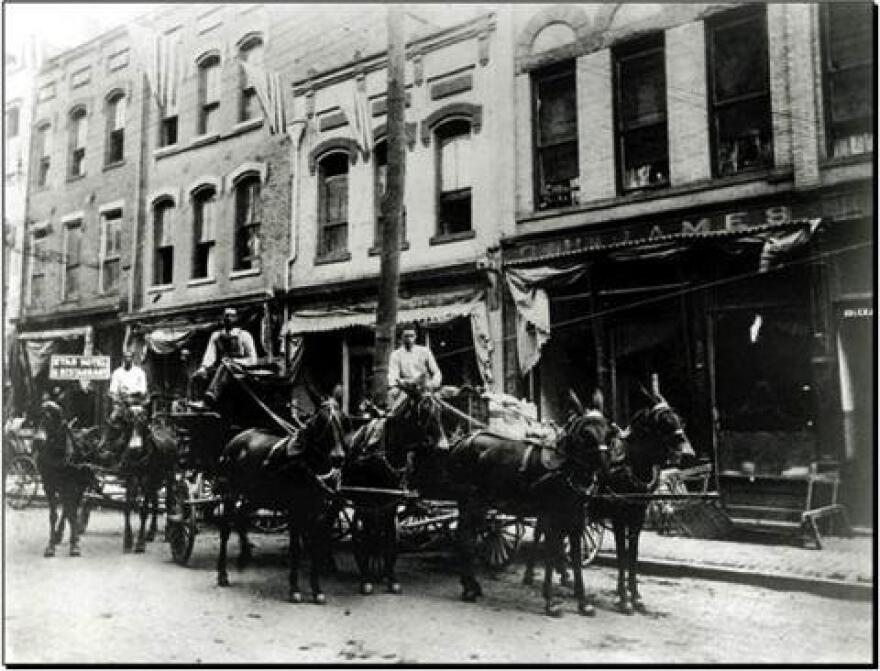
Credit Credit courtesy of C.H. James III
/
The first C.H. James Produce Company was located in downtown Charleston on Summers Street
Thursday evening, Jones will discuss his role in some of that community’s history. His lecture will take place at 6:00 P M in at the Culture Center Archives and History Museum on the Capitol Complex in Charleston.
Music in this story was by King Oliver’s Creole Jazz Band, playing “Just Gone”, courtesy of WFMU.
Add WVPB as a preferred source on Google to see more from our team
This October, the Adaptive Climbers Festival will gather in Kentucky’s Red River Gorge for the fifth year. In 2023, Folkways Reporter Emily Chen-Newton covered the event for Inside Appalachia. Since then, the Adaptive Climbers Festival has grown. Organizers say they’re nearly at capacity, with 300 climbers, caregivers and volunteers. Ahead of the festival, the campground has made accessibility improvements. Volunteers with the ACF have also been sprucing up the trails.