Alert (09/29/2026): Our Parkersburg TV transmitter is still undergoing maintenance and remains temporarily inoperative. We apologize for the inconvenience.
All our programming is available via our TV livestreams on our website and WVPB Passport. Thank you for your patience!
This week, Barbara Kingsolver’s new novel takes on issues of class and classical music. Also, kudzu warriors band together to fend off invasive plants and take back the land. And, it’s pawpaw season, but a new bug could be harming the trees.
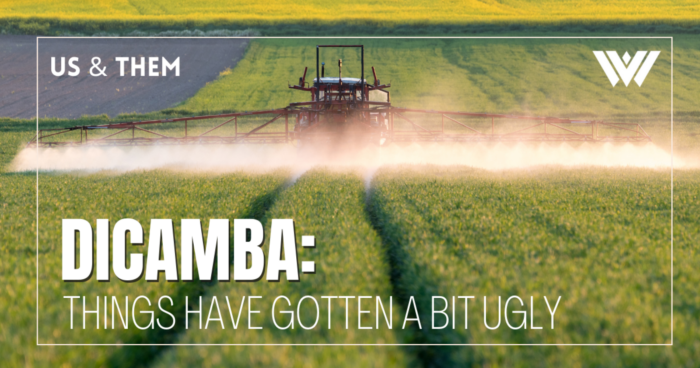
Use Of A Weedkilling Herbicide Has Stoked An ‘Us & Them’ Divide In Arkansas
Listen
Share this Article
There’s a weedkiller used across the country that’s created a new divide between farmers. In Arkansas, people who work the land are at odds over a herbicide called dicamba. In this episode of Us & Them, host Trey Kay and reporter Loretta Williams follow up on a story that’s gotten ugly over the past couple years.
A newer version of the herbicide is designed to give soybean and cotton farmers a way during the growing season to combat pigweed, a tenacious plant that can take over fields. However, there’s evidence that the chemical can evaporate from where it was sprayed and move to harm other plants. It’s become so controversial that some farmers and backyard gardeners are afraid to complain about crop or plant damage.
On the other side of the debate, farmers who want to use the herbicide have gone to court and challenged who gets to make the rules about pesticide use in the state. Rural farm communities are typically tight-knit and if one farmer has a problem with another, they meet at what is called the “turn row” to talk things out.
But that’s not what’s happening in Arkansas. The atmosphere has gotten just plain un-neighborly.
This episode of Us & Them is presented with support from the West Virginia Humanities Council and the CRC Foundation.
Subscribe to Us & Them on Apple Podcasts, NPR One, RadioPublic, Spotify, Stitcher and beyond.
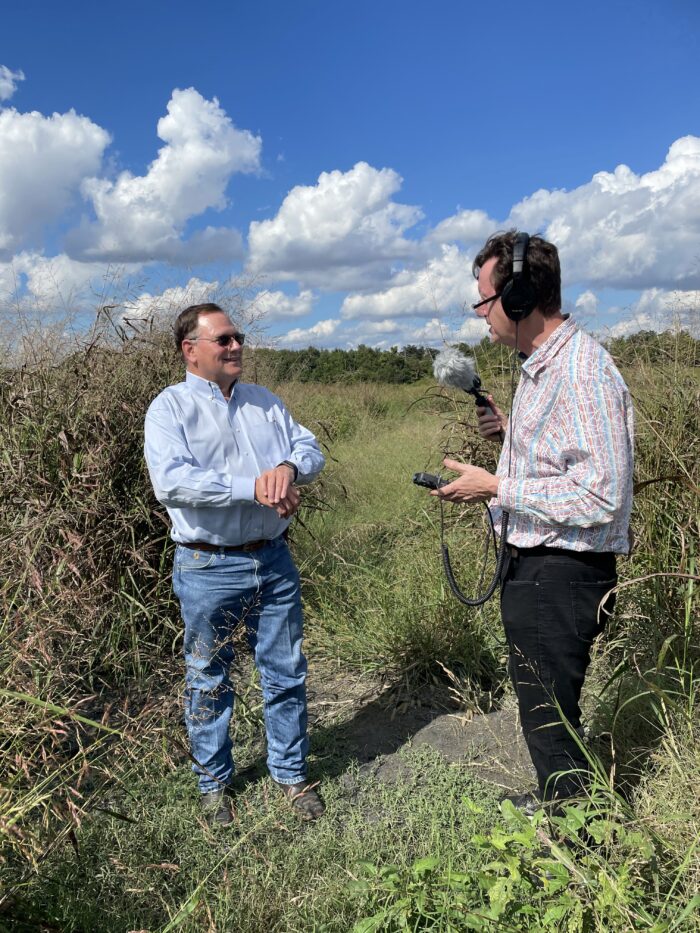
Terry Fuller, former member of the Arkansas Plant Board, shows Us & Them host Trey Kay the place where several of his hay bales were set ablaze not long after he made public statements calling to limit the use of a special formulation of dicamba during the growing season. Fuller also says that two of his tractors were vandalized which caused more than $60,000 worth of damage.
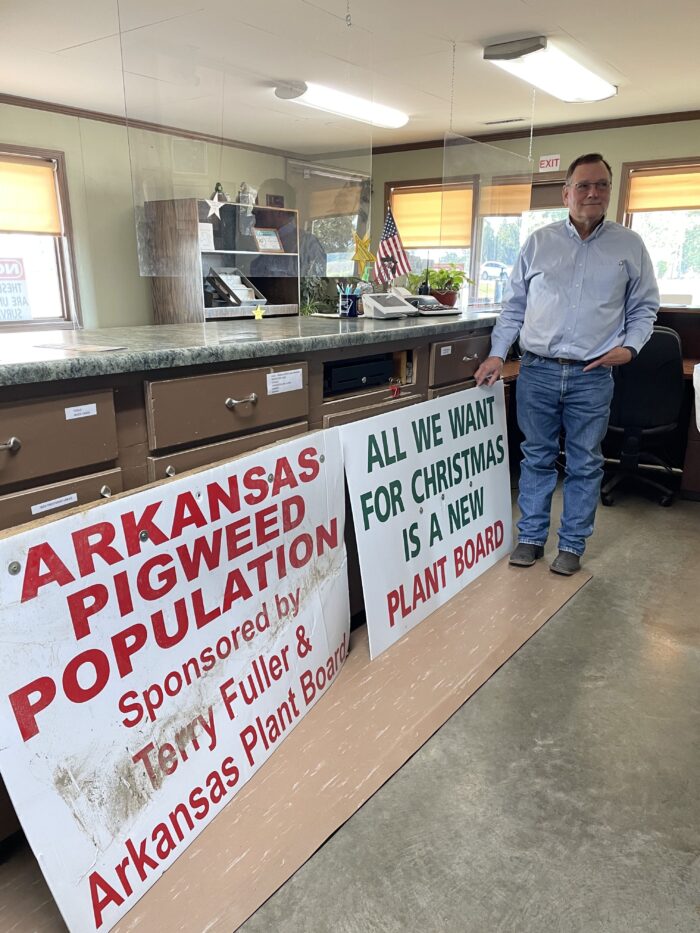
Photo Credit: Loretta WilliamsTerry Fuller, former member of the Arkansas Plant Board, displays a couple of signs that have repeatedly been posted alongside the roads near his house. One sign could be seen from his daughter’s bedroom window on Christmas Day.
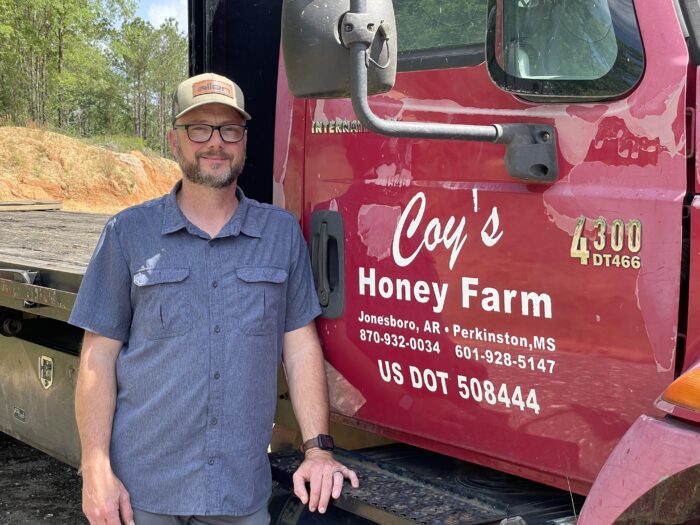
Photo Credit: Loretta WilliamsRichard Coy’s family has been in the honey producing business since the 1960s. Over the years, Coy’s Honey Farm became the largest commercial bee business in Arkansas. Coy claims dicamba has had an adverse effect on the plant life necessary for honey bees to thrive and produce honey. He says the conditions got so bad that he and his family had to move their business outside of Arkansas and into Mississippi.
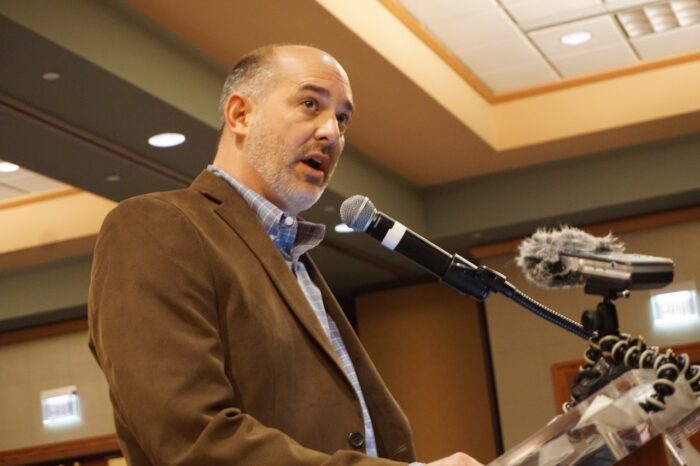
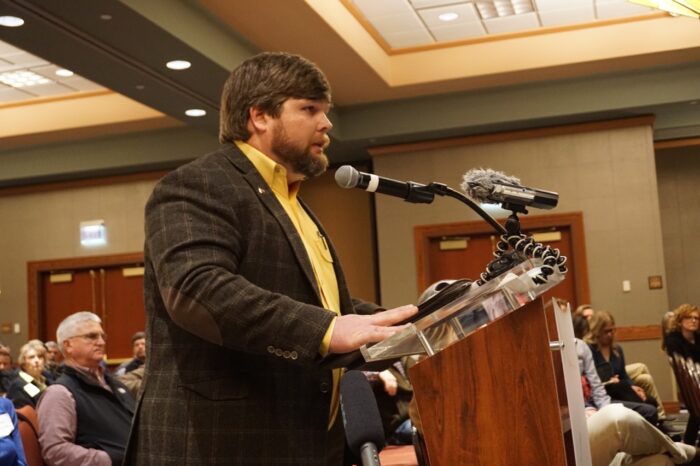
Photo Credit: Loretta WilliamsFranklin Fogelman, a soybean farmer in Arkansas, speaking at a special session of the Arkansas Plant Board in 2019. He believes farmers like him need to be able to use dicamba during the growing season to control weeds in their fields.
Photo Credit: Loretta WilliamsReed Storey, a soybean and cotton farmer, opposes the use of the newer formulations of dicamba during the growing season because he believes the herbicide can harm the crops of neighboring farmers. He sees this as “big agriculture against smaller growers.”
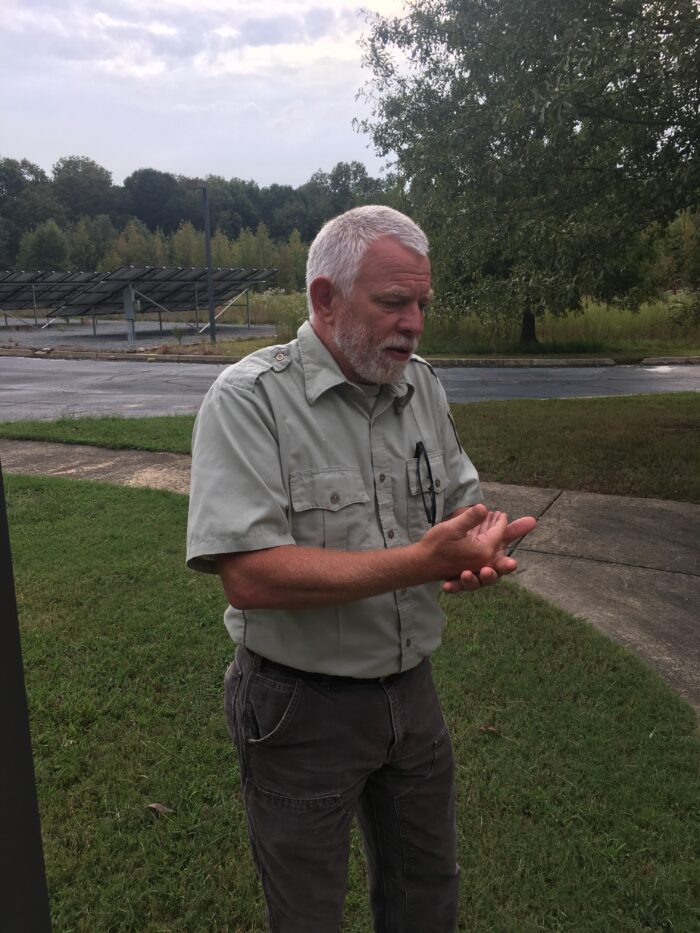
Photo Credit: Loretta WilliamsCharles “Bo” Sloan is the manager of the Dale Bumpers White River Wildlife Refuge in Arkansas. He says he’s learned that dicamba can “get up and walk.” By this he means that the weed killer has a tendency to volatilize when the weather gets above 85 degrees. When dicamba volatilizes, the chemical transforms from a liquid to a gas and can move to other locations in ways that are difficult, if not impossible, to track. Sloan has heard the complaints that dicamba might adversely impact agriculture, and is also worried that it might be harming the environment in some of the nation’s protected lands.
Photo Credit: Trey Kay/West Virginia Public Broadcasting
Add WVPB as a preferred source on Google to see more from our team
On this West Virginia Week, a mine operation in Kanawha County gets a WARN Notice, three Wyoming County Schools will remain closed until next week, and we learn the origins of the Flatwoods Monster.
This week, Barbara Kingsolver’s new novel takes on issues of class and classical music. Also, kudzu warriors band together to fend off invasive plants and take back the land. And, it’s pawpaw season, but a new bug could be harming the trees.
One hundred nine miners and operators at the Panther Creek Mine in Eskdale, in southeastern Kanawha County, are slated to lose their jobs just before Christmas.