Alert (09/10/2026): Our Parkersburg TV transmitter is undergoing maintenance for a few days and will not be operational. We apologize for any inconvenience.
All our programming is available via our TV livestreams on our website and WVPB Passport. Thank you for your patience!
This week, it’s not easy to find a place to play hockey in Appalachia, and if you happen to be young and ambitious, it can be harder. Also, rappers and musicians across West Virginia come together for a song challenge. And, farmers learn to turn unwanted sheep’s wool into home insulation.
Us & Them: Who Gets Stuck Behind Bars In West Virginia?
Listen
Share this Article
West Virginia’s state prisons and jails are overcrowded and understaffed.
Just over half of those who are incarcerated have not yet been found guilty of a crime, they’re in a cell because they can’t make their bail. Many of those people are poor and a disproportionate number are Black.
On this episode of Us & Them, host Trey Kay takes a look at what contributes to the racial disparities in our justice system. Black people make up about 3.5 percent of West Virginia’s population but 12 percent of the state’s incarcerated population. Why are people of color overrepresented in the criminal justice system?
Join Kay for a visit to arraignment court where the choices made early on play a critical role in how a case proceeds. Bail options are an important point where racial disparities can be on display and when a person’s freedom depends on their access to cash or property, some say Black West Virginians are disproportionately harmed.
This episode of Us & Them is presented with support from the West Virginia Humanities Council, the CRC Foundation and The Just Trust.
Subscribe to Us & Them on Apple Podcasts, NPR One, RadioPublic, Spotify, Stitcher and beyond.
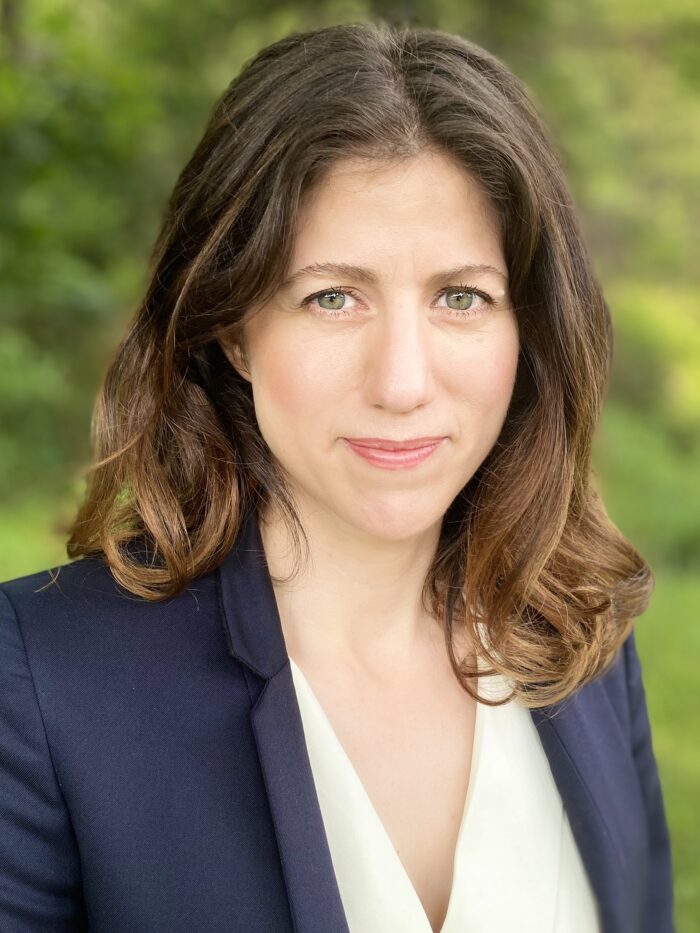
Since an arraignment is the gateway to any West Virginia jail, Us & Them host Trey Kay decided to take a field trip to Magistrate Court in Kanawha County, West Virginia to meet with Magistrate Traci Strickland.
“Somebody’s present in day court every day from 8 a.m. until midnight,” Strickland told Kay. “For individuals who find themselves needing help with the court system or individuals who have found themselves under arrest, who come in for their initial appearance.”
She says several hundred come through in a 24-hour period.
“They can come to day court to request a domestic violence petition, to request a personal safety order for people who are under arrest. They come in to post bonds. They come in with tickets. They come in for a variety of things.”
Credit: Trey Kay/West Virginia Public Broadcasting “Pretrial detention has been called the front door of mass incarceration,” says Sara Whitaker, who spent nine years as a public defender in Kanawha County, West Virginia.
“People who are jailed while they’re awaiting trial are more likely to be convicted, more likely to receive a jail or prison sentence upon conviction and more likely to receive a longer sentence than those who are not detained prior to trial,” Whitaker says. “In West Virginia, like in most places, whether you’re jailed prior to your trial or not depends on how much money or wealth you have.”
Whitaker is now a criminal legal policy analyst with the West Virginia Center on Budget and Policy. She says bail options are some of the first points in the system where racial disparities can be on display.
Credit: West Virginia Center on Budget and PolicyJust a few years ago, West Virginia legislators debated proposals to lessen the load on the state’s overpopulated jails. In 2020, one of those proposals became law with bipartisan support in both chambers.
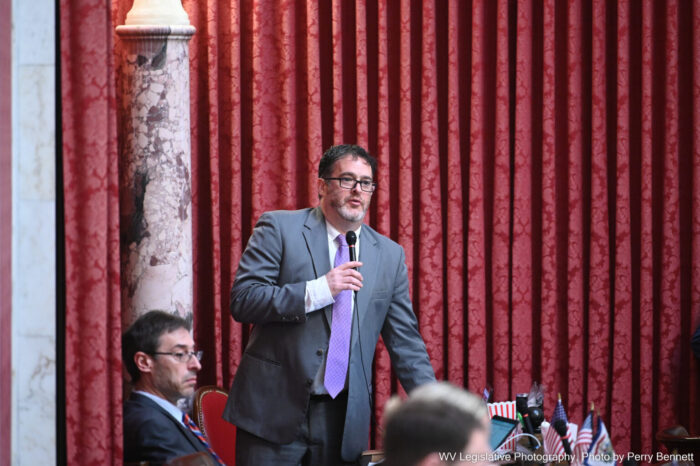
“I think it was mainly intended to cut down on the amount of pretrial misdemeanors that would be warehoused in a county jail simply because they don’t have money. But it didn’t do that,” says Del. Mike Pushkin, a Democrat who represents a large section of Charleston, with a district that’s about 30 percent Black.
He says the bill was intended to encourage magistrates to use more personal recognizance bonds. That’s when the bail is set at zero but a person has to promise to show up for their court date.
Credit: Perry Bennett/WV Legislative Photography
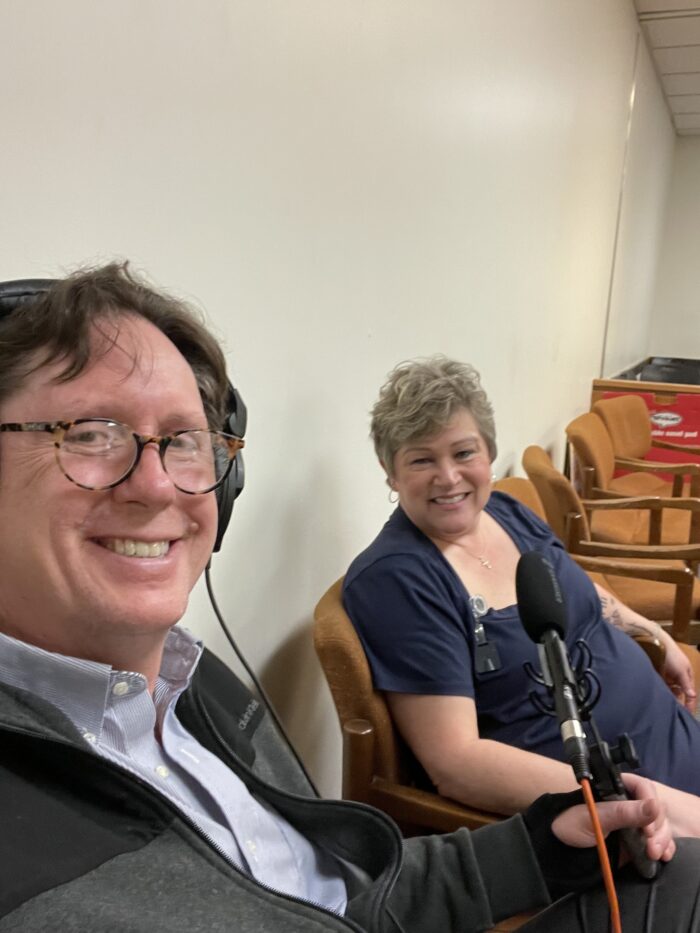
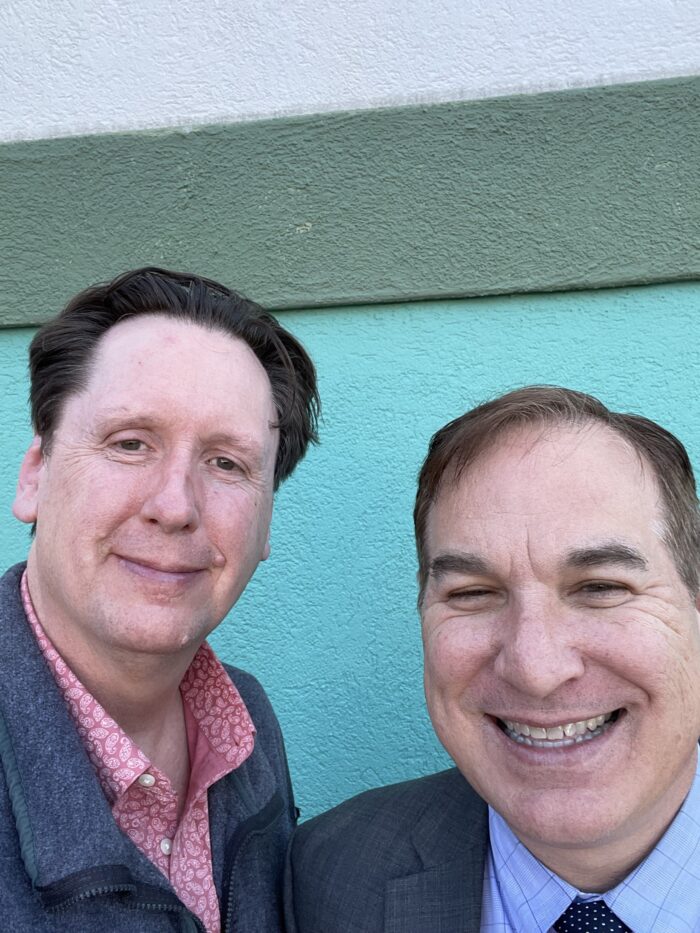
Back in February, 2020, when the West Virginia Legislature was debating a number of criminal justice reform bills, this radio ad from Mike Stuart was airing across the state. Stuart was then a U.S. Attorney who says he felt compelled to run what he calls public service announcements to criticize the bail reform measure. Today, Mike Stuart is a Republican state senator representing West Virginia’s 7th district. It’s a rural part of the state, and 96 percent white. He recently announced his candidacy for attorney general. Stuart says he hasn’t seen enough data on the bail reform’s effectiveness, but he’s wary of what he calls a “revolving door” approach to criminal justice.Mike Stuart is a Republican state senator representing West Virginia’s 7th district. He’s pictured here with Us & Them host Trey Kay.
“My solution to prison overcrowding. Build another prison,” Stuart explained to Kay. “If you’ve committed a crime that’s worthy of incarceration, you should be serving your time. I believe in second chances and redemption and I believe you get there. Part of the criminal justice system is punishment. It’s punishment. It’s not all about rehabilitation. There’s a proper role for rehabilitation. But punishment is part of the role, too.”
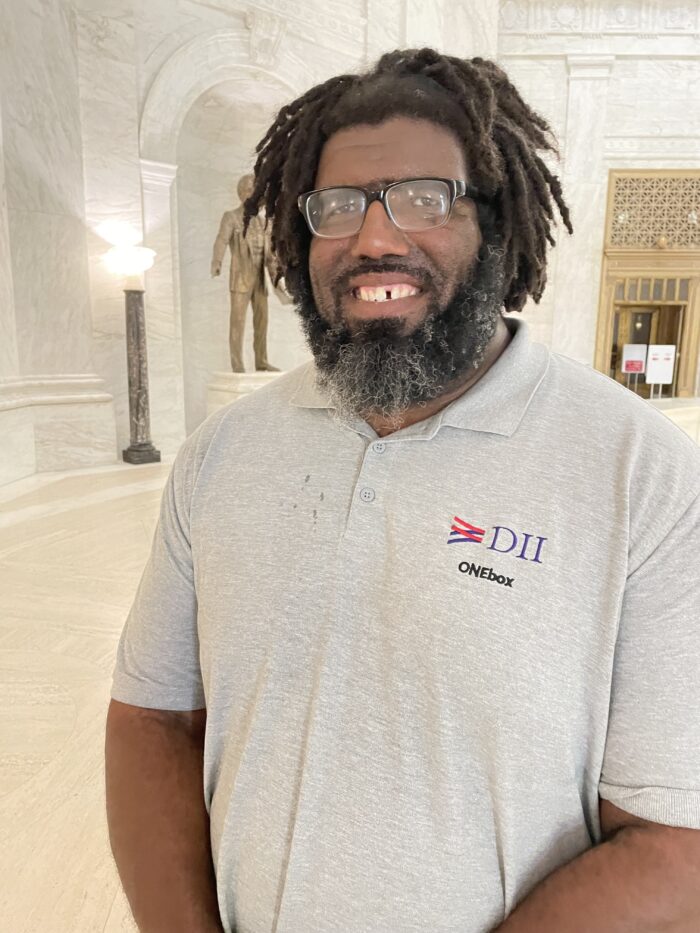
Credit: Trey Kay/West Virginia Public BroadcastingKenny Matthews is quite familiar with West Virginia’s legal system.
He’s originally from Chicago, but back in 2011, he was arrested on drug charges and spent several years incarcerated. About 18 months of his time behind bars was in pre-trial detention. He was there because he was unable to make bail. He had his pretrial hearings and then waited for his trial in West Virginia’s Northern Central Regional Jail.
These days, Matthews works with the American Friends Service Committee as a lobbyist and spends multiple hours during the state’s legislative session speaking to delegates and senators about criminal justice, economic justice and recovery related issues.
“This past legislative session, I almost lived up here and just was talking to senators, delegates, other organizations that had lobbying efforts here at the capitol and were able to get some good bills passed. Some not so good bills killed, and also were able to have some amendments to some bad bills to make them better.”
One of those bills was House Bill 633, on capias reform. Matthews worked with several legislators, including Sen. Mike Stuart.
Credit: Trey Kay/West Virginia Public Broadcasting
Add WVPB as a preferred source on Google to see more from our team
On this West Virginia Week, a Lincoln County student asks the state supreme court to step in, a state of emergency is declared in several counties, and a new initiative honors Dolly Parton.
This week, it’s not easy to find a place to play hockey in Appalachia, and if you happen to be young and ambitious, it can be harder. Also, rappers and musicians across West Virginia come together for a song challenge. And, farmers learn to turn unwanted sheep’s wool into home insulation.
Hockey is still finding fans and players in central Appalachia, but just because it’s an emerging sport in this region doesn’t mean we don’t have hockey heroes. Inside Appalachia’s Abby Neff met with Gwyneth Phillips, a goalie for the gold-medal winning U.S. Olympics Women’s team, to learn more.
In the runup to the midterm elections, it’s time for a new Us & Them dinner party. Host Trey Kay brings West Virginians together from a range of political perspectives to share some family dishes, as well as their thoughts. This time around, the conversation included some new topics as well as some of the familiar issues that divide us. We listen to an excerpt.