Alert (09/29/2026): Our Parkersburg TV transmitter is still undergoing maintenance and remains temporarily inoperative. We apologize for the inconvenience.
All our programming is available via our TV livestreams on our website and WVPB Passport. Thank you for your patience!
This week, Barbara Kingsolver’s new novel takes on issues of class and classical music. Also, kudzu warriors band together to fend off invasive plants and take back the land. And, it’s pawpaw season, but a new bug could be harming the trees.
Us & Them Encore: Black West Virginians With Substance Use Disorder Face Unique Challenges
Listen
Share this Article
This year, West Virginia lawmakers made significant changes to drug and alcohol treatment programs funded by Medicaid, which many people use. The new legislation ties Medicaid payments to patient outcomes rather than the number of patients served.
The Mountain State has the nation’s highest overdose rates, and overdose death rates among Black residents exceed those of any other group. In this episode of Us & Them, host Trey Kay learns how Medicaid funding supports organizations working in recovery and what that work looks like on the ground.
This episode of Us & Them, recently honored with a Regional Edward R. Murrow Award for Excellence in Diversity, Equity and Inclusion, is presented with support from The Greater Kanawha Valley Foundation.
Subscribe to Us & Them on Apple Podcasts, YouTube Music, Spotify, the NPR app and wherever you get your podcasts.
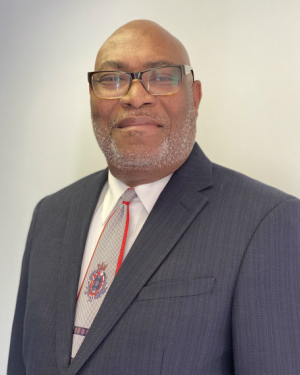
Reverend James Patterson has led the Partnership of African American Churches (PAAC) for the past two decades as its founder and president/CEO. PAAC is a nonprofit, collaborative, faith-based community development corporation based in Charleston, WV, that also provides health care.
Photo Credit: PAAC
“Every time we had discussions, I was doing focus group research. We started talking about kids, the challenges they face, and other issues in our communities. Everybody kept saying, ‘the real problem is them drugs’ — that’s exactly how they said it. So, we decided to do something about it. We began by implementing prevention programs and training community health workers, and then we trained them in peer support as recovery coaches.”
Many Black West Virginians have had uncomfortable experiences when visiting the doctor — experiences that can discourage people of color from seeking medical care, mental health treatment or help for drug addiction. Dr. Wendy Lewis, clinical director for the Partnership of African American Churches and a researcher of this phenomenon, explains the impact of these encounters.
Photo Credit: PAAC
“Every day, people face subtle but constant annoyances because of their color — especially Black people. They are insulted, invalidated and sometimes physically, verbally and mentally assaulted just for being Black. I see this as a double malady that people must overcome daily, particularly when they’re also dealing with addiction and racism. The stress they endure is something others rarely experience.
We are a licensed behavioral health center that provides treatment for substance use disorder. We offer a residential treatment facility, medication-assisted treatment and multiple sober living facilities.”
— Dr. Wendy Lewis, clinical director for the Partnership of African American Churches, Charleston, WV
Kevin Watkins received training as a peer support coach from the Partnership of African American Churches. A native of Charleston’s Westside — a community with a high concentration of Black residents — Watkins describes the area as “the valley of the shadow of death” because many people he knew died too young. Watkins struggled with substance use disorder, starting with alcohol at a young age and later turning to marijuana, pills and, eventually, speed, which he injected.
Photo Credit: PAAC
“I had a teacher who was trying to help me, to show me the right way. I was one of those kids with ADD—I could never sit still—so I spent most of my time in the office. I don’t think he understood the full extent of my problem, or he wouldn’t have paddled me as he did. I knew I had issues when I tried to break into his house.
Looking back, I wonder why I did it all. Part of it was the divorce—my dad was never around, having started another family—so I never had the support system other kids had. I felt like I fell through the cracks in Orchard Manor. Sometimes I’d wake up in the old county jail, not even knowing why I was there, beat up and bleeding. I knew I had a serious situation on my hands.”
— Kevin Watkins, peer support coach trained by the Partnership of African American Churches
Robert Hansen is retired after nearly 50 years in West Virginia’s behavioral health field, including a two-year stint as director of the state’s Office of Drug Control Policy — known as the drug czar.
Photo Credit: The Charleston Gazette-Mail
“Residential treatment programs in West Virginia have grown dramatically. Back in 2016, 2017 and 2018, the state had about 150 to 200 treatment beds. Today, there are more than 1,700. Providers are expanding services on the theory that Medicaid funding will continue.
The bulk of Medicaid money comes from the federal government — with Congress and the president’s approval — while West Virginia must supply matching dollars. The Partnership of African American Churches is funded similarly; as they apply for grants from the Bureau of Behavioral Health or the federal government, they have opportunities aligned with their expertise. Otherwise, their core funding is no different from any other addiction treatment provider.”
— Robert Hansen, former director of West Virginia’s Office of Drug Control Policy.
Add WVPB as a preferred source on Google to see more from our team
On this West Virginia Week, a mine operation in Kanawha County gets a WARN Notice, three Wyoming County Schools will remain closed until next week, and we learn the origins of the Flatwoods Monster.
This week, Barbara Kingsolver’s new novel takes on issues of class and classical music. Also, kudzu warriors band together to fend off invasive plants and take back the land. And, it’s pawpaw season, but a new bug could be harming the trees.
Each NEST kit includes more than 20 newborn and postpartum essentials, including diapers, wipes, an infant thermometer, postpartum recovery and breastfeeding supplies, and a blood-pressure monitor. Families also receive information on postpartum health, infant safety and care, feeding and nutrition, and programs and resources available to support parents and their babies.
Barbara Kingsolver is one of Appalachia’s foremost writers. She’s written a string of bestsellers, like "The Poisonwood Bible" and "Demon Copperhead," which won her the Pulitzer Prize. Inside Appalachia’s Mason Adams met Kingsolver at her home outside Abingdon, Virginia, to talk art, writing and her latest book, "Partita." We listen to an excerpt from that interview.