Alert (09/10/2026): Our Parkersburg TV transmitter is undergoing maintenance for a few days and will not be operational. We apologize for any inconvenience.
All our programming is available via our TV livestreams on our website and WVPB Passport. Thank you for your patience!
This week, one thing about Appalachians: we can get competitive. We’re proud of our local food. Love a good hunt. And enjoy competition with friends. We learn the rules and celebrate our victories. You'll hear these stories and more this week, Inside Appalachia.
In the aftermath of a disaster, people search for assistance and answers.
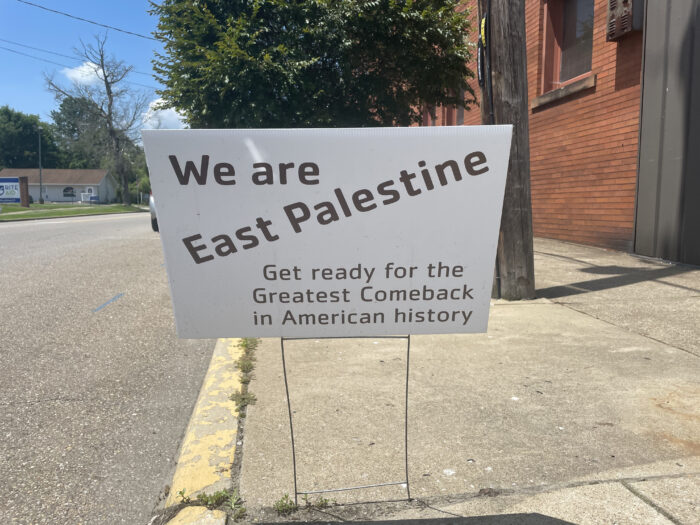
Since a rural Ohio train derailment sent toxic material into the air, soil and water earlier this year, people in East Palestine have needed help. Some look to the government for that support, while others aren’t sure who to trust.
In this episode of Us & Them, host Trey Kay hears from residents who face daunting challenges. Some say government agencies are doing their best at ongoing cleanup, while others say delays and inconsistent information leave them uncertain about their safety and unclear about whether they can go home.
This episode of Us & Them is presented with support from the West Virginia Humanities Council and CRC Foundation.
Subscribe to Us & Them on Apple Podcasts, NPR One, RadioPublic, Spotify, Stitcher and beyond.
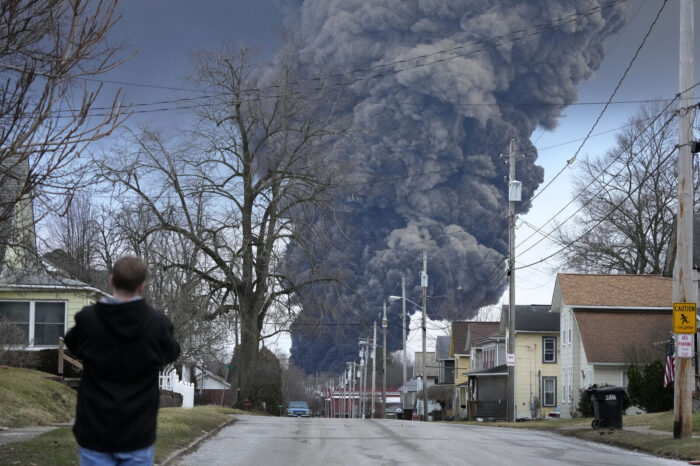
An East Palestine, Ohio resident watches a black plume rise over his town, in February 2023, after a controlled detonation of derailed Norfolk Southern tank cars filled with vinyl chloride.
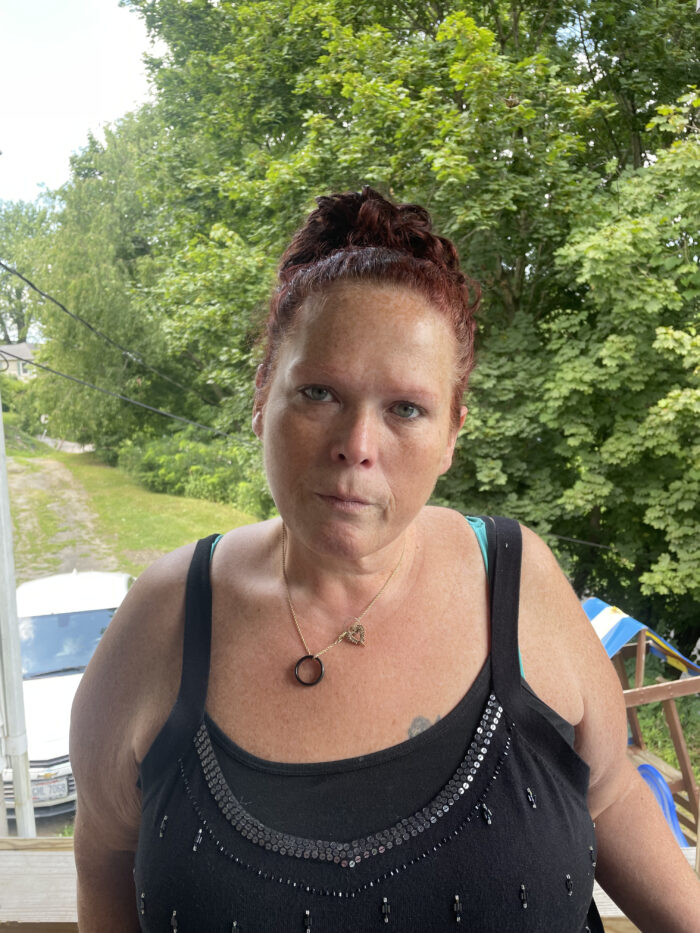
Credit: NPRUntil the Norfolk Southern derailment, Jami Wallace was an East Palestine resident. She lived just over a mile from the accident site. Now, she’s moved with her family to East Liverpool — about 30 minutes away. She has a law degree and a background in Political Science and Public Administration. Now, as president of a response group for her community — the Unity Council — she finds herself a de facto spokesperson for a town still in crisis.
Credit: Trey Kay/West Virginia Public Broadcasting
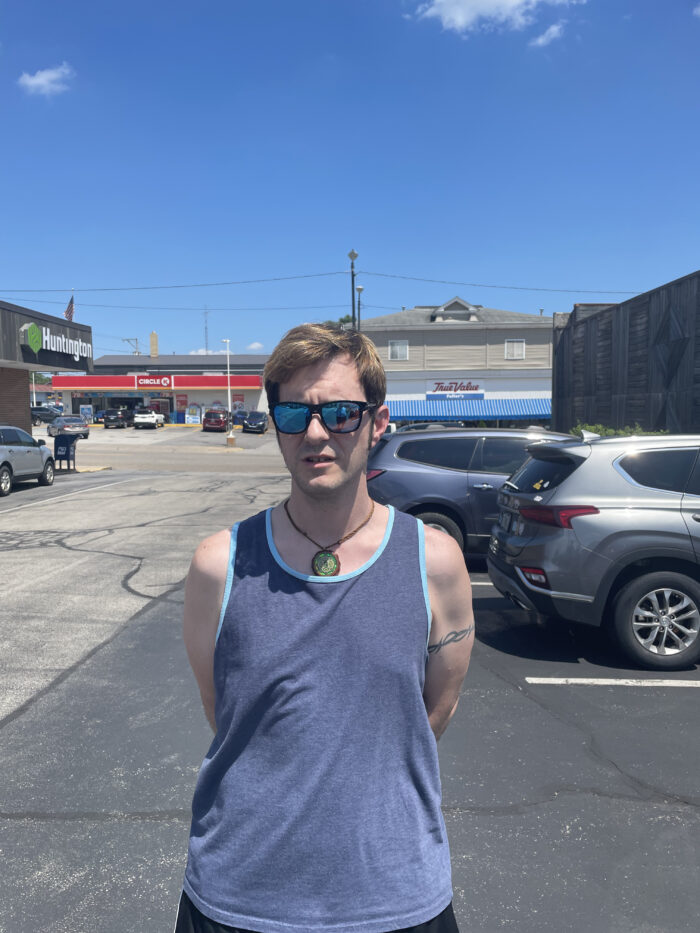
Credit: Trey Kay/West Virginia Public BroadcastingMacklain Hersman works in IT and says he lives within the official disaster area. He has history in East Palestine. In fact, his house has been in the family for three generations.
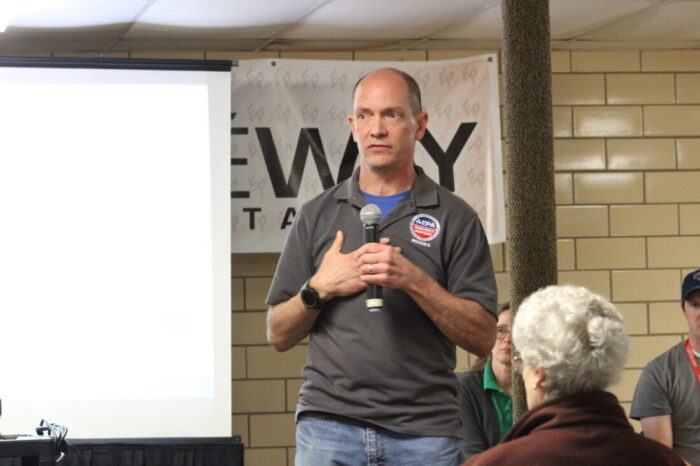
Credit: Trey Kay/West Virginia Public BroadcastingMark Durno, an EPA response coordinator, takes questions from concerned East Palestine residents.
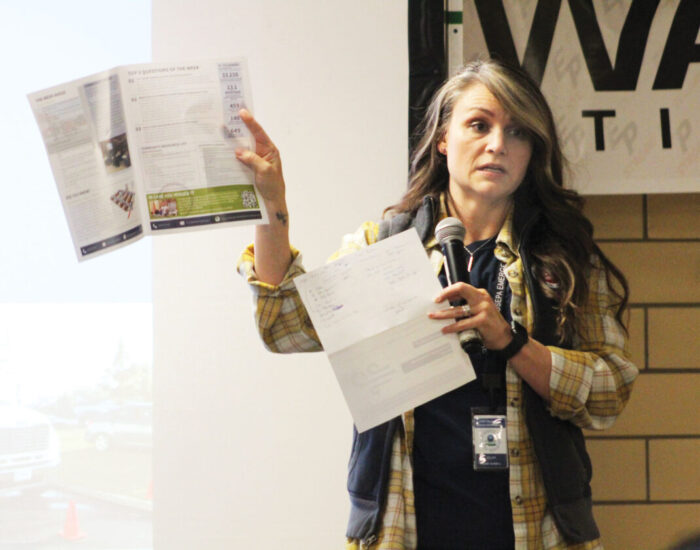
Courtesy Stephanie ElverdEPA Community Involvement Coordinator Diane Russell discusses the air monitoring data that the EPA has collected for the East Palestine area.
Courtesy Stephanie Elverd“East Palestine is quite a conservative area, but what I saw whenever things happened was I saw people who were on the right, who were on the left, who were somewhere in the middle, and some people who didn’t care at all, come together to demand answers and demand justice. Personally, I was proud of that, and that’s part of the reason why I’m here…that beauty in coming together, that solidarity, is what everyone should have all the time.” — Timothea Deeter, East Palestine resident
Credit: Trey Kay/West Virginia Public Broadcasting
Add WVPB as a preferred source on Google to see more from our team
In southern Ohio, there’s a musical tradition that goes back nearly 1,000 years and 4,000 miles. For Inside Appalachia, Folkways Reporter Capri Cafaro has this story.
The student-led team that produces the news for WMUL radio at Marshall University learned in August that they won a collegiate Edward R. Murrow award for Outstanding Newscast for the second year in a row.