Alert (March 14, 2026): Due to recent high winds, our radio/TV tower in Bethany is not operational. Our engineers are working to resolve the issue. Alert (March 11, 2026): Our TV translator in Flatwoods is experiencing technical issues. Our engineers are troubleshooting the problem and expect it to be down for a couple days.
Thank you for your patience.
This week, a new novel about two girls and an astronomy textbook draws inspiration from one of the quietest places in West Virginia. Also, author Annette Saunooke Clapsaddle talks about growing up as part of the Eastern Band of Cherokee Indians. And, a Kentucky tattoo artist practices traditional tattooing and traditional music. He says they’re not too different.
We continue to learn more about the way childhood trauma can affect our physical and psychological health, and the result is creating a social movement. More than two decades ago, researchers first came up with a way to assess the impact of childhood neglect, abuse and family dysfunction. Nearly half the kids under 18 in the U.S. have had an adverse experience or serious trauma — also known as ACEs, which stands for adverse childhood experiences. Now, advocates are getting traction with “trauma-aware” campaigns and coalitions.
Many institutions are investing in trauma awareness, training and screening. The original study, published in 1998, concluded that early traumas contribute to poor health outcomes later in life. That research got almost no attention when it was first published, however today its findings are considered ground-breaking. But some say using such a rubric to assess a person’s experience won’t work for everyone and may simply label and limit their future potential.
If you are anywhere else in the world and would like to know more about ACEs, reach out to PACEs Connection.
This episode of Us & Them is presented with support from the Claude Worthington Benedum Foundation and CRC Foundation.
This program is made possible by funding from the National Endowment for the Humanities and the federal American Rescue Plan Act of 2021 through the West Virginia Humanities Council. Any views, findings, conclusions or recommendations do not necessarily represent those of the West Virginia Humanities Council or the National Endowment for the Humanities.
Subscribe to Us & Them on Apple Podcasts, NPR One, RadioPublic, Spotify, Stitcher and beyond.
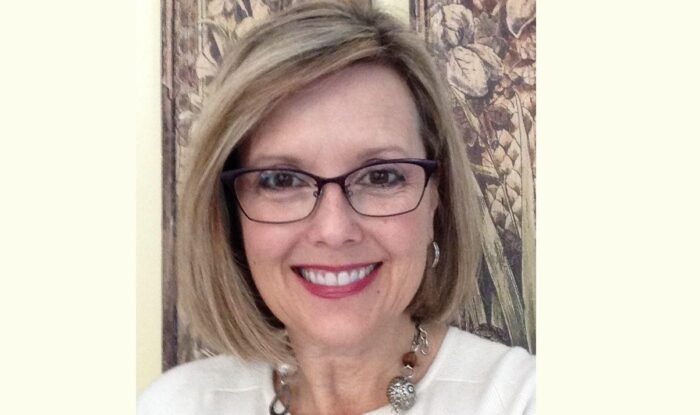
Kathy Szafran, a licensed professional counselor in West Virginia for 30 years, works primarily with high-risk foster care children who have lived through significant trauma.
“Kids need to know that someone loves them. They need to have hope. Something as simple as hope that it’s going to be okay, is critical. Imagine a life without it. Imagine if that child didn’t have grandma who rescued her. What if she stayed in the foster care system and was bounced around, and had no one to connect to? We have a lot of children in the system like that.”
— Kathy Szafran
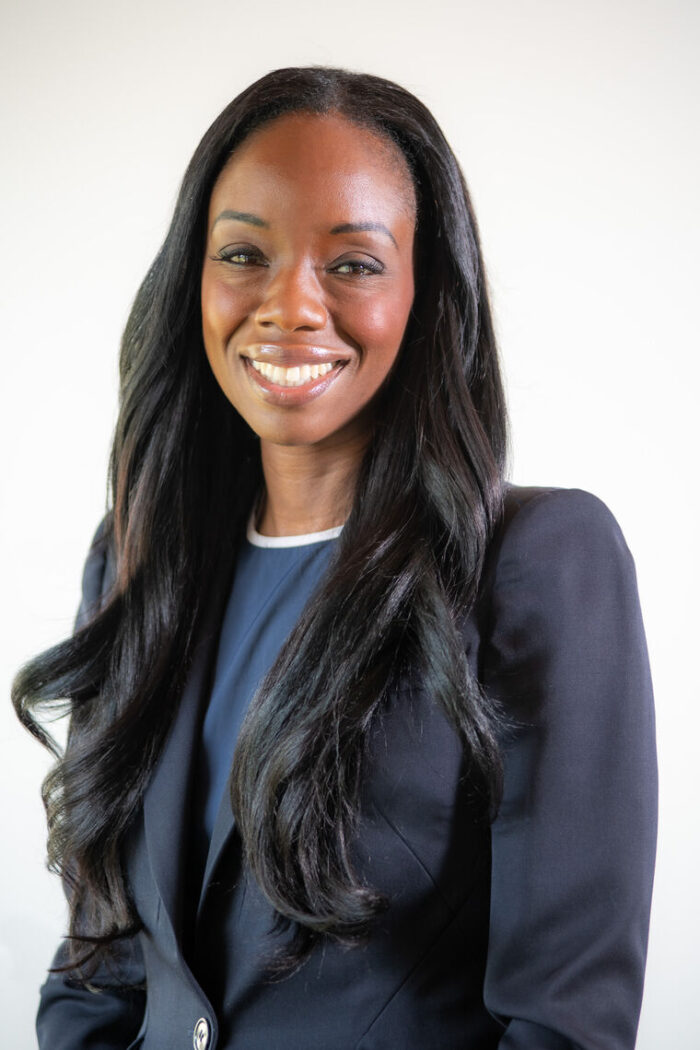
Photo Credit: Charleston Gazette-MailPediatrician Dr. Nadine Burke Harris — the former Surgeon General of California — gave an influential TED Talk nearly a decade ago on the Adverse Childhood Experiences Study. In that presentation, she described the link between the body, brain and toxic stress.
“Imagine you’re walking in the forest and you see a bear. Immediately, your hypothalamus sends a signal to your pituitary, which sends a signal to your adrenal gland, that says, ‘Release stress hormones! Adrenaline! Cortisol!’ And so your heart starts to pound. Your pupils dilate, your airways open up. And you are ready to either fight that bear or run from the bear. And that is wonderful if you’re in a forest, and there’s a bear. But the problem is what happens when the bear comes home every night and this system is activated over and over and over again?”
— Dr. Nadine Burke Harris
Photo Credit: Paul & Daisy Soros Fellowship for New Americans
(Click here to view Dr. Nadine Burke Harris’ TED Talk: “How childhood trauma affects health across a lifetime.”)
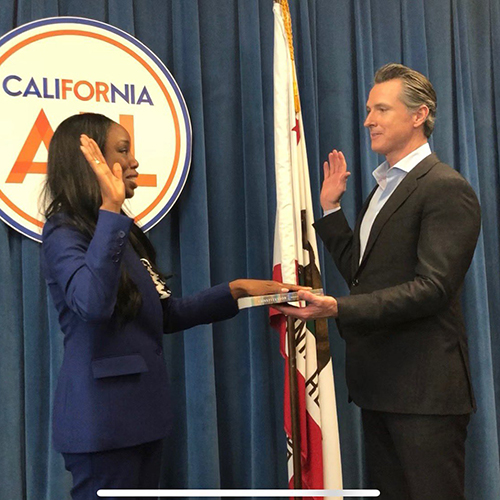
Dr. Nadine Burke Harris is sworn in by California Gov. Gavin Newsom as the state’s first surgeon general.
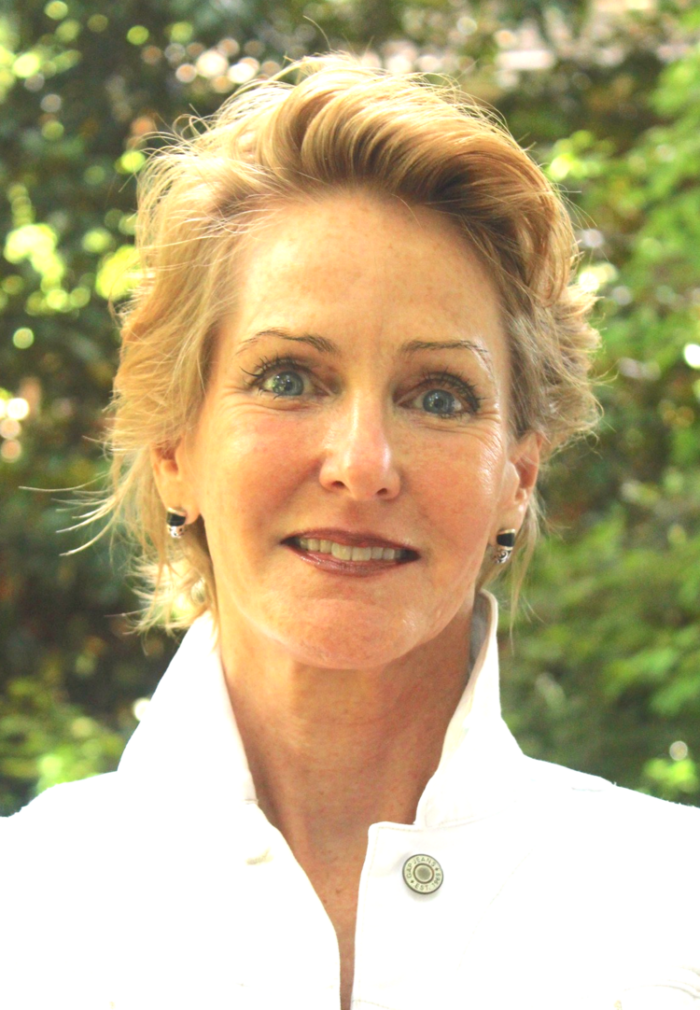
Photo Credit: Nadine Burke HarrisCarey Sipp, the southeastern regional community facilitator for ACEs Connection, is author of The TurnAround Mom, about breaking cycles of addiction and abuse.
“It’s clear, it’s there. A child whose brain is steeped in cortisol and adrenaline is going to have structural and functional changes that are going to predispose that child to having those health issues. At the same time, though, if we can buffer with more positive childhood experiences, we may be able to turn that around. That’s the hope. And that’s the proof. We’ve got proof – you can turn this around.”
— Carey Sipp
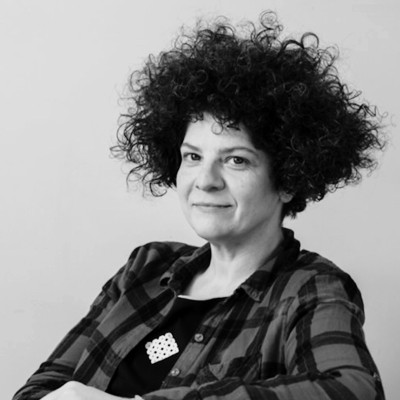
Photo Credit: Whitney Jones/Jean Exum PhotographyMany advocates, including Nadine Burke Harris, want to see ACE screenings become commonplace at schools, in the doctor’s office and in other settings across the country. Screening for adversity may seem like a good idea — after all, we screen for developmental disabilities and smoking and drug use, which can lead to early interventions. But, education scholar Alex Winninghoff questions the value of widespread screening. She believes it’s inappropriate, maybe even damaging to screen individuals with regard to childhood adversity.
“So if we’re thinking about the use, for instance of an ACE score, in relation to health care as a potential data point for assigning risks by insurance companies … if we think about the ways that the ACE score could be interpreted by professionals, including educators, social workers, police… We can see that number, as a kind of reductive, summative representation of someone’s previous experience, also projects a future story that can be dismal and devastating. So the use of the ACE score as a label to imagine potential risk and to give us information about what that person’s likely outcomes are going to be in terms of, you know, education and social functioning and health? There are a number of ways that the interpretation of a score could be deeply problematic and consequential at the system’s level.”
— Alex Winninghoff
Photo Credit: Alex Winninghoff
(Click here to read Winninghoff’s scholarly paper: “The road ahead: Moving beyond ACEs in transformative SEL.”)
Add WVPB as a preferred source on Google to see more from our team
The 2026 state Legislative session stretched all the way to midnight Saturday night. WVPB reporters Randy Yohe, Chris Schulz and Maria Young were in the rotunda as the session concluded and brings us this recap.
On this West Virginia Week, a group sues over SNAP waivers, the coal forecast for next year is gloomy, and we learn how online gambling is affecting college students.
On The Legislature This Week, our legislative reporters discuss bills nearing the finish line and our student reporter talks to first responders about a new safety bill.
Host and reporter Randy Yohe speaks with Senior Reporter Chris Schulz and Assistant News Director Maria Young. They discuss some of the biggest bills they covered during the 2026 regular session of the West Virginia Legislature — and what issues did not come up. They also look ahead to the legislature's final day, Saturday, March 14.