This week, Hurricane Helene devastated central Appalachia and disrupted the lives of people in recovery. Also, in West Virginia, fur trapping continues, even in the 21st century. And, baseball is America’s past-time. One league is making the game more inclusive.
Home » WVPB Podcasts » Inside Appalachia: W.Va. Mine Wars, Red-Neck Folklore, & More
Published
Inside Appalachia: W.Va. Mine Wars, Red-Neck Folklore, & More
Listen
Share this Article
Amid news of more mine lay-offs, one former coal town has built a labor museum to attract visitors. Driving down to the new West Virginia Mine Wars Museum , you really feel the fading towns and cities, sliding into the backdrop of the mountains. It’s surreal. Many places in Appalachia are. It’s sad to many people who remember the thriving economy here when coal was booming. Wilma Lee Steele says she hopes the museum in Matewan will become a place where people throughout the coalfields can come to reclaim their identity. “I think that we have a lot to say, and I think we’re gonna say it. We’re gonna tell our history, and we’re gonna come together as a community.”
Redneck is a name that often comes with a negative meaning. The word sometimes is used to describe poor people who are hotheaded, eager to pick a fight and cause trouble. There are many different stories from folklore about the origin of this term. But perhaps the best and most dramatic of these tales goes like this: The term “Red-Neck” was first used in 1921 West Virginia, when Logan County Sheriff Don Chafin referred to striking miners during the Mine Wars. Legend has it that he gave the order to “Kill all the rednecks you can.”
What’s in a Name?
Here in Appalachia there are plenty of folks that embrace the term redneck. It’s common in parts of central Appalachia to see a vehicle with the word across the windshield. But others haven’t always embraced the term.
Some folks say the term redneck comes from people who got a little bit too much sun and had the tan lines to prove it. Others say the word was a term for southern white field workers, or even a label for Native Americans. This week, we’ll hear one story behind the word, told by a storyteller named Bob Day.
History professor Chuck Keeney says there are other stereotypes about Appalachians that may have started because of the mine wars. “The media and the powers that be explained away these violent incidents by saying that this violence was the result of a backward, isolated, feuding, moonshine driven mountain culture.” And these stereotypes continue to this day.
Former Mining Town Hopes to Turn Their Town Around…Through Labor History
This past weekend, over 500 people visited Matewan, W.Va. to catch a glimpse of a brand new museum, called the West Virginia Mine Wars Museum. The museum memorializes a dark and bloody time in West Virginia’s labor history. In the early 1900s, coal miners in southern West Virginia were fighting for the right to organize-and to stop the practice of using mine guards. They also wanted an alternative to shopping at coal company stores and being paid in scrip, instead of money.
Our producer Roxy Todd brings us this report from the grand opening of the new West Virginia Mine Wars Museum.
The West Virginia Mine Wars Museum is open on Saturdays and Sundays 10 a.m.- 4 p.m. Contact the museum for more information. By the way, there is a restaurant in Matewan called Wingos that serves great pulled pork sandwiches. And there is a little bed and breakfast in downtown Matewan that sleeps up to 30 people. It is a very small and out of the way place, but if you want to travel somewhere that’s deep in the heart of Appalachia, Matewan might be just what you’re looking for.
W.Va. Labor Strike from the 1980s
Credit wmmt.org
/
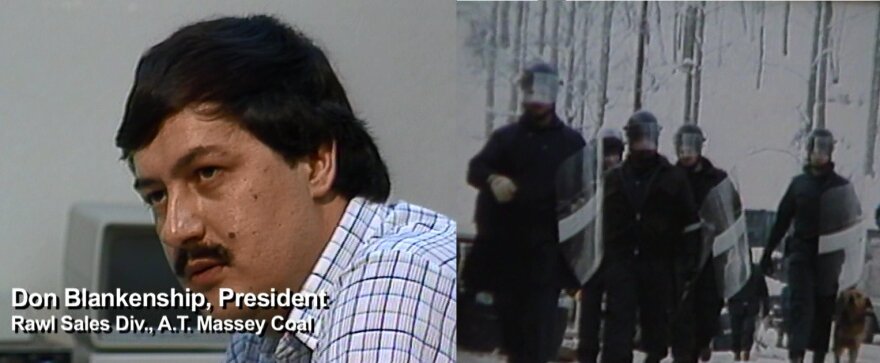
In 1984-1985, the United Mine Workers of America organized a strike in 1984 against A.T. Massey. The strike at Blackberry Creek first put Don Blankenship’s name in the national news, and it also helped fuel his rise up the chain of company command. WMMT’s Parker Hobson sent us an excerpt from the film, Mine War on Blackberry Creek, by Anne Lewis.
Union Reign On Kentucky Coal Comes To An End
Next we’ll head over to Kentucky, where the state’s few remaining union miners were laid off this past New Year’s Eve when Patriot Coal’s Highland Mine in Western Kentucky shut down, the United Mine Workers of America confirmed. With help from of Whitney Jones of WKMS, Erica Peterson of WFPL in Louisville, reports that Kentucky doesn’t have any more working union coal miners.
Photographer Describes Capturing “Vanishing Points” In Appalachia
Credit Michael Sherwin
/
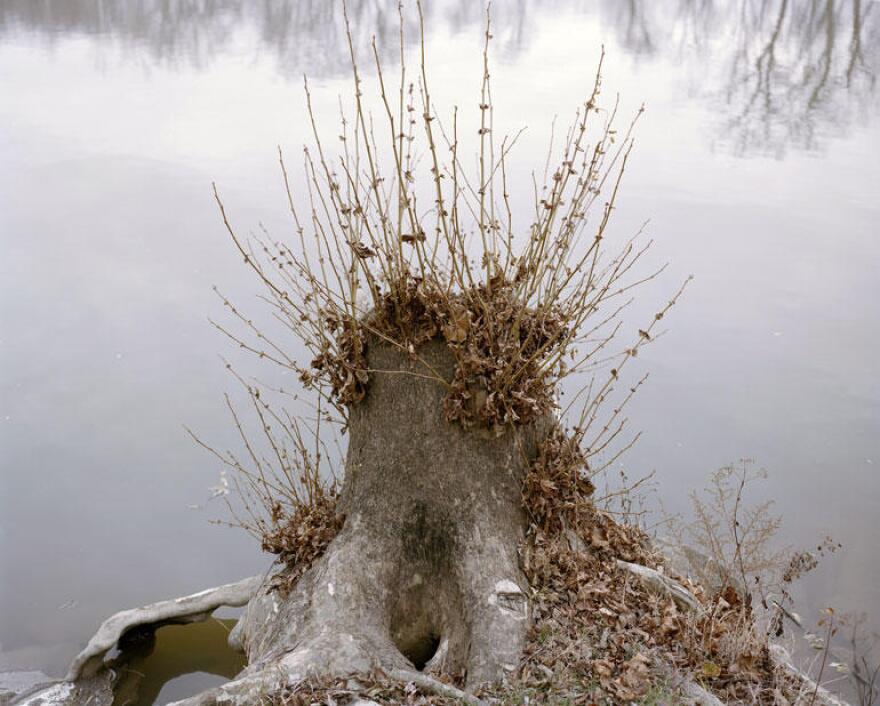
Stump, Great Miami River, Hamilton, OH – from “Vanishing Points” 2013-14 series
Time marches relentlessly on. Many philosophers say the only guarantee in this life is change. In fact, you don’t have to drive far in Appalachia to find remnants of former prehistoric societies whose hay day in this region has long since faded from memory. One photographer is trying to capture glimpses of those ancient times in a series he has dubbed “Vanishing Points”. Glynis Board spoke with Michael Sherwin about his work.
Credit Michael Sherwin
/
Road Ends, Green Bottom Wildlife Management Area, W.Va.
Note: there are many stories about the origins of the term “redneck”. Most scholars agree that the term probably was originally used at least a century before the Mine Wars, to refer to southern farmers who were exposed to long hours in the sun while working in the fields. Do you have a story about where the term redneck came from? You can send a tweet to Roxy Todd @RoxyMTodd to join the conversation.
At least one primary election race is headed for a recount. Also, an independent audit finds a critical deficit that could affect struggling families. And, the termination of a federal grant program for first time farmers is leaving some growers – and communities – in a bind.
This week, Hurricane Helene devastated central Appalachia and disrupted the lives of people in recovery. Also, in West Virginia, fur trapping continues, even in the 21st century. And, baseball is America’s past-time. One league is making the game more inclusive.
It’s been a year-and-a-half since Hurricane Helene ravaged central Appalachia. Communities are still recovering, including those who were already in recovery for addiction.
A small federal grant program aimed at increasing first-time farmer’s access to land, training and tools was finding fertile ground in West Virginia. But in March, the Trump administration suddenly terminated it, leaving local partners uncertain about their futures.