Alert (09/29/2026): Our Parkersburg TV transmitter is still undergoing maintenance and remains temporarily inoperative. We apologize for the inconvenience.
All our programming is available via our TV livestreams on our website and WVPB Passport. Thank you for your patience!
This week, Barbara Kingsolver’s new novel takes on issues of class and classical music. Also, kudzu warriors band together to fend off invasive plants and take back the land. And, it’s pawpaw season, but a new bug could be harming the trees.
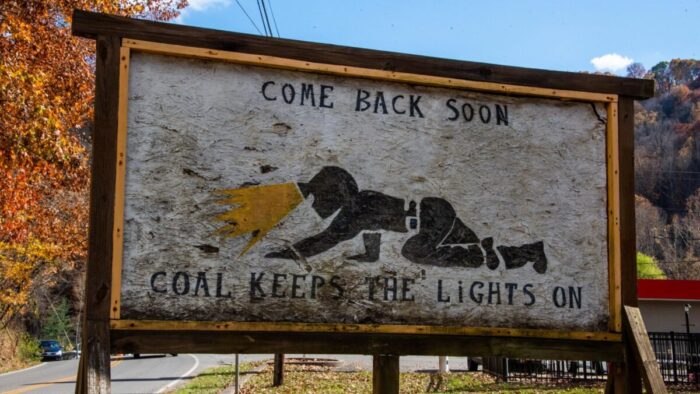
A makeshift billboard depicting a miner working in a “low coal” mine shaft greets drivers leaving Fleming-Neon, Kentucky.Photo Credit: Justin Hicks/Louisville Public Media
Listen
Share this Article
Black lung disease is back. In fact, it never went away. Now, younger and younger miners are living with a particularly nasty form of black lung disease.
Regulators and the coal industry have known about the problem for decades — but they’ve been slow to respond.
One reporter asks, “What would happen if thousands of workers in any other industry got sick and died just because of where they worked?”
This week, we’re talking about the black lung epidemic, Inside Appalachia.
In This Episode:
Looking Back At The Rise of Advanced Black Lung Cases Rising
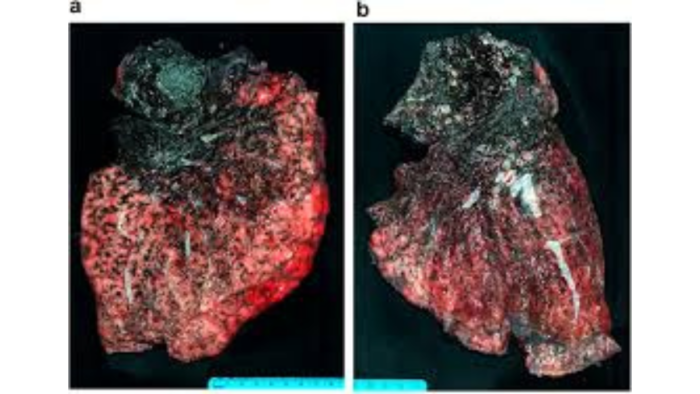
The blackened lungs of a coal miner who received a transplant at age 60.
Credit: Mine Safety and Health Administration
Advanced black lung is rampant across the coal-producing regions of central Appalachia, in West Virginia, eastern Kentucky and southwestern Virginia.
This is different from simple black lung, which is debilitating, but advanced black lung is known as progressive massive fibrosis. It’s the result of miners digging at increasingly thin coal seams. To get at the coal, they cut into quartz, which creates silica dust.
Breathing the mix of silica and coal dust is much more destructive and like simple black lung, there is no cure.
Advanced black lung has been documented for decades, but it’s getting new attention from federal officials.
As part of our special program, we aired a 2018 NPR segment with Howard Berkes, where he met with dozens of Appalachian miners with advanced black lung disease.
Federal Regulators Are Crafting New Rules
Most coal production has been declining for years, but the metallurgical coal industry has been ramping up production to meet global demand. With increased demand, experts predict more cases of black lung. After years of inaction, though, federal officials are addressing the issue.
Over the summer, the Mine Safety and Health Administration proposed a rule intended to protect coal miners from exposure to silica dust. By the time the comment period closed in September, the draft rule had attracted 157 comments.
Mason Adams spoke with Berkes about what they found.
------
Our theme music is by Matt Jackfert. Other music this week was provided by John Hurlbut and Jorma Kaukonen, Tim Bing, June Carter Cash and Steve Earle.
Bill Lynch is our producer. Zander Aloi is our associate producer. Our executive producer is Eric Douglas. Kelley Libby is our editor. Our audio mixer is Patrick Stephens.
You can send us an email: InsideAppalachia@wvpublic.org.
On this West Virginia Week, a mine operation in Kanawha County gets a WARN Notice, three Wyoming County Schools will remain closed until next week, and we learn the origins of the Flatwoods Monster.
This week, Barbara Kingsolver’s new novel takes on issues of class and classical music. Also, kudzu warriors band together to fend off invasive plants and take back the land. And, it’s pawpaw season, but a new bug could be harming the trees.