'Haunted' Town Already Celebrating Spooky Season
Halloween is still several weeks away, but one West Virginia town is already celebrating the season.
Continue Reading Take Me to More NewsAlert (09/29/2026): Our Parkersburg TV transmitter is still undergoing maintenance and remains temporarily inoperative. We apologize for the inconvenience.
All our programming is available via our TV livestreams on our website and WVPB Passport. Thank you for your patience!




To Educate, Inform, and Inspire by Telling West Virginia's Story

Mountain Readers Week will be held Oct. 5-9, 2026! Celebrate and foster a love of reading in children across West Virginia.

Nominate an exceptional West Virginia K-12 teacher today!

On Demand

On Demand

Stream original productions from WVPB

Watch locally produced documentaries & more.

On Demand

On Demand






West Virginia Morning

Inside Appalachia

West Virginia Week

Mountain Stage

Us & Them

The Legislature Today

The Legislature This Week

Send us your comments and questions.

Stream our board meetings.

Check out the latest WVPB news.

Sign up for our newsletter and get weekly updates.

Meet the WVPB staff.

WV Educational Broadcasting Commission, the WVPB Foundation, and the Friends of WVPB.

Come work with us!

Read our annual report and learn how we educate, inform and inspire with your support.

Sponsor impactful and engaging media and entertainment.

Use your IRA to make a gift to WVPB.

Become a member with your gift of $1,000 or more.

Make WVPB part of your legacy.

Manage your membership account.

Learn how you can Protect and Sustain West Virginia Public Broadcasting.
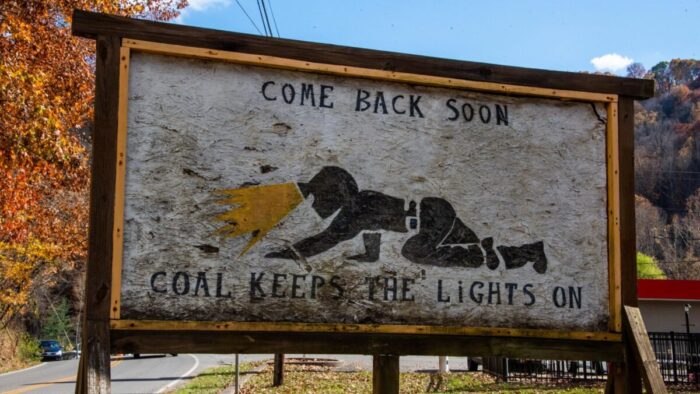
Black lung disease is back. In fact, it never went away. Now, younger and younger miners are living with a particularly nasty form of black lung disease.
Regulators and the coal industry have known about the problem for decades — but they’ve been slow to respond.
One reporter asks, “What would happen if thousands of workers in any other industry got sick and died just because of where they worked?”
This week, we’re talking about the black lung epidemic, Inside Appalachia.
In This Episode:
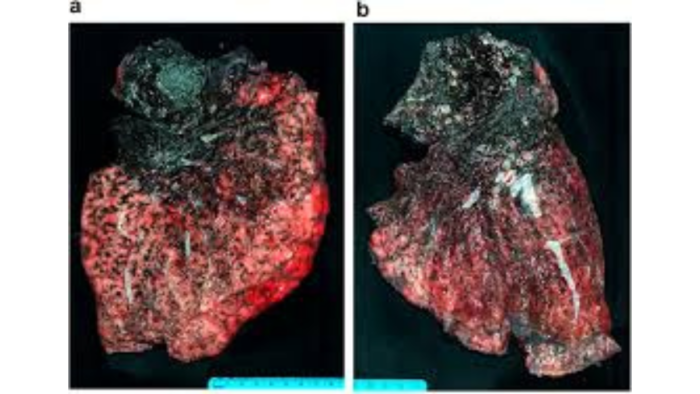
Advanced black lung is rampant across the coal-producing regions of central Appalachia, in West Virginia, eastern Kentucky and southwestern Virginia.
This is different from simple black lung, which is debilitating, but advanced black lung is known as progressive massive fibrosis. It’s the result of miners digging at increasingly thin coal seams. To get at the coal, they cut into quartz, which creates silica dust.
Breathing the mix of silica and coal dust is much more destructive and like simple black lung, there is no cure.
Advanced black lung has been documented for decades, but it’s getting new attention from federal officials.
As part of our special program, we aired a 2018 NPR segment with Howard Berkes, where he met with dozens of Appalachian miners with advanced black lung disease.
Most coal production has been declining for years, but the metallurgical coal industry has been ramping up production to meet global demand. With increased demand, experts predict more cases of black lung. After years of inaction, though, federal officials are addressing the issue.
Over the summer, the Mine Safety and Health Administration proposed a rule intended to protect coal miners from exposure to silica dust. By the time the comment period closed in September, the draft rule had attracted 157 comments.
WVPB’s Emily Rice reports.
Howard Berkes has continued to report on advanced black lung, even after retiring from NPR. Recently, he helped lead a new investigation into advanced black lung cases, co-published by Public Health Watch, Louisville Public Media and Mountain State Spotlight.
Mason Adams spoke with Berkes about what they found.
------
Our theme music is by Matt Jackfert. Other music this week was provided by John Hurlbut and Jorma Kaukonen, Tim Bing, June Carter Cash and Steve Earle.
Bill Lynch is our producer. Zander Aloi is our associate producer. Our executive producer is Eric Douglas. Kelley Libby is our editor. Our audio mixer is Patrick Stephens.
You can send us an email: InsideAppalachia@wvpublic.org.
You can find us on Instagram, Threads and Twitter @InAppalachia. Or here on Facebook.
Sign-up for the Inside Appalachia Newsletter!
Inside Appalachia is a production of West Virginia Public Broadcasting.

Add WVPB as a preferred source on Google to see more from our team

Halloween is still several weeks away, but one West Virginia town is already celebrating the season.
Continue Reading Take Me to More NewsWest Virginia has seen the largest population decline in the nation - nearly 1.5% - and many of those leaving are young people. In an episode that aired last month, Us & Them host Trey Kay heard from some young people who think they may stay in the state to launch their futures. This month, Kay talks with those who say living their dreams may well require moving away from the Mountain State. We listen to an excerpt from the latest Us & Them.
Continue Reading Take Me to More NewsThey love West Virginia, but love alone may not be enough to keep them here. In the second of two Us & Them episodes, Trey Kay talks with young West Virginians who say they may need to leave in search of careers, community and a place where they can imagine their futures. Their decisions reveal what the Mountain State risks losing when young people cannot see a place for themselves at home.
Continue Reading Take Me to More NewsLast week, we aired the first part of an interview with a WVSU professor about what is AI. In the second part of that interview, we explore the best way to use AI to get what you want – while avoiding fabricated or false answers that seem real.
Continue Reading Take Me to More News