West Virginia is the third most forested state in the country. The fall foliage projection map, a collaboration between the West Virginia Department of Tourism and the Division of Forestry, promotes the best places in West Virginia to see changing fall colors.
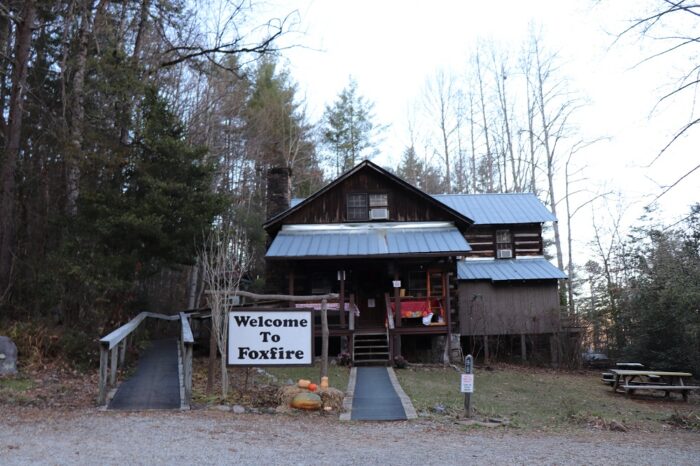
Foxfire began in 1967 as a student-run magazine in North Georgia. It was a way for high school students to collect and share the wisdom and lore from their community members. They named it “Foxfire” after a fungus in the region that glows in the dark.
Over 50 years, it’s grown into a book series, a magazine, a museum and an oral history archive. One of those oral histories is from 1975 and captures the kind of knowledge that Foxfire collected.
An Appalachian Woman’s Place Often Went Beyond The Home
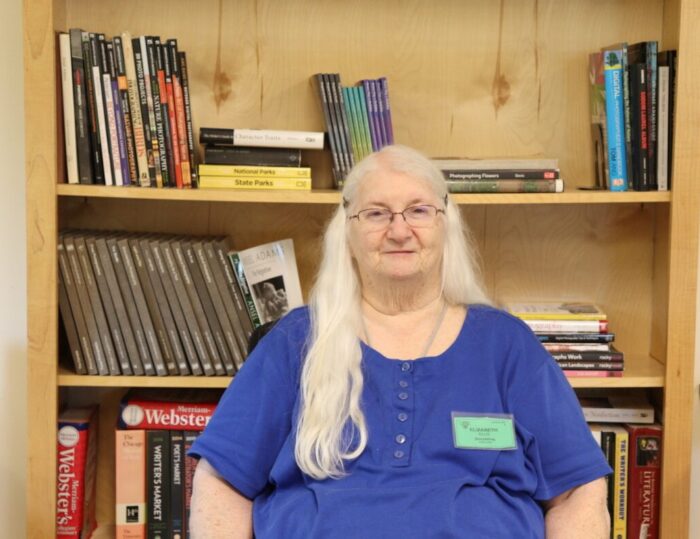
Appalachian storyteller Elizabeth Ellis is featured in the Foxfire project with Blue Ridge Public Radio.
Photo Credit: Lilly Knoepp
A lot of the women in older archival Foxfire interviews said that they “didn’t work” but so many Appalachian women were midwives, mothers and business owners.
Foxfire’s latest collection features 21 women in the book called, The Foxfire Book of Appalachian Women, edited by then Foxfire education director and museum curator Kami Ahrens. Mason Adams has more.
Oral History Tradition Continues Today
In 2020, Blue Ridge Public Radio partnered with Ahrens to record oral histories and aired them on the radio. BPR’s Lilly Knoepp shared a few.
------
Our theme music is by Matt Jackfert. Other music this week was provided by Bela Fleck and Abigail Washburn, Sean Watkins, The Steel Woods, and Dr. Kathy Bullock and her class at the John C. Campbell Folk School.
Bill Lynch is our producer. Zander Aloi is our associate producer. Our executive producer is Eric Douglas. Kelley Libby is our editor. Our audio mixer is Patrick Stephens.
You can send us an email: InsideAppalachia@wvpublic.org.
Singer, actress and icon Dolly Parton visited West Virginia in 2022 to celebrate the state’s full participation in her Imagination Library, an early childhood literacy program she started in honor of her father in 1995. Dolly Parton died Tuesday after a brief illness. We listen back to an interview she did with then WVPB Executive Producer Suzanne Higgins.
One of the world’s rarest plants, the Peters Mountain Mallow, lives on only one mountainside, in the New River Valley along the West Virginia line. Last year, scientists counted just five plants still alive – and the recent drought means protecting it from extinction is getting tougher.
West Virginia is the third most forested state in the country. The fall foliage projection map, a collaboration between the West Virginia Department of Tourism and the Division of Forestry, promotes the best places in West Virginia to see changing fall colors.
As developers rapidly propose data centers across Kentucky, their neighbors are struggling to find out what it will mean for them. For the Appalachia + Mid-South Newsroom, Sylvia Goodman reports that residents are calling for more transparency from developers and their own public officials.