WVPB had a conversation with Us & Them host Trey Kay earlier this week on the significance today of the 250th anniversary of America’s founding. This week, WVPB is hosting a special screening event at Marshall University with excerpts from Ken Burns’ The American Revolution, and Kay will lead a panel discussion. We once again hear from Kay, this time speaking with one of the panelists — Marshall University political science professor George Davis — about why revisiting the nation’s founding story still matters.
West Virginian Uses Opera to Talk Mountaintop Removal Mining, Painkiller Overdoses
Listen
Share this Article
Composer and Huntington native Nate May recently finished production on an original two-person music-drama, called Dust in the Bottomland.
When he began studying music at the University of Michigan Nate May decided to write an opera about some of the issues facing Appalachians.
His friend and fellow student at the University, Andrew Munn, collaborated with him to create Dust in the Bottomland, which they performed last year in West Virginia, Kentucky, Pennsylvania, and New York City. The piece uses only one instrument and one vocalist. May plays piano, and Munn sings bass.
“Some people ask, ’Where’s the Appalachian influence in the music?’ And I say, ‘Well, all of it. It’s me, who’s writing it and I grew up in Appalachia,’” said May.
Dust in the Bottomland is about a young man who grew up in West Virginia but moved away. Since he’s been gone, his parents and sister have been displaced from their home, due to mountaintop removal mining. They still live in West Virginia, though they now live down in the valley.
The main character is returning home after 10 years because his sister has overdosed on pain pills. During his return home, the protagonist also visits the site of his family’s home and sees the changes that mining has done to that landscape.
“I think the story hit home to a lot of people because a lot of people, even not from the area, know people affected by addiction,” said May. “The other issue that people were affected by was homecoming. And going away and coming back.”
Credit Nate May
/
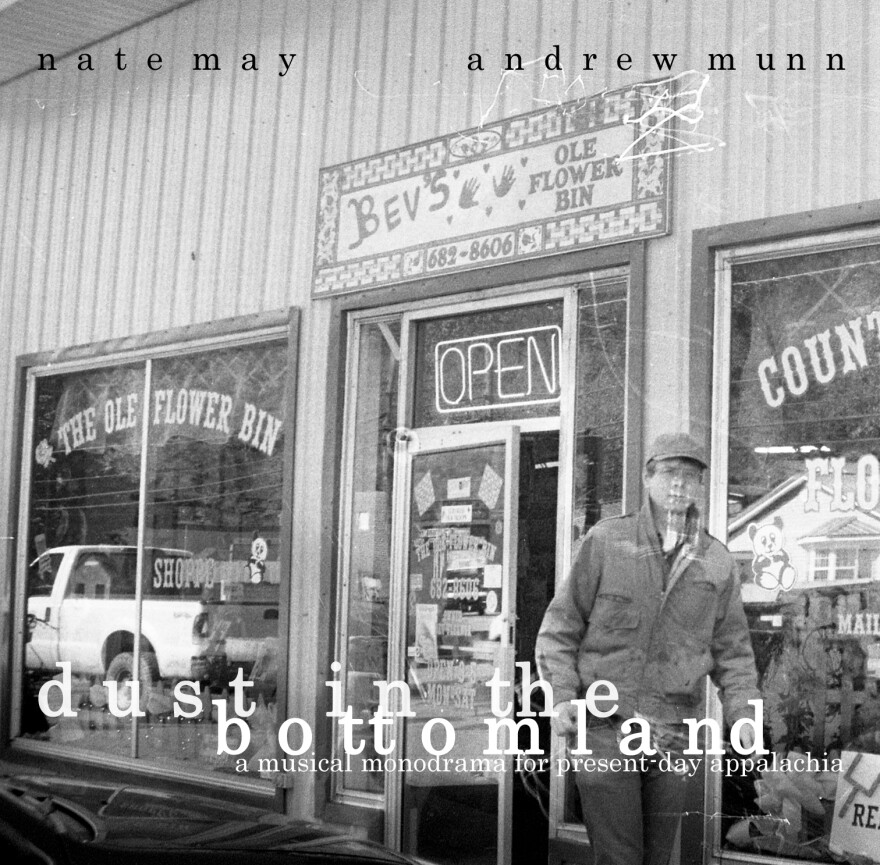
Album cover for Dust in the Bottomland. Shows Bev’s Flower Store in Oceana, West Virginia.
Nate May and Andrew Munn are now talking about composing a chamber ensemble version of Dust in the Bottomland, which will include more instruments.
Credit Abigail O’Bryan
/
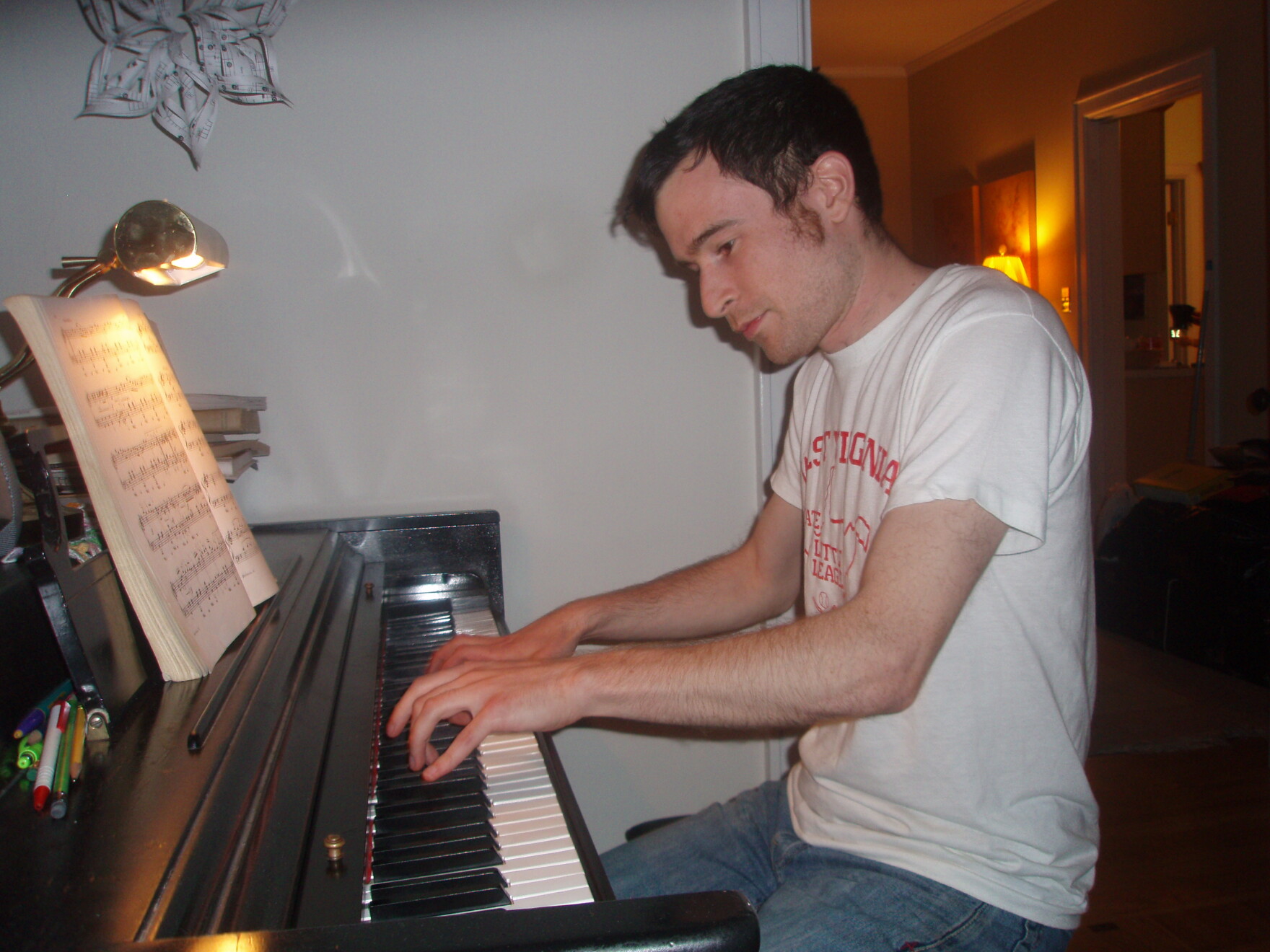
Andrew and Nate, during a break from rehearsing at Interlochen Center for the Arts in northern Michigan.
Add WVPB as a preferred source on Google to see more from our team
WVPB had a conversation with Us & Them host Trey Kay earlier this week on the significance today of the 250th anniversary of America’s founding. This week, WVPB is hosting a special screening event at Marshall University with excerpts from Ken Burns’ The American Revolution, and Kay will lead a panel discussion. We once again hear from Kay, this time speaking with one of the panelists — Marshall University political science professor George Davis — about why revisiting the nation’s founding story still matters.
WVPB will be screening excerpts of Ken Burns’ recent PBS documentary series "The American Revolution" this week at Marshall. Us & Them host Trey Kay will moderate the event, and he spoke recently with WVPB News Director Eric Douglas about why revisiting the nation’s founding story matters today. Also, a bill to temporarily delay moving a child to homeschooling during an active case of abuse or neglect hit a snag in the Senate on Monday.
One of America’s pioneering filmmakers had nothing to do with Hollywood but nevertheless left his mark on the emerging industry. Oscar Micheaux was a homesteader, who then turned his attention to making movies in the early 1900s. He was a Black man who made movies for Black audiences at a time when they weren’t allowed into mainstream, white-only theaters. And for several pivotal years in the 1920s, he operated out of Roanoke, Virginia.
This week, in the 1920s, Oscar Micheaux was an entrepreneur filmmaker in western Virginia. He became a world-renowned director and producer. Also, Kentucky’s poet laureate lives down the road from what has been called the country’s most lethal cryptid. Attempts to spot it have led to deaths. And, we talk soul food with Xavier Oglesby, who’s passing on generations of kitchen wisdom to his niece.