Alert (09/10/2026): Our Parkersburg TV transmitter is undergoing maintenance for a few days and will not be operational. We apologize for any inconvenience.
All our programming is available via our TV livestreams on our website and WVPB Passport. Thank you for your patience!
This week, it’s not easy to find a place to play hockey in Appalachia, and if you happen to be young and ambitious, it can be harder. Also, rappers and musicians across West Virginia come together for a song challenge. And, farmers learn to turn unwanted sheep’s wool into home insulation.
How Many Historic W.Va. Buildings will Benefit from Increased Tax Credit?
Listen
Share this Article
During a special session of the West Virginia Legislature in October, lawmakers passed a bill that makes redeveloping historic buildings in the state more viable, financially. The bill had widespread support from both sides of the aisle, but some are concerned it doesn’t go far enough.
The state historic rehabilitation tax credit was put in place as an incentive for individuals, developers, and property owners to take dilapidated, historic buildings and bring them back up to snuff -- rehabilitating them into apartments, businesses, or community spaces…
Just like the Charles Washington Hall in Jefferson County.
What Rehabilitating Historic Buildings Could Look Like
The City of Charles Town took advantage of the state historic rehabilitation tax credit a few years ago to help rehabilitate the Charles Washington Hall in the city’s downtown area. At the time renovations began, a 10 percent tax credit was in place in West Virginia. The credit provides dollar-for-dollar reductions in income tax and corporate income tax liability for historic rehabilitation projects.
But the new legislation bumps that tax credit to 25 percent -- though, it doesn’t go into effect until December 31.
Credit Liz McCormick / West Virginia Public Broadcasting
/
West Virginia Public Broadcasting
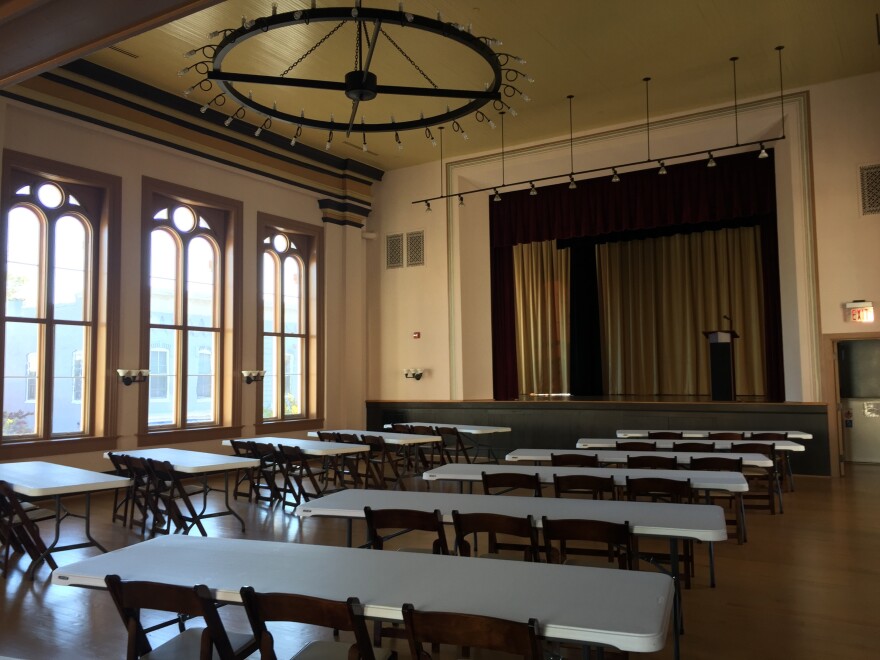
A new auditorium space in the Charles Washington Hall in Charles Town, W.Va.
The Charles Washington Hall, originally built in 1874, is now home to an auditorium, a soon-to-open restaurant featuring Appalachian cuisine, and a small, organic, locally-sourced grocery store. Renovations were completed earlier this year.
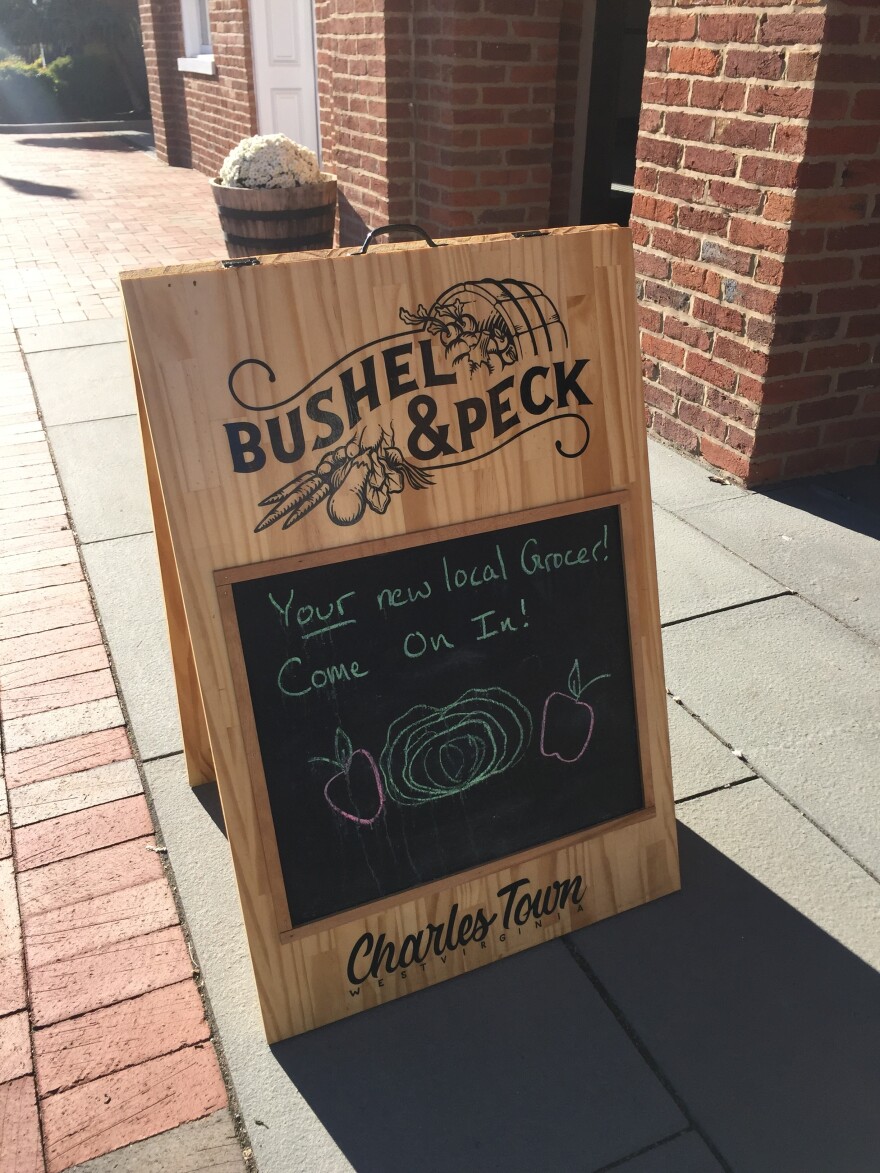
The grocery, called Bushel & Peck, is the main presence at the location.
“It’s a beautiful building; wood floors and ceiling molding are really striking to me,” Abby Beavin, Assistant Manager at Bushel & Peck, said, “and all the beautiful wood detail. It has kind of its own challenges, like making a food safe facility in a historic building, but I think it’s a beautiful, beautiful space, with beautiful natural lighting.”
Bushel & Peck moved into the space at the beginning of October, so the market is still getting situated. Beavin hopes it will help revitalize downtown Charles Town and create a tighter community.
“It’s a difficult time to keep the main street businesses alive,” she noted, “You see a lot more of them boarded up in small towns than you do opening a new business. So, it’s a risk, but, you know, we’re out here and we’re gonna see what happens and see what works and what this will mean for Charles Town.”
Credit Liz McCormick / West Virginia Public Broadcasting
Last year, the Hub traveled the state to bring awareness to community members and lawmakers about the benefits of increasing the historic rehabilitation tax credit.
Jake Dougherty, Executive Director of Wheeling Heritage, was heavily involved in that campaign.
“We’ve seen people and developers choose Winchester, Virginia, over Martinsburg; Saint Clairsville, Ohio, over Wheeling; Ashland over Huntington; Waynesburg over Morgantown; it’s happening all across the state, and that’s revenues and that’s a stronger tax base, and that’s more jobs that aren’t happening in West Virginia, and they’re right across the border,” Dougherty explained.
A couple versions of a bill to increase that credit were introduced during the regular 2017 state Legislative session, but it wasn’t until a special session in October that advocates like Dougherty got their wish.
House Bill 203 increased the state’s historic rehabilitation tax credit from 10 to 25 percent, making the credit more competitive with West Virginia’s bordering neighbors like Virginia, Ohio, and Pennsylvania -- BUT the bill also has a $10 million cap, or limit, per project and an annual, overall statewide cap of $25 million -- unlike some neighboring states like Virginia, which have uncapped incentive plans.
Credit Will Price / West Virginia Legislative Photography
/
West Virginia Legislative Photography
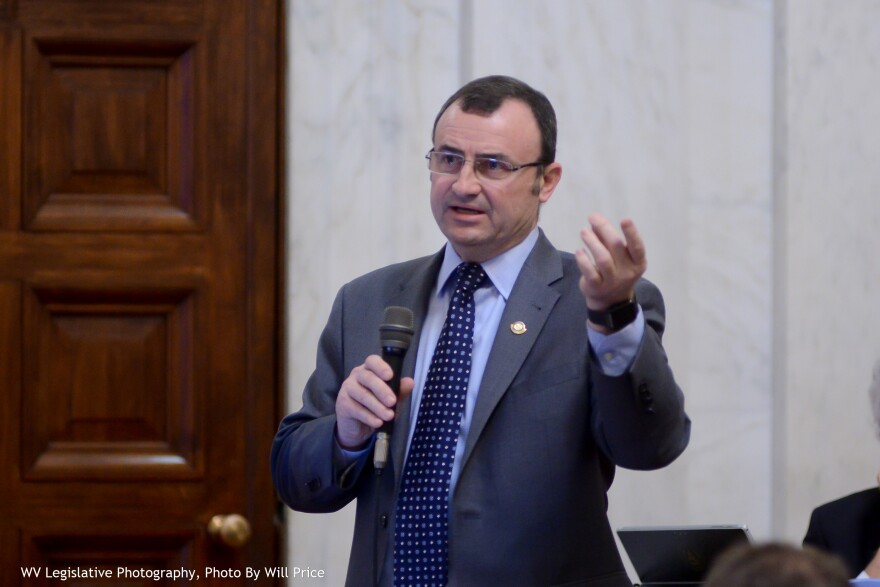
Sen. Glenn Jeffries, D-Putnam.
Democratic Senator Glenn Jeffries, of Putnam County, was the lead sponsor of a Senate version of the bill during the 2017 regular session.
He said, while he’s relieved something finally passed, he’s concerned the caps will discourage developers -- especially the annual $25 million cap.
“I don’t want to see us hinder potential investors to come to West Virginia, invest their dollars, and [then] take it somewhere else,” Jeffries said, “If you keep the cap on it, that just pushes your application, and it’s first come first serve; somebody walks in there on day one, and the first three application takes up that $25 million, you gotta wait until the following year.”
Jefferies said he understands the reason for the limits -- uncapped incentives could become a financial juggernaut in an already tight state budget if too many developers take advantage of the program all at once. But Jeffries argued it’s a long, step-by-step process to get approved and complete a renovation, so it wouldn’t hit the state in the way opponents fear. He plans to introduce amendments to the bill during the 2018 session.
The National Register of Historic Places has just over 700 historic buildings registered in West Virginia -- like the Charles Washington Hall. To-date, 175 in-state projects have used the 10-percent historic rehabilitation tax credit.
Add WVPB as a preferred source on Google to see more from our team
On this West Virginia Week, a Lincoln County student asks the state supreme court to step in, a state of emergency is declared in several counties, and a new initiative honors Dolly Parton.
The suit, filed with the support of the American Civil Liberties Union of West Virginia, asks the court to declare the state’s school funding system unconstitutional and order the state to meet its duty to provide a thorough and efficient education to every child in West Virginia.
Hockey is still finding fans and players in central Appalachia, but just because it’s an emerging sport in this region doesn’t mean we don’t have hockey heroes. Inside Appalachia’s Abby Neff met with Gwyneth Phillips, a goalie for the gold-medal winning U.S. Olympics Women’s team, to learn more.
Duties of poll workers can include delivering election supplies to polling places, verifying voter identities and registrations and securing the materials after polls close.