Alert (09/10/2026): Our Parkersburg TV transmitter is undergoing maintenance for a few days and will not be operational. We apologize for any inconvenience.
All our programming is available via our TV livestreams on our website and WVPB Passport. Thank you for your patience!
On this week's premiere broadcast of Mountain Stage, host Kathy Mattea welcomes The Jayhawks, Tift Merritt, Tanasi, and Candi Jenkins to the Culture Center Theater in Charleston, WV.
The House of Delegates has passed a Senate bill that would legalize medical marijuana in the state. But the bill has seen a number of changes since the 28 to 6 vote last week in the upper chamber.
During a late night floor session Monday, delegates voted on a handful of amendments to Senate Bill 386, including a committee substitute that completely replaces the Senate’s version of the bill with one sponsored by House Judiciary Chairman John Shott of Mercer County.
Senate Bill 386 would now put the West Virginia Medical Cannabis Act under the control of the West Virginia Department of Public Health. It would create a 6 percent excise tax on marijuana and pushes the rollout date back one year to July 2019 instead of the Senate’s July 2018 implementation date.
The latest version of the bill does not allow distributors to sell forms of the drug that can be smoked or eaten, but does include prescription oils, pills, or patch versions and a form that can be vaped. Judiciary Chair Shott says the bill would allow patients to make their own baked goods using the oils. Medical marijuana would also not be covered by Medicare or Medicaid.
Delegate Shott has called this version of the bill a cautious approach to a controversial issue.
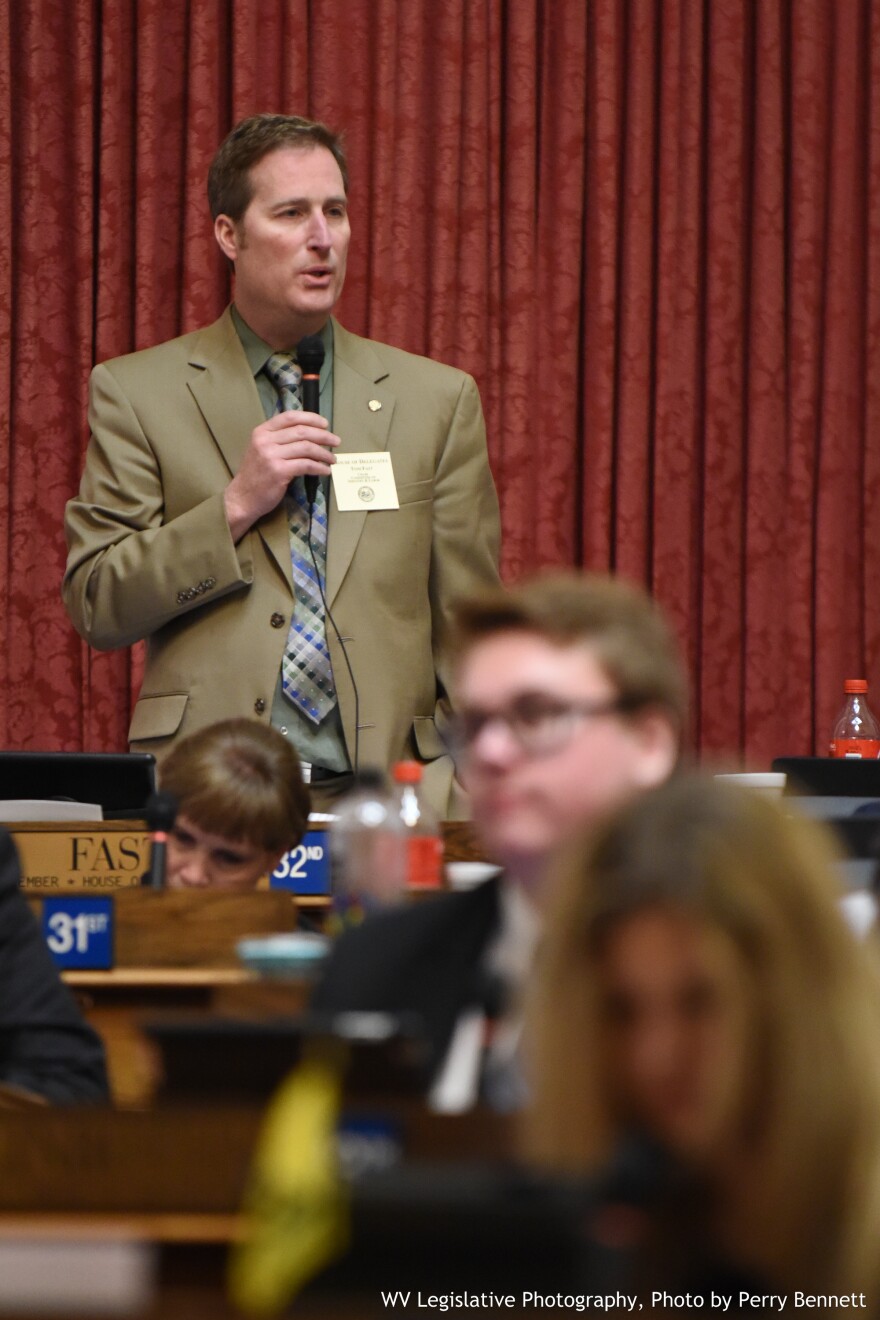
Delegate Tom Fast, a Republican from Fayette County, spoke in opposition to the bill as it was put to a final vote Tuesday. He argued since it is still classified as an illegal drug by the federal government, states shouldn’t make their own rules about using medical marijuana without the Federal Drug Administration’s approval and guidance.
Credit Perry Bennett / West Virginia Legislative Photography
/
West Virginia Legislative Photography
Del. Tom Fast, R-Fayette.
“We’re declaring that we are no longer a state under the law,” Fast said, “We’re just going to join 28 other states and say we’re not going to obey the law. That makes no sense to me. If 28 people are gonna jump off a bridge, are you gonna jump off the bridge with them? Are we a nation of laws or are we not? That is the decision that you are faced with today.”
Republican Charlotte Lane of Kanawha County, who introduced her own bill this session to legalize medical marijuana that was never taken up in a committee, says this bill is a step in the right direction.
“People might not be 100 percent happy with it, but folks, this is a lot further than we ever thought we would get this session,” Lane noted, “and we all know people who are sick that can benefit from this or might benefit from it. Now, yes you can talk about maybe we should wait for the Federal Drug Administration, well folks, if you’re dying, it doesn’t matter. So, if something can make you feel better and ease those last days, last weeks for the patient, and for the members, then we ought to pass it.”
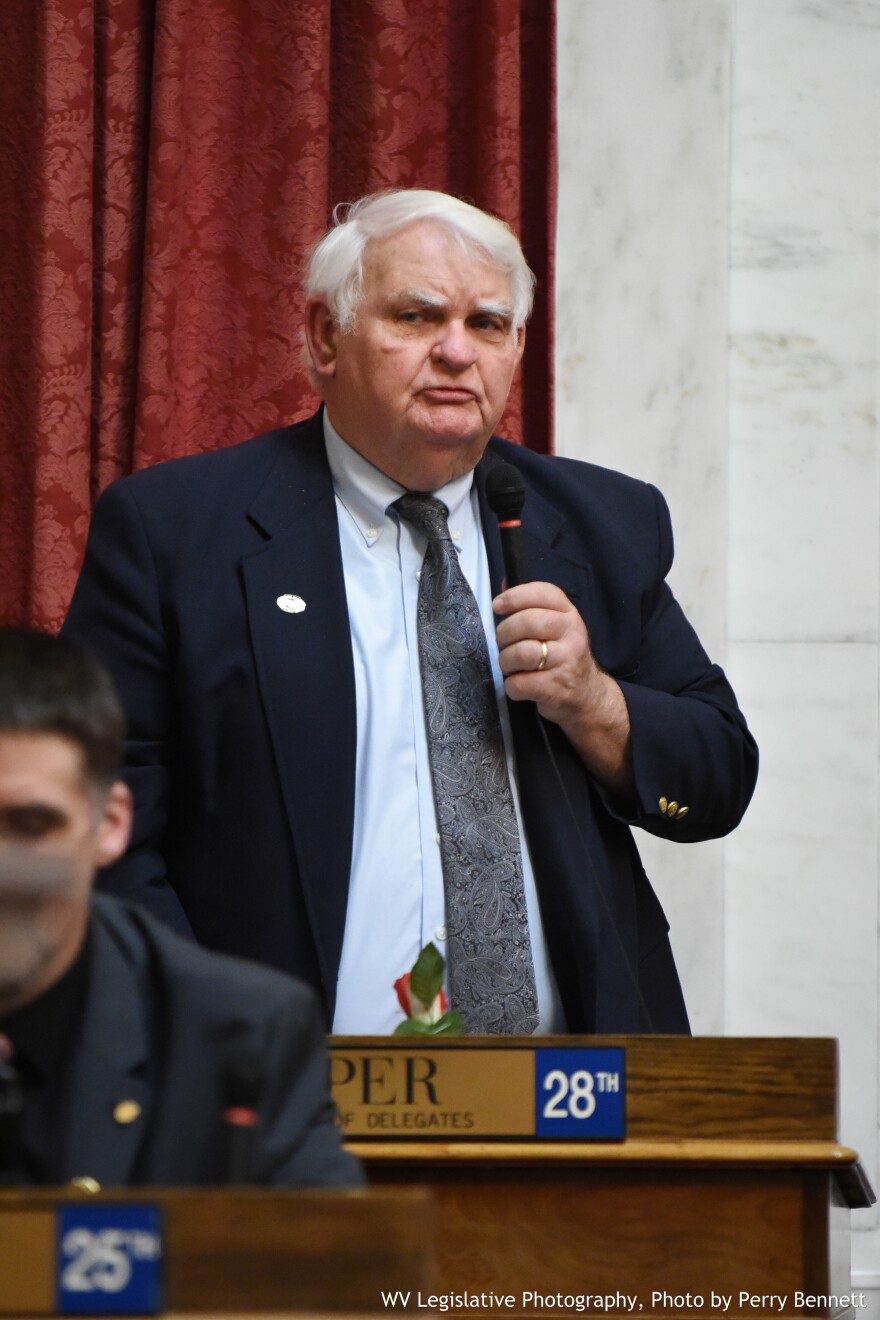
Many supporters of the bill have said legalizing medicinal use of the drug could help veterans suffering from PTSD. But Delegate Roy Cooper, a Republican from Summers County argued the legislation will just add another substance to the list of drugs that are abused in the state.
“The veteran’s suicide issue can be answered by the paper in my hand. We’ve now prescribed to veterans ever how many’s on this page; Prozac, Zoloft, sinequan, Wellbutrin, Valium, Ambien, Xanax, morphine, fentanyl, codeine, Ultram, Percocet, Vicodin – veterans are getting these pills shoved in their hands at veterans hospitals all over the country in combination with each other. That’s where our suicide issue’s coming from with veterans,” Cooper explained, “Now, so we put another drug out there and say, okay, you can take that on top of all this other stuff and then go ahead and drink a little alcohol with that. It’s a deadly cocktail folks; a deadly cocktail.”
Credit Perry Bennett / West Virginia Legislative Photography
/
West Virginia Legislative Photography
Del. Roy Cooper, R-Summers.
Delegate Gary Howell, a Republican from Mineral County, supported the bill.
“I’m not a doctor, and I don’t know all of the medical benefits; I don’t know all the medical downsides, but I do know that people in the end of life; it gives them hope;” Howell said, “they’ve tried many other things, it hasn’t worked. They know this won’t cure their problem, but it will make ‘em a little bit more comfortable, and if you’ve been with someone at the end of their life, you want them comfortable, and that’s why I support this bill.”
Judiciary Chair Shott pointed to a study from the American Medical Association, that argued there was “high quality evidence” medical marijuana has done a lot of good for sick and dying patients.
“So shouldn’t we give, based on studies like this, shouldn’t we give our physicians the authority to use that type of tool to help their patients? And that’s really what we’ve done, and we’ve instilled in this structure protections to be sure this is not abused and is used properly,” Shott explained, “and for that, ladies and gentlemen, I strongly urge that we give our physicians this tool, that we pass this bill and provide some relief for those who can benefit from it.”
After an hour of debate, Senate Bill 386 passed 76 to 24 and now heads back to the Senate for consideration. If the Senate approves the bill, the West Virginia Medical Cannabis Act will head to the governor for a signature, but if the Senate refuses the House changes, the bill will go to a conference committee.
Governor Jim Justice has said he could support medical marijuana in the state.
Add WVPB as a preferred source on Google to see more from our team
With the midterm elections approaching, Us & Them is taking the Dinner Party on the road to a trio of communities across West Virginia. In the first of our three gatherings this fall, host Trey Kay is back in Charleston bringing together conservative and liberal West Virginians to share a potluck meal, talk politics and see whether conversation across the divide can uncover some common ground.
The votes are in – more than 3,200 of them – and the winner of the inaugural Coolest Thing Made In West Virginia competition will be announced next week. It’s down to the final five. Assistant News Director Maria Young caught up with Bill Bissett, president of the West Virginia Manufacturers Association, which is hosting the contest, to find out more about the finalists.
At the core of the case is who in government has final authority over policy and rulemaking for the state's public schools: the Board of Education or the Legislature.
The state argued that the judiciary cannot and should not intervene in what they see as regular legislative proceedings when removing one of their own members.