


The Old Louisville Demon Leaper’s Mischief In One Of America’s Largest Victorian Neighborhoods
In the late 1800s, tales of a creature that bounds between rooftops emerged in Old Louisville — The Demon Leaper.
Continue Reading Take Me to More NewsAlert (10/27/2026): Our 88.5 FM signal in Charleston is experiencing intermittent outages. Our engineers are working with our provider to find a solution. We apologize for the inconvenience.
Our radio livestream is available at wvpublic.org and through the WVPB app. Thank you for your patience.




To Educate, Inform, and Inspire by Telling West Virginia's Story

Mountain Readers 2026 has concluded! Please fill out our volunteer post-survey.

Nominate an exceptional West Virginia K-12 teacher today!

On Demand

On Demand

Stream original productions from WVPB

Watch locally produced documentaries & more.

On Demand

On Demand






West Virginia Morning

Inside Appalachia

West Virginia Week

Mountain Stage

Us & Them

The Legislature Today

The Legislature This Week

Send us your comments and questions.

Stream our board meetings.

Check out the latest WVPB news.

Sign up for our newsletter and get weekly updates.

Meet the WVPB staff.

WV Educational Broadcasting Commission, the WVPB Foundation, and the Friends of WVPB.

Come work with us!

Read our annual report and learn how we educate, inform and inspire with your support.

Sponsor impactful and engaging media and entertainment.

Use your IRA to make a gift to WVPB.

Become a member with your gift of $1,000 or more.

Make WVPB part of your legacy.

Manage your membership account.

Learn how you can Protect and Sustain West Virginia Public Broadcasting.
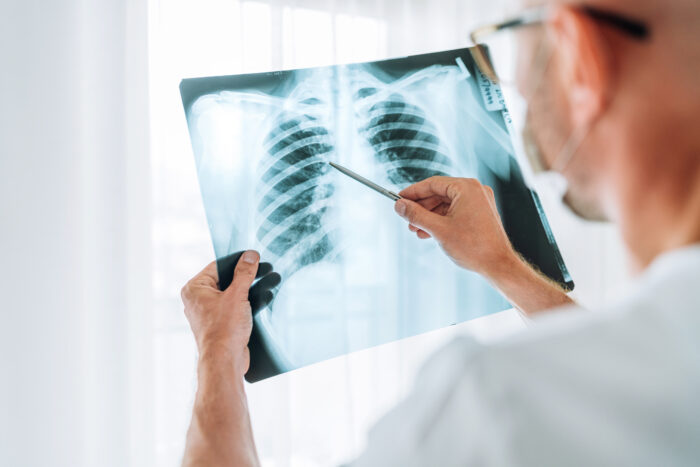
The United Mine Workers of America (UMWA) is demanding the immediate enforcement of federal silica dust protections in central Appalachian coal mines, in a statement released Thursday.
Just last week, new research from the National Institute for Occupational Safety and Health (NIOSH), published in the American Journal of Respiratory and Critical Care Medicine, showed that 32.5% of veteran underground coal miners in central Appalachia are suffering from black lung disease, a devastating rate not seen since 1978.
The problem, according to the report, is thinner coal seams surrounded by rock rich in silica which becomes dust in the mining process.
“They’re mining seams of coal that years ago wasn’t feasible, wasn’t financially feasible or wasn’t mechanically feasible for them to get those smaller seams of coal,” Josh Roberts, Health and Safety director for the UMWA, said. “Now they’ve mined out the thicker seams of coal, so now what’s left is these smaller, thinner seams but they’re going to still have the same amount of height for the size of equipment that they use. So they’re going to have to in turn cut more rock on top of the coal seam that they’re taking, which is what’s creating the increase in silica dust.”
All of that additional rock and the dust from the mining operations leads to more cases of black lung.
“Now we’re seeing not just older veteran miners getting sick, but we’re seeing younger miners, in their mid-30s with progressive massive fibrosis, which is the most severe, advanced and deadly form of black lung,” Roberts said.
For decades, the UMWA fought to secure a modern federal rule targeting toxic crystalline silica dust, a substance 20 times more toxic than coal dust alone, according to the union’s statement. After years of administrative delay, a comprehensive safety standard was finalized, only to be hit with industry lawsuits and placed on hold by the Mine Safety and Health Administration (MSHA) and federal courts.
“Mining associations filed lawsuits arguing this rule hurts business, but what about the human lives destroyed every single day this rule sits on a shelf?” UMWA International President Brian Sanson said. “Every day federal regulators drag their feet and sit on this rule, another working father, mother, husband, wife, sister or brother contracts an incurable, fatal disease. Someone’s life is forever changed. A company’s profit margin cannot take precedence over a miner’s right to draw a breath.”
Roberts noted that mine operators say they can’t put safety rules in place and mine cost-effectively.
“I worked 10 years underground before working for the United Mine Workers and becoming a representative. And it’s been my experience that it’s very possible to have a very productive mine while at the same time having a healthy and safe mine,” he said. “The issue comes when operators and the industry says ‘We can’t afford to do this. We can’t afford to abide by these rules because it’s just going to cost us too much. We’re not going to be able to run. We’re not going to be able to continue to run these mines.’ And that’s the same song and dance we have heard for every single rule that has ever been put in place in the mining industry. And lo and behold, after all these rules are in place, they’re able to mine and miners are safer because of it.”
The UMWA highlighted three issues in reliance on personal protective equipment:
The union statement said the heart of the crisis is still in central Appalachia’s nonunion mines. Miners there are forced to cut through razor-thin coal seams locked in rock using massive, high-powered machinery. And without union backing, speaking up about toxic air or broken dust controls usually means risking your job.
To stop the preventable spread of disease, the UMWA is calling on federal regulators and the courts to take immediate action:
“More needs to be done, and it needs to be done now,” said Sanson. “Miners are wearing masks. They are following rules, and yet they are still breathing in killer dust. We will not stand by while federal regulations are ignored and sat on while our members and coalfield workers pay for it with their lives.”
Public Health Watch, Kentucky Public Radio and NPR obtained a draft of the NIOSH research letter before publication and reported this story on Aug. 5 through the Appalachia Mid-South News hub of which West Virginia Public Broadcasting is a part.
Add WVPB as a preferred source on Google to see more from our team

From The Allegheny Front, a public radio program based in Pittsburgh, brings us their latest story on the return of black lung disease to Appalachian coal miners.
Continue Reading Take Me to More NewsSecretary of State Kris Warner has announced that 66,855 ballots have been cast across the state in absentee voting and the first four days of early voting.
Continue Reading Take Me to More NewsNearly $1.4 million in funds from the state's Rural Health Transformation Program will be used to help replace a mobile cancer screening unit that serves rural communities.
Continue Reading Take Me to More NewsFlu cases are still low nationwide -- but beginning to increase much sooner than is typical.
Continue Reading Take Me to More News