Alert (09/29/2026): Our Parkersburg TV transmitter is still undergoing maintenance and remains temporarily inoperative. We apologize for the inconvenience.
All our programming is available via our TV livestreams on our website and WVPB Passport. Thank you for your patience!
This week, author Silas House returns with a sweeping new novel. Also, some folks say, you have to fake it 'til you make it, even if you're trying to establish a state park. And, the story of the first Mothman sightings as written by a small town journalist in 1966.
Utility bills, High School Graduation Requirements Addressed At 2026 Legislative Lookahead
Sen. Amy Grady, R-Mason, and House Minority leader Sean Hornbuckle, D-Cabell, discuss an issue at the 2026 Legislative LookaheadRandy Yohe/West Virginia Public Broadcasting
Listen
Share this Article
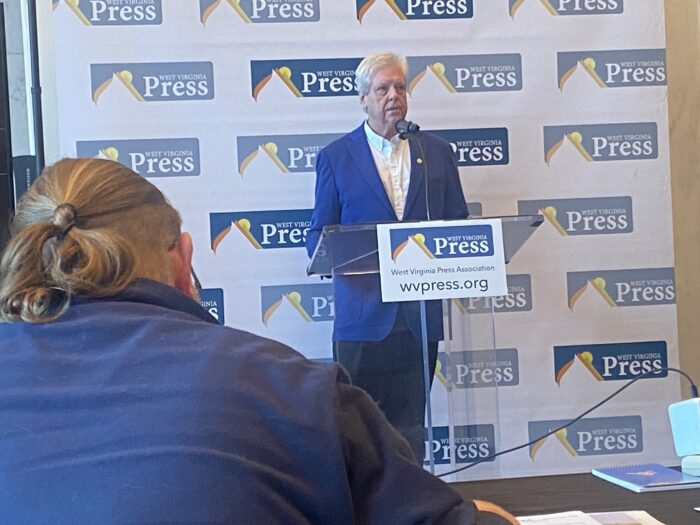
Cutting consumer utility bills and changing core high school graduation requirements were two of the many issues discussed at the annual press lookahead for West Virginia’s 2026 legislative session.
State Senator and Education Committee Chair Amy Grady, R-Mason, was among the state political and industry leaders addressing legislative priorities to the West Virginia media.
Grady said with future state employment needs changing the focus of what classes to teach, there needs to be a fundamental change in each county’s long-standing. blanket requirements to get a high school diploma.
“We need to allow counties to have flexibility to provide opportunities for kids,” Grady said. “Allow them to go ahead and get those credentials that they need in high school so that they can be successful when they graduate, instead of just forcing upon every single student the same exact thing.”
Grady also said the growing number of West Virginia’s Special Education students is creating increasing school costs and a need for more Special Education teachers.
For years, the now super-minority of House and Senate democrats has pushed for legislation to lower consumer utility bills. Senate Minority Leader Mike Woelfel, D-Cabell, said a key to initiate utility bill reform is to have Public Service Commission board members elected instead of being appointed by the governor. Woelfel said it’s an issue of accountability, or lack thereof.
Sen. Mike Woelfel, (D-Cabell) takes the podium at 2026 Legislative Lookahead.
Photo by Randy Yohe/West Virginia Public Broadcasting.
“You’ve got people that are appointed by the governor, and they’re in some office, and they’re not at all accountable to the people, and I want them to be accountable to the people when they take the votes that affect the lives of every West Virginian. Our water rates are the highest in the country, and our other utility rates are rising faster than any state in America, and our people cannot tolerate that. They can’t afford it. We have to act.”
Woelfel also said with more than six thousand West Virginia children in foster care, the legislature must prioritize and increase resources to the still struggling program.
Woelfel announced earlier this week he will not seek another term as state Senator. The 60 day 2026 Legislative Session begins Wednesday, January 14.
Add WVPB as a preferred source on Google to see more from our team
Silas House is a major voice for Appalachia. The Kentucky native has written more than 15 books and served as the state's poet laureate. His latest book is The Tulip Poplars, a sweeping novel about the lives of four people as they navigate friendship and forbidden love throughout the 20th century. Inside Appalachia's Mason Adams spoke with House.
Ryan Saxe, superintendent of Berkeley County Schools, said the suit is about whether West Virginia school funding system adequately supports what school districts are responsible for providing their students.