Updated July 31 at 4:17 p.m.
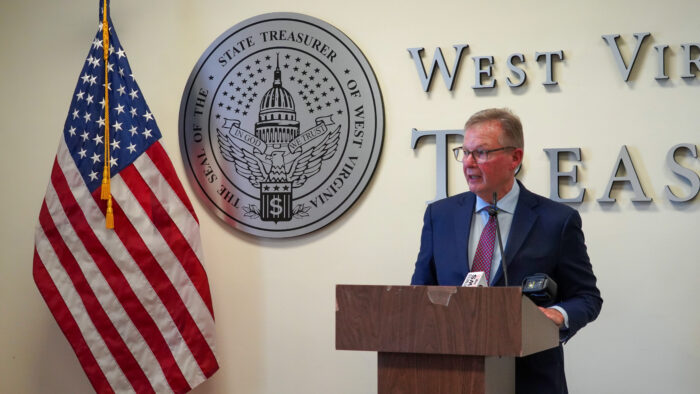
State Treasurer Larry Pack told West Virginia Public Broadcasting in a call Friday afternoon that a lack of notice is his major concern for how the state’s School Clothing Allowance Program was closed. He pointed out that Gov. Patrick Morrisey could have proposed cuts to the program during the budgetary process of the 2026 legislative session.
“No change in programs were announced or anything like that, so no notification went to the possible recipients this July for the clothing vouchers,” Pack said. “In May, they made some statements that some point in the future, maybe 13 months, that they were going to run out of money, so they’re going to have to be some structural changes made to the program, and that he was going to work, or the administration was going to work with the legislature to go through all that stuff, nothing was heard until you get to the first July.”
The treasurer said he is incredulous that the money for clothing vouchers has been depleted, especially with a $370 million surplus coming out of fiscal year 2026 that ended in June, and July poised to be announced as another month of surplus early next week. But he said even if the program did run out, West Virginia families should have been forewarned.
“He didn’t give these families notice that this money may not be there, or this money would not be there. And I just think he’s pulled the rug out from people and really changed the rules in the middle of the game,” Pack said. “It’s something we you know we don’t do in West Virginia. We wouldn’t do it for a business, and we sure don’t want to do it to these folks that are just trying to take care of their kids and get their kids ready for school.”
Pack admits that it’s uncommon for officials in the capitol building to disagree so publicly, but the lack of concrete information around the school clothing allowance program needs to be addressed.
“We’re not exactly sure what it is, but what we do know, in fact, is that $170 million has not been expended in 31 days of July,” he said. “We know there’s still money there. For some reason, this is a decision that they have made, that they’re not going to spend any more or provide this benefit to any more than 52,000 students this year. That’s an arbitrary number.”
The treasurer is adamant that the administration “turned off the spigots to this program. They can turn it back on in a moment’s notice. We absolutely have the money.”
West Virginia Public Broadcasting reached out to the governor’s office for comment, but has not received a reply at the time of this update.
Original Story:
In a statement released Thursday afternoon, State Treasurer Larry Pack said it was unacceptable that the state claims to lack funding to help children while celebrating millions of dollars in budget surplus.
“Providing for these needy children is a fundamental duty of government. With rising costs, we must do more to ensure that needy families have the resources required to give their children a real chance at success,” Pack said.
The West Virginia School Clothing Allowance Program, which provides families with a $200 voucher to buy clothing before the school year starts, closed after just one week because available Temporary Assistance for Needy Families (TANF) funds allegedly ran out.
The program, which normally begins accepting voucher applications on July 1, was delayed for three weeks this year as the West Virginia Department of Human Services (DoHS) conducted a comprehensive review of TANF programs.
Gov. Patrick Morrisey announced in May that an initial audit of the TANF program showed a deficit of $40 million. The DoHS explained earlier this month that the TANF review was necessary due to the end of one-time funding made available during the COVID-19 pandemic.
Pack joins private nonprofits and lawmakers in openly expressing skepticism of the TANF funding issues. Jim McKay, state director of Prevent Child Abuse West Virginia, told West Virginia Public Broadcasting earlier this month that the federal TANF block grant to West Virginia is approximately $110 million per year. That clashes with a claim that Morrisey made July 17 that the state’s federal grant is just $98.8 million per year.
“The governor should collaborate openly with the legislature and have a transparent, formal discussion about the true cost of this program and how we will fund assistance in the future,” Pack said. “Identifying a problem without outlining any clear solutions helps no one. By working together, we can better serve the people of our state.”
This year, over 52,000 children applied for assistance, leaving others wondering how they will do without. The program was officially set to run until August 15 or until funds were exhausted. Each summer more than 80,000 children have received the clothing allowance for the last several years.
The West Virginia Legislature appropriated $177 million for TANF in the state budget for fiscal year 2027, approved and signed by the governor.
In response to Pack’s comments, a representative from the governor’s office told West Virginia Watch the treasurer’s comments “appear to be more political posturing rather than a serious discussion about the long-term sustainability of these programs.”
“Gov. Morrisey fought to make sure the state’s most vulnerable kids were taken care of while making sure the program was sustainable for future generations,” Lars Dalseide, the governor’s communications director, told Watch. “Treasurer Larry Pack is being completely disingenuous as his decisions as the Revenue Secretary were irresponsible and put future kids’ future programs at risk. The support of West Virginia kids is largely consistent with last year, and to say otherwise is simply political theater. It’s unfortunate and West Virginia expects better.”