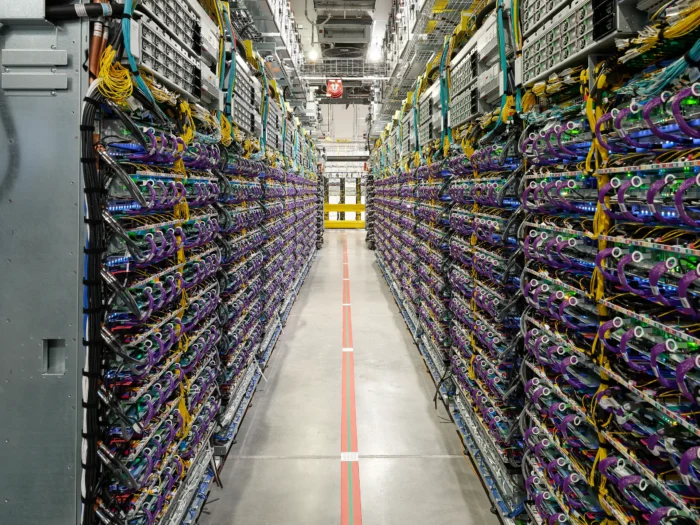
During May interim meetings of the West Virginia Legislature Matt Irby, state tax commissioner, told lawmakers that estimates of tax revenue from data centers are based on the best information available today. He said it will be years before a large-scale data center is built that state officials can formally assess for tax revenue.
Treasurer Larry Pack has now attempted to update the “best information available.” He released Tuesday a tax analysis report on two data center projects: the Berkeley County Penzance Management project and the Google project in Putnam County.
The analysis places the total tax income from the two projects at over $100 million annually, a fraction of the roughly $17 billion the companies will spend developing the data centers.
“There’s a lot of confusion about these data center projects. That’s why we worked to clarify their impact, so the public understands what it means for their community,” Pack said. “Regardless of what the estimates say, we know that community buy-in is crucial to any economic development project, and that is why it’s important that we be as transparent as possible about the total impact of these data center projects. If these projects come to fruition, we want citizens to be ready to talk with their local and state officials on how best to spend these dollars to benefit their communities.”
State code gives data centers significant tax breaks, including the valuation of property like computer servers for tax purposes at 5% of its original cost.
The state also waives the 6% state sales tax for high-technology business services including computers, servers and building materials for direct use in a high-technology business.
The analysis focuses on how the distribution formula for property taxes associated with data center investments could affect local government entities, including county commissions, county school boards, and other associated entities. According to House Bill 2014, 70% of all tax revenue is diverted to the state’s coffers, leaving 30% for local governments to distribute as they see fit.
The analysis, completed by Mark Muchow, West Virginia Treasury strategic analyst, shows the expected government revenue gained is $10.5 million for the Berkeley County Commission and $8.3 million for the Putnam County Commission annually. School districts in those areas are expected to receive $28.3 million and $17.4 million, respectively. The Personal Income Tax (PIT) Reduction Fund would receive more than $27.9 million. Other counties would share $5.6 million, or an average of roughly $100,000 per county.
“As state and local governments consider adding more data centers, we must ensure the benefits outweigh the drawbacks. West Virginia citizens and their needs must stay front and center in these discussions,” Pack said. “Economic growth and diversification must be our top priority if we are to move West Virginia forward. Only through pro-growth policies can we set West Virginia on a brighter path.”