


Aluminum Plates For Deep Space Win W.Va. 'Coolest' Contest
Aluminum plates that helped keep astronauts on the Artemis II rocket safe won the first ever Coolest Thing Made In West Virginia competition.
Continue Reading Take Me to More NewsAlert (09/29/2026): Our Parkersburg TV transmitter is still undergoing maintenance and remains temporarily inoperative. We apologize for the inconvenience.
All our programming is available via our TV livestreams on our website and WVPB Passport. Thank you for your patience!




To Educate, Inform, and Inspire by Telling West Virginia's Story
Mountain Readers Week will be held Oct. 5-9, 2026! Celebrate and foster a love of reading in children across West Virginia.
Nominate an exceptional West Virginia K-12 teacher today!

On Demand

On Demand

Stream original productions from WVPB

Watch locally produced documentaries & more.

On Demand

On Demand






West Virginia Morning

Inside Appalachia

West Virginia Week

Mountain Stage

Us & Them

The Legislature Today

The Legislature This Week

Send us your comments and questions.

Stream our board meetings.

Check out the latest WVPB news.

Sign up for our newsletter and get weekly updates.

Meet the WVPB staff.

WV Educational Broadcasting Commission, the WVPB Foundation, and the Friends of WVPB.

Come work with us!

Read our annual report and learn how we educate, inform and inspire with your support.

Sponsor impactful and engaging media and entertainment.

Use your IRA to make a gift to WVPB.

Become a member with your gift of $1,000 or more.

Make WVPB part of your legacy.

Manage your membership account.

Learn how you can Protect and Sustain West Virginia Public Broadcasting.
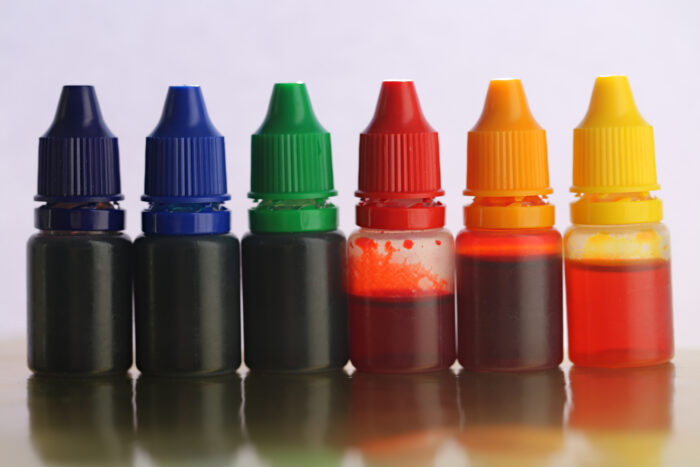
West Virginia was the first in the nation to implement a new law that bans several artificial food dyes from school lunches. House Bill 2354 was signed into law by Gov. Patrick Morrisey this spring and went into effect on August 1. A statewide ban on those same dyes and preservatives is set to take effect on Jan. 1, 2028.
The law prohibits the use of FD&C Blue No. 1, FD&C Blue No. 2, FD&C Green No. 3, FD&C Red No. 3, FD&C Red No. 40, FD&C Yellow No. 5, FD&C Yellow No. 6 and preservatives butylated hydroxyanisole (BHA) and propylparaben.
Earlier this month, the International Association of Color Manufacturers filed a lawsuit in the U.S. District Court for the Southern District of West Virginia, seeking to stop it.
Sen. Jason Barrett, R-Berkeley, was one of the supporters of the law.
“My job is to do the best job I can for the people of the 16th district and all of West Virginia,” he said. “And if there are large corporations from out of state that don’t like it, that’s the least of my concerns.”
The complaint named Arvin Singh as the cabinet secretary of the Department of Health, Justin Davis as the interim commissioner of the West Virginia Bureau for Health and the entire state school board along with Michele Blatt, the state superintendent of schools.
In the complaint, the trade association says “West Virginia’s new law arbitrarily prohibits certain named synthetic color additives — used to color food and beverage products — that the U.S. Food and Drug Administration (“FDA”) evaluated and certified as safe decades ago.”
The association also said “the FDA conducted an extensive investigation into the synthetic color additives that H.B. 2354 targets. After a thorough review and testing process, the FDA approved seven synthetic colors as safe for use—including each of the colors West Virginia now bans.”
Barrett questioned why the association is suing only West Virginia.
“I would point out that the state of California passed a similar ban of synthetic food dyes, petroleum based food dyes and their schools to go in effect at the beginning of 2027 and that bill was passed prior to our legislation passing,” he said. “However, the International Association of Color Manufacturers isn’t suing the state of California, so it makes me wonder why they have chosen to pick on West Virginia, and maybe they think that West Virginia is an easier place to get a victory.”
Barrett explained that he and Delegates Evan Worrell, R-Cabell, and Adam Burkhammer, R-Lewis, all watched a documentary called “To Dye For” that detailed problems with the dyes and how many are banned in Europe and other countries.
“Frankly, our goal was really to try to get it through as fast as possible before some of these large food companies and beverage companies showed up to lobby against it,” he said. “But I want to give credit to the large beverage companies like PepsiCo, large food manufacturers like Kraft, Heinz, Kellogg’s and others who are now, because of the law in West Virginia, they are now removing synthetic food dyes out of their products.”
A statement from Gov. Patrick Morrisey’s office read:
“Our office stands by the law passed by the West Virginia Legislature and signed by the governor earlier this year to clean up our food and protect the health and well-being of West Virginia families. Many of these food dyes are already banned or being phased out in European countries due to their links to negative health effects, especially in children. Companies have been able to adapt to those markets, and West Virginia’s law provides ample time for them to do so.
“We are confident H.B. 2354 will withstand legal scrutiny and our focus will remain on protecting West Virginians.”
A request for comment from the Attorney General JB McCuskey’s office went unanswered but Barrett said he has complete confidence in “Attorney General McCuskey and his staff to represent West Virginia well in this lawsuit.”
It is unclear when the complaint would be heard in court.
Add WVPB as a preferred source on Google to see more from our team

Lesions, sores and an itchy, red rash have affected more than 50 Wyoming County public school students.
Continue Reading Take Me to More NewsWest Virginia will apply to host the country's future United States Space Academy.
Continue Reading Take Me to More NewsThe Campaign Finance Reporting System (CFRS) through the West Virginia Secretary of State’s office is available to the public online.
Continue Reading Take Me to More NewsStories abound of people using large language models, colloquially referred to as artificial intelligence (AI), to write reports, only to discover that the computer used fake sources and made-up references. This interview explores the best way to use AI to get what you want – and not fabricated or false answers that seem real.
Continue Reading Take Me to More News