On this week’s encore broadcast of Mountain Stage, CBS Sunday Morning correspondent Conor Knighton joins us as guest host to welcome The Baseball Project, The Minus 5, Bob Mould, Chris Stamey, and Loose Cattle.
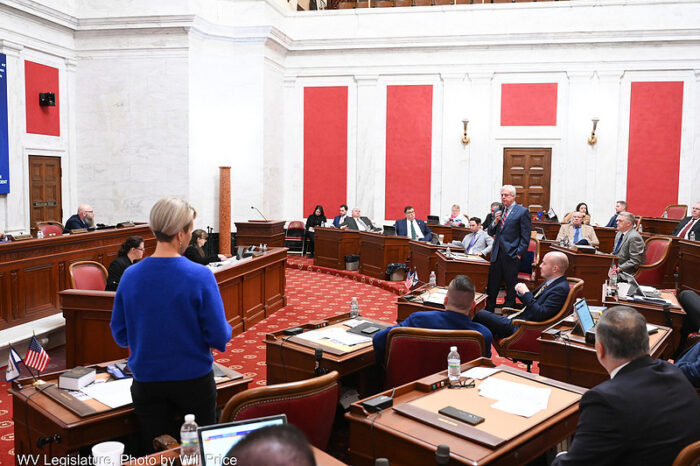
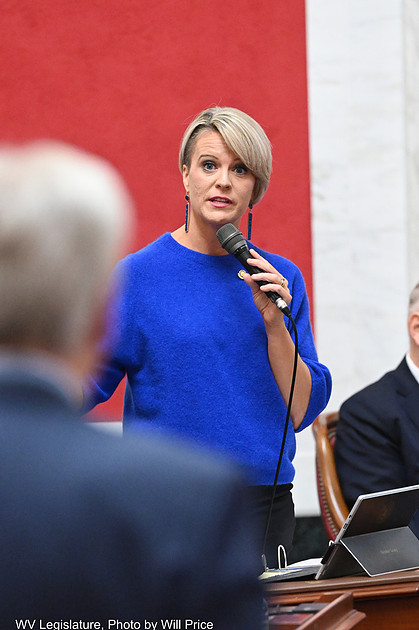
Sen. Amy Grady, R-Mason, standing left, and Sen. Mike Woelfel, D-Cabell, standing right, discuss an amendment to Senate Bill 388.Will Price/WV Legislature
Listen
Share this Article
Discussion on the West Virginia Senate floor on a bill to place the historically significant Robert Aitken Bible in certain public school classrooms Wednesday turned contentious.
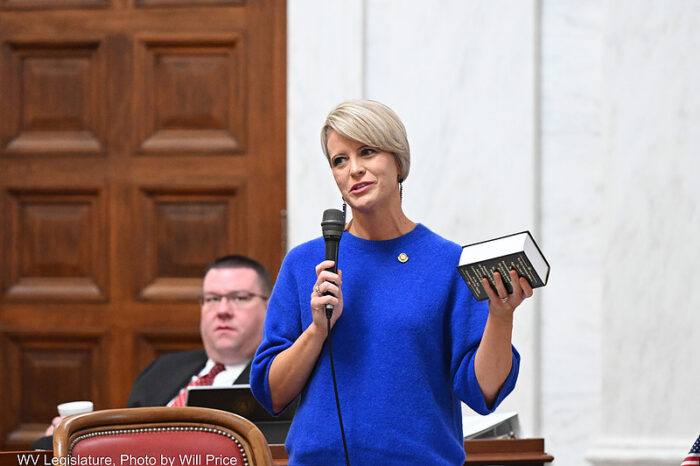
Sen. Amy Grady, R-Mason, lead sponsor of the bill, holds an Aitken Bible on the Senate floor Wednesday.
Photo Credit: Will Price/WV Legislature
Senate Bill 388 would require the Aitken Bible be made available as a resource for 4th, 8th and 10th grade students.
The Aitken Bible was first published in 1782 when the English Bible couldn’t be imported to the colonies due to the Revolutionary War.
In addition to the scriptures, supporters of the bill say it represented the nation’s new found independence.
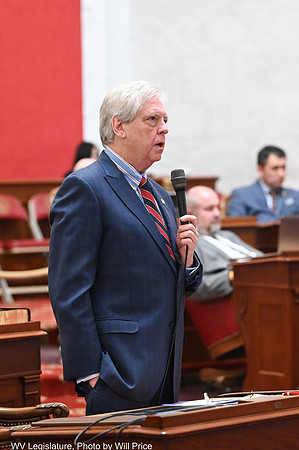
Sen. Mike Woelfel, D-Cabell, explains his proposed amendment to Senate Bill 388.
Photo Credit: Will Price/WV Legislature
Sen. Mike Woelfel, D-Cabell, wanted to amend the bill to include the Catholic American Bible.
“As we look around our room, our chamber today, we don’t have a lot of religious diversity, and I think, I think this amendment adds to that, gives the bill some balance,” Woelfel said.
But teacher and chair of the Senate Education Committee Sen. Amy Grady, R-Mason, opposed the amendment.
“We are focused solely on the historical significance as it pertains to our revolutionary time period and when America was gaining its independence,” Grady said. “That’s the significance of this Bible, Mr. President, and I oppose the gentleman’s amendment.”
Sen. Ryan Weld, R-Brooke, pointed out that the Catholic version has seven books more in the Old Testament. He supported the amendment.
Sen. Eric Tarr, R-Putnam, opposed the amendment calling it “a poison pill” to be struck down in the courts and said the Aitken Bible was recognized during the American Revolution because printing presses were such an important form of communication.
Other colleagues weighed in on the religious and historical significance of both versions. But the exchange between Woelfel and Grady took a sharper tone.
Sen. Mike Woelfel, D-Cabell, looks on as Sen. Amy Grady, R-Mason, explains her reasons for voting against his amendment to SB 388.
Photo Credit: Will Price/WV Legislature
“What’s wrong with my Bible?” Woelfel asked Grady.
“I didn’t say there was anything wrong with your Bible,” she responded.
“You’re rejecting it. Why is your Bible better than my Bible?” Woelfel replied.
“This Aitken Bible, which I stated whenever I opposed your amendment, has a historical significance to the American Revolution. That is the basis of this bill,” Grady said. “We are simply talking about the significance in trade with Britain that happened during this time, and these specific classes focus on that content.”
The amendment failed by a vote of 25 nays to 8 yeas. The Senate is expected to consider passage of the bill as soon as Thursday.
Add WVPB as a preferred source on Google to see more from our team
Much of West Virginia remains under a flood watch through 8 a.m. Sunday. The National Weather Service predicts multiple thunderstorms, some of them severe, across the state.
The industrial warehouse fire in Parkersburg is completely out and the shelter in place order has been lifted. Now is the time for cleanup and remediation, as well as an investigation into what caused the blaze.
On this West Virginia Morning, affordable dental care is a little-talked-about challenge low-income families face in this state, but there is an effort underway to change that.