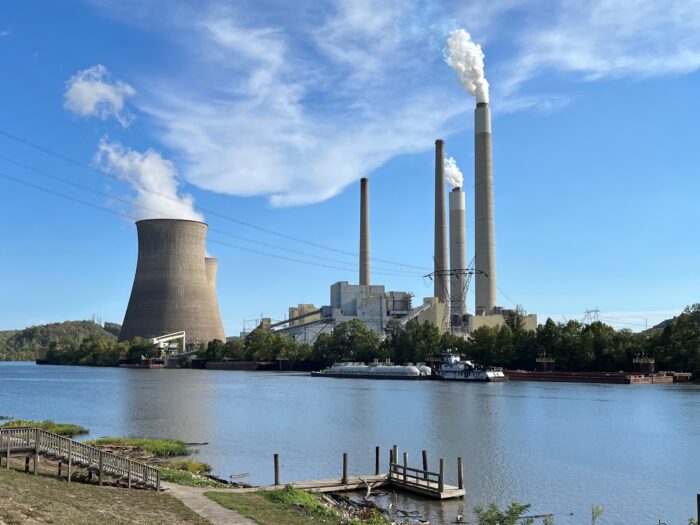
Gov. Patrick Morrisey recently announced major investments in West Virginia’s energy sector. But community advocates are questioning the benefits of those investments.
Morrisey said the state has secured more than $4 billion in private-sector energy investments. The majority – more than $3 billion – are for plans to construct two new gas power plants and further build out two of the state’s existing gas facilities.
More than $1 billion of that money comes in the form of low-interest loans from the U.S. Department of Energy (DOE) to refurbish six of the state’s coal-fired power plants, extending their lives by up to 20 years.
In a press release, the West Virginia Chapter of Sierra Club has questioned the wisdom of the investments, noting that payments on the low-interest DOE loans will be passed on to West Virginian ratepayers.
“Our state leaders continue to keep ratepayers stuck, tossing billion dollar lifelines to the sinking coal industry,” Jim Kotcon, chair of the West Virginia Chapter of Sierra Club wrote. “Every dollar Governor Morrisey and DOE say is being ‘invested’ in coal means decades of higher energy bills and difficult financial decisions for our state’s families.”
The cost to generate electricity from coal has increased faster than the rate of inflation, according to a report by Energy Innovation Policy and Technology earlier this year. That has led electricity customers to pay more than $6 billion more for the same amount of coal power in 2024 than they did in 2021.
“Most of these plants operate less than half the time, because they simply cannot compete with lower-cost sources,” Kotcon said. “We need to transition our electric utilities and should be investing in the cheapest, fastest, cleanest and safest sources of electricity. That is not coal.”
The Sierra Club also highlighted their own analysis of the public health impacts of coal-based energy production, noting that in-state coal plants account for hundreds of hospital visits and 20 West Virginian deaths annually.
West Virginia’s coal plants also account for 335 out-of-state deaths annually.
Add WVPB as a preferred source on Google to see more from our team