


Aluminum Plates For Deep Space Win W.Va. 'Coolest' Contest
Aluminum plates that helped keep astronauts on the Artemis II rocket safe won the first ever Coolest Thing Made In West Virginia competition.
Continue Reading Take Me to More NewsAlert (09/29/2026): Our Parkersburg TV transmitter is still undergoing maintenance and remains temporarily inoperative. We apologize for the inconvenience.
All our programming is available via our TV livestreams on our website and WVPB Passport. Thank you for your patience!




To Educate, Inform, and Inspire by Telling West Virginia's Story

Mountain Readers Week will be held Oct. 5-9, 2026! Celebrate and foster a love of reading in children across West Virginia.

Nominate an exceptional West Virginia K-12 teacher today!

On Demand

On Demand

Stream original productions from WVPB

Watch locally produced documentaries & more.

On Demand
On Demand





West Virginia Morning

Inside Appalachia
West Virginia Week
Mountain Stage
Us & Them
The Legislature Today
The Legislature This Week

Send us your comments and questions.

Stream our board meetings.

Check out the latest WVPB news.

Sign up for our newsletter and get weekly updates.

Meet the WVPB staff.

WV Educational Broadcasting Commission, the WVPB Foundation, and the Friends of WVPB.

Come work with us!

Read our annual report and learn how we educate, inform and inspire with your support.

Sponsor impactful and engaging media and entertainment.

Use your IRA to make a gift to WVPB.

Become a member with your gift of $1,000 or more.

Make WVPB part of your legacy.

Manage your membership account.

Learn how you can Protect and Sustain West Virginia Public Broadcasting.
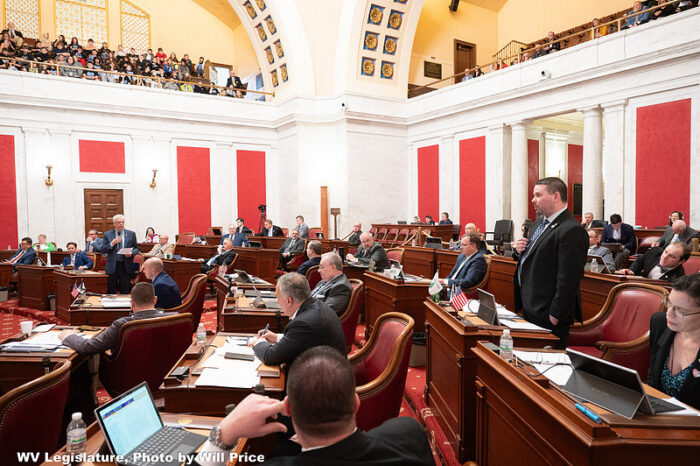
Among the more than two dozen bills passed by the Senate on Wednesday’s Crossover Day: the West Virginia First Energy Act.
Supporters say Senate Bill 420 is designed to stabilize electric bills by increasing the use of in-state coal-fired energy. It sets a minimum production rate of 69% that opponents like Sen. Tom Takubo, R-Kanawha, say will have the opposite effect.
“When we mandate that coal fired power plants have to run at 69% capacity, regardless if we need the energy or not, it’s going to run up rates on the electric bills,” Takubo said.
Sen. Eric Tarr, R-Putnam, said applying the economics of the proposed bill from January to November, 2025, would have brought massive utility bills to West Virginia customers.
“Those costs would have been pushed back onto rate payers at $80 million,” Tarr said. “If you go back and look at an 18-month period applying this same bill between January of 2023 through June of 2024, 18 months, that’s almost a quarter billion dollars that would come back in increased cost on electricity rates to the people of West Virginia.”
Multiple opponents of the legislation said they thought the bill was well-intentioned, but would have a negative impact on utilities. Sen. Chris Rose, R-Monongalia, said the bill fights back against the war on coal.
“And, quite frankly, anyone who votes against this, I feel sorry for you,” Rose said with a chuckle. “It’s election year for some of you. I feel sorry for that, because this is a Friends of Mamaw bill. And far as the way of the road we’re going down, moving away from coal, she can’t afford it.”
The bill passed 22-11 and moves now to the House of Delegates.
Add WVPB as a preferred source on Google to see more from our team

West Virginia will apply to host the country's future United States Space Academy.
Continue Reading Take Me to More NewsThe Campaign Finance Reporting System (CFRS) through the West Virginia Secretary of State’s office is available to the public online.
Continue Reading Take Me to More NewsLast week, we aired the first part of an interview with a WVSU professor about what is AI. In the second part of that interview, we explore the best way to use AI to get what you want – while avoiding fabricated or false answers that seem real.
Continue Reading Take Me to More NewsThe West Virginia Extension service is asking volunteer firefighters why departments are struggling to recruit and maintain members and what support firefighters need.
Continue Reading Take Me to More News