Alert (09/29/2026): Our Parkersburg TV transmitter is still undergoing maintenance and remains temporarily inoperative. We apologize for the inconvenience.
All our programming is available via our TV livestreams on our website and WVPB Passport. Thank you for your patience!
This week, author Silas House returns with a sweeping new novel. Also, some folks say, you have to fake it 'til you make it, even if you're trying to establish a state park. And, the story of the first Mothman sightings as written by a small town journalist in 1966.
Brushfire Burns 100 Acres Atop Morgan County Mountain, Has Been Contained
Smoke rises in the Cacapon Mountain region in this photograph shared to Facebook on Sunday, Dec. 8. A wildfire atop the mountain has since been contained, local officials say.Emily.Roxberry.5/Facebook
Listen
Share this Article
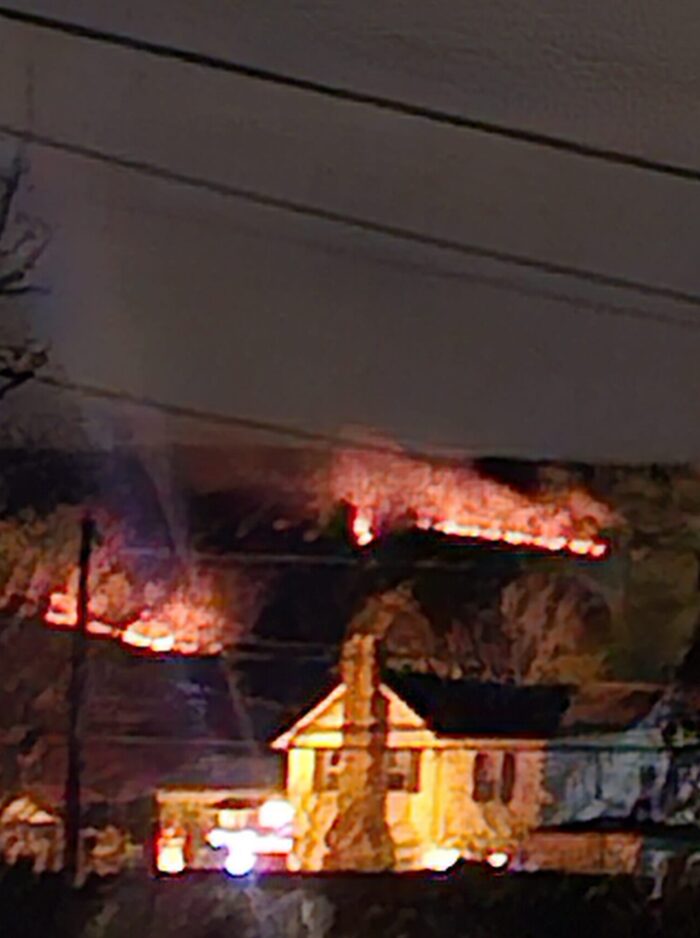
Over the weekend, local officials say a brushfire burned more than 100 acres of wilderness atop the Morgan County region of Cacapon Mountain, near the rural community of Great Cacapon.
The fire was still burning as of early Monday afternoon, but has since been “completely contained” by emergency response teams, according to Morgan County Emergency Communications Director Marshall Younker.
Younker said Morgan County emergency responders called in support outside the county to help reduce the burning.
“There were multiple agencies from around the area, both from inside West Virginia and outside West Virginia,” he said.
Local response teams have not yet identified the cause of the fire, which was first identified in the “late morning, early afternoon” on Saturday, Younker said. No injuries or structural damages were reported.
On Sunday, flames “got fairly close to one house,” so emergency response teams staged a “structural protection” apparatus around it, Younker said. Ultimately, it did not come into use.
“There was never an immediate danger to the house,” he said.
Fire was visible atop Cacapon Mountain, documented in this photo shared online Dec. 8.
Photo Credit: Elizabeth O’Meally/Facebook
Flames approach a home in the rural Cacapon Mountain region.
Photo Credit: J.B. Bailey/Facebook
According to Younker, small-scale brushfires are not unusual for the area during drier times of year.
“The fire was a little bigger than what we normally deal with, but brushfires this time of year are fairly common,” he said.
From Oct. 1 to Dec. 31, West Virginia tightens burning regulations because drier fall weather can contribute to the spread of man-made wildfires, according to the West Virginia Division of Forestry.
During these months, and another restricted burning period in the spring, outdoor burning is allowed only from 5 p.m. to 7 a.m. Burning during daytime hours is prohibited, and all fires must be contained by a ring or a safety strip.
Violating state burning policies during fall and spring months can result in fines from $100 to $1,000.
This fall, the state enacted a temporary ban on outdoor burning due to low water levels and dry weather. These conditions can contribute to the spread of wildfires, according to a November press release from the office of Gov. Jim Justice.
Despite the ban, fires stretched across several regions of West Virginia last month, burning through thousands of acres of land.
For a full list of outdoor burning regulations, visit the West Virginia Division of Forestry website.
Add WVPB as a preferred source on Google to see more from our team
West Virginia Attorney General JB McCuskey has launched a broad investigation into many of the state's leading environmental groups, demanding a decade of internal records involving their fundraising and climate change advocacy as part of a probe into “alleged unfair or deceptive acts."
As people take a greater number of medications across years or decades, experts say the risk for adverse drug interactions increases. One way to advocate for yourself? Keep a list of your meds handy. We listen to the latest story from health series, HealthQ, a collaboration between Nashville Public Radio and KFF Health News, with reporters Cara Anthony and Blake Farmer.