Alert (09/29/2026): Our Parkersburg TV transmitter is still undergoing maintenance and remains temporarily inoperative. We apologize for the inconvenience.
All our programming is available via our TV livestreams on our website and WVPB Passport. Thank you for your patience!
Barbara Kingsolver is one of Appalachia’s foremost writers. She’s written a string of bestsellers, like "The Poisonwood Bible" and "Demon Copperhead," which won her the Pulitzer Prize. Inside Appalachia’s Mason Adams met Kingsolver at her home outside Abingdon, Virginia, to talk art, writing and her latest book, "Partita." We listen to an excerpt from that interview.
What Is Appalachia? We Asked People From Around The Region. Here’s What They Said
The Shenendoah Valley in Virginia.
Listen
Share this Article
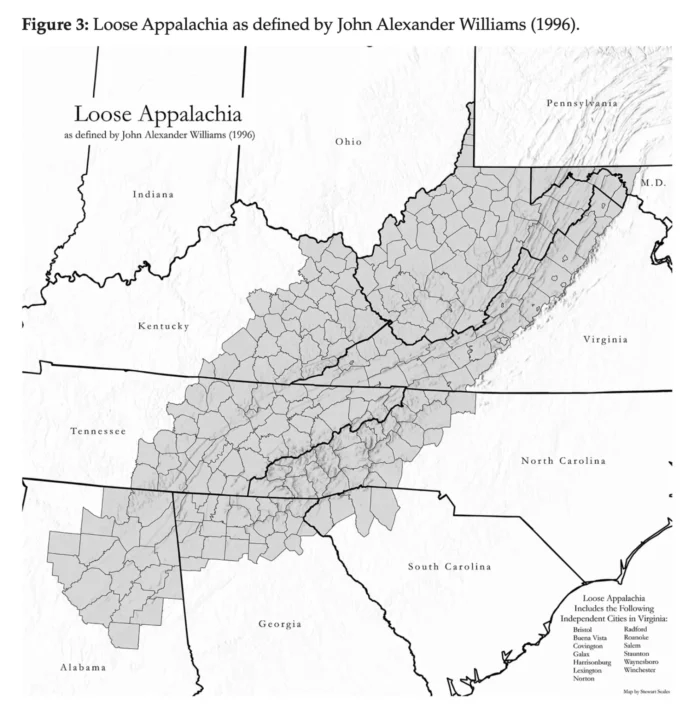
Appalachia connects mountainous parts of the South, the Midwest, the Rust Belt, even the Northeast. The Appalachian Regional Commission defined the boundaries for Appalachia in 1965 with the creation of the Appalachian Regional Commission, a part of Lyndon B. Johnson’s War on Poverty. It was legislation that sought to expand social welfare, and some localities were eager for the money, while others resisted the designation. The boundaries and definition of Appalachia can only be changed by an act of Congress.
Politically, Appalachia encompasses 423 counties across 13 states — and West Virginia’s the only state entirely inside the region.
Southern Appalachia
That leaves so much room for geographic and cultural variation, as well as many different views on what Appalachia really is. For Inside Appalachia this week, we’re turning our entire episode over to the question, “What is Appalachia?” With stories from Mississippi to Pittsburgh, we ask people across our region whether they consider themselves to be Appalachian.
Mississippi
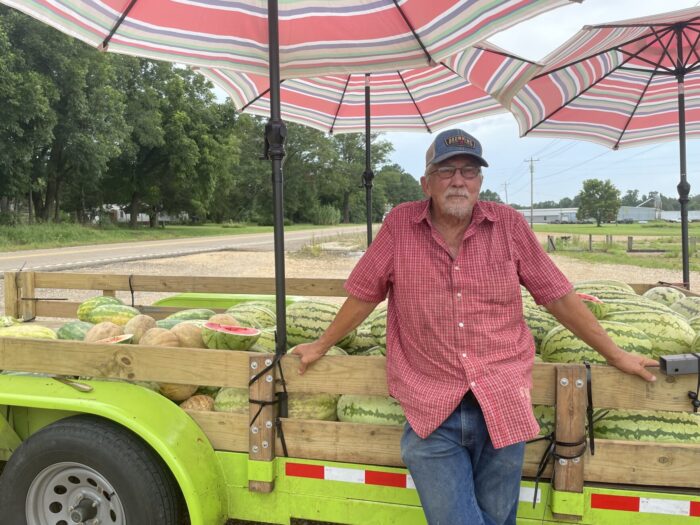
Bob Owens -- locally known as ‘Pop Owens’, standing in front of his watermelon stand outside New Houlka, Miss. Pop said he was aware that Mississippi is part of Appalachia, but that no one in the state would consider themselves Appalachian.
Bob Owens is a watermelon farmer outside New Houlka, in the northeastern part of Mississippi. Owens said he was aware that Mississippi is part of Appalachia, but that no one in the state would consider themselves Appalachian. “I consider myself the worst redneck you’ve ever seen,” Owens said. “I live in the area of the Appalachian mountain range—not part of it, but close to it. So I guess you call me a redneck Appalachian.” This is the general consensus among the people in Mississippi we spoke to.
Geographically, the foothills of the Appalachian mountain range are located in northern Mississippi. The state’s tallest point is Woodall Mountain, 806 feet in elevation. For reference, the highest point in North Carolina, Mount Mitchell, is more than 6,600 feet in elevation, eight times higher than Woodall Mountain.
Co-host Caitlin Tan spoke with Texas State University History professor Justin Randolph, who wrote an essay for “Southern Cultures” called “The Making of Appalachian Mississippi.” Randolph argues in his essay that Mississippi became part of Appalachia for political and racial reasons, as well as economic advantages the designation brought the 24 counties in Mississippi that were included in the ARC’s boundaries.
Shenandoah Valley
In the 1960s, while some localities were clamoring to get into Appalachia, on the eastern edge of the region some lawmakers fought to keep their counties outside the boundaries, including politicians in Roanoke, Virginia and the Shenandoah Valley. Appalachian Studies associate professor Emily Satterwhite said explaining to her students why some counties in Virginia are included in Appalachia, but others aren’t is confusing. “The students in front of me are wondering why they’re not included,” White said.
Pittsburgh
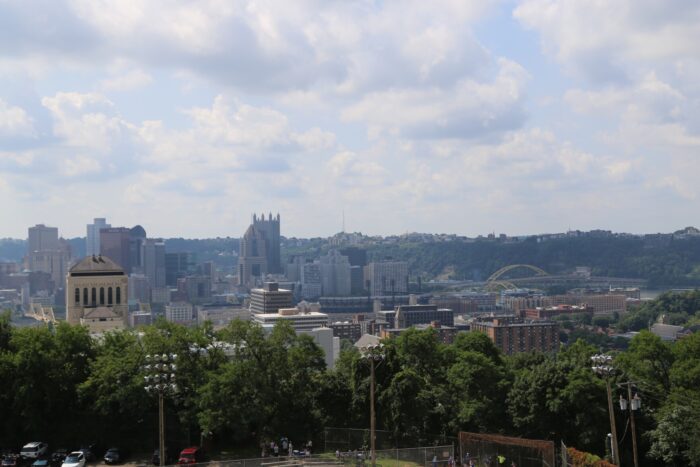
The Pittsburgh, Pennsylvania skyline.
Appalachia’s largest city is Pittsburgh, Pennsylvania. When we asked people from that city to tell us if they consider it a part of Appalachia, about half said no. “I definitely do not feel that I am Appalachian culturally,” said Mark Jovanovich, who grew up just outside Pittsburgh’s city limits in the Woodland Hills area. “Personally, I would consider the city of Pittsburgh is sort of like a mini New York City. I guess we’d probably be lumped in as like a Rust Belt city, which makes enough sense, but definitely not Appalachian culturally.”
An editor advised him to change the title of his book to a phrase that he said is sometimes used to refer to Pittsburgh derisively. “I couldn’t figure out why that should be a putdown, because Paris is nice. And Appalachia is a beautiful part of the world. And if we were called the Paris of the Rockies, we wouldn’t run from that. So why would we run from this? Why don’t we embrace it? So that became the title of my book.”
He said that geographically, Pittsburgh is clearly in the Appalachian Mountains. “I mean, this is one mountain range that stretches from Georgia to Maine. And the idea that it belongs only to the southern part of the mountain range defies logic to me,” O’Neill said.
What Do You Think?
How about you? Do you call yourself an Appalachian? Why or why not? Send an email to InsideAppalachia at wvpublic.org.
Reporters Jess Mador, Shepherd Snyder and Liz McCormick contributed to this episode.
Roxy Todd is our producer. Our executive producer is Andrea Billups. Kelley Libby is our editor. Our audio mixer is Patrick Stephens. Zander Aloi and Eric Douglas also helped produce this episode. You can find us on Twitter @InAppalachia. You can also send us an email to InsideAppalachia@wvpublic.org.
Add WVPB as a preferred source on Google to see more from our team
Barbara Kingsolver is one of Appalachia’s foremost writers. She’s written a string of bestsellers, like "The Poisonwood Bible" and "Demon Copperhead," which won her the Pulitzer Prize. Inside Appalachia’s Mason Adams met Kingsolver at her home outside Abingdon, Virginia, to talk art, writing and her latest book, "Partita." We listen to an excerpt from that interview.
For LGBTQ youth in Appalachia, estrangement from their families of origin can be a common and heartbreaking experience. So, some LGBTQ people rely on “chosen family." In Roanoke, Virginia, the culture of ballroom offers the safety and stability of family, along with traditions that are handed down — traditions like vogueing. Mason Adams reported this Folkways story, in collaboration with Brad Kutner and Kelley Libby.
A specific style of ballroom dance is helping disenfranchised young people find community in Appalachia. In our latest episode of Inside Appalachia, we explore LGBTQ ballroom culture and community in Roanoke, Virginia. Mason Adams has this excerpt.
Through early October, the Blowing Rock Art and History Museum in North Carolina is hosting an exhibit celebrating one of the region’s most notable fiber artists – Barbara Grennell. The exhibit does more than expose people to great art; it asks people, what makes art, art? Folkways Reporter Wendy Welch reports.