Aluminum Plates For Deep Space Win W.Va. 'Coolest' Contest
Aluminum plates that helped keep astronauts on the Artemis II rocket safe won the first ever Coolest Thing Made In West Virginia competition.
Continue Reading Take Me to More NewsAlert (09/29/2026): Our Parkersburg TV transmitter is still undergoing maintenance and remains temporarily inoperative. We apologize for the inconvenience.
All our programming is available via our TV livestreams on our website and WVPB Passport. Thank you for your patience!




To Educate, Inform, and Inspire by Telling West Virginia's Story
Mountain Readers Week will be held Oct. 5-9, 2026! Celebrate and foster a love of reading in children across West Virginia.
Nominate an exceptional West Virginia K-12 teacher today!

On Demand

On Demand

Stream original productions from WVPB

Watch locally produced documentaries & more.

On Demand

On Demand






West Virginia Morning

Inside Appalachia

West Virginia Week

Mountain Stage

Us & Them

The Legislature Today

The Legislature This Week

Send us your comments and questions.

Stream our board meetings.

Check out the latest WVPB news.

Sign up for our newsletter and get weekly updates.

Meet the WVPB staff.

WV Educational Broadcasting Commission, the WVPB Foundation, and the Friends of WVPB.

Come work with us!

Read our annual report and learn how we educate, inform and inspire with your support.

Sponsor impactful and engaging media and entertainment.

Use your IRA to make a gift to WVPB.

Become a member with your gift of $1,000 or more.

Make WVPB part of your legacy.

Manage your membership account.

Learn how you can Protect and Sustain West Virginia Public Broadcasting.
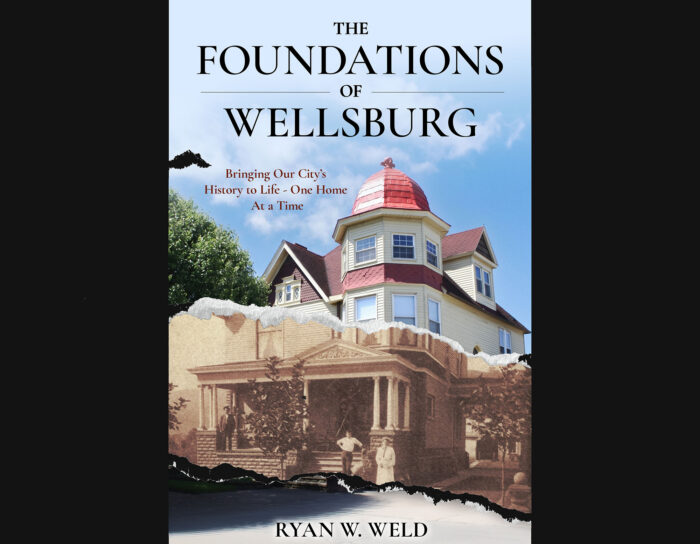
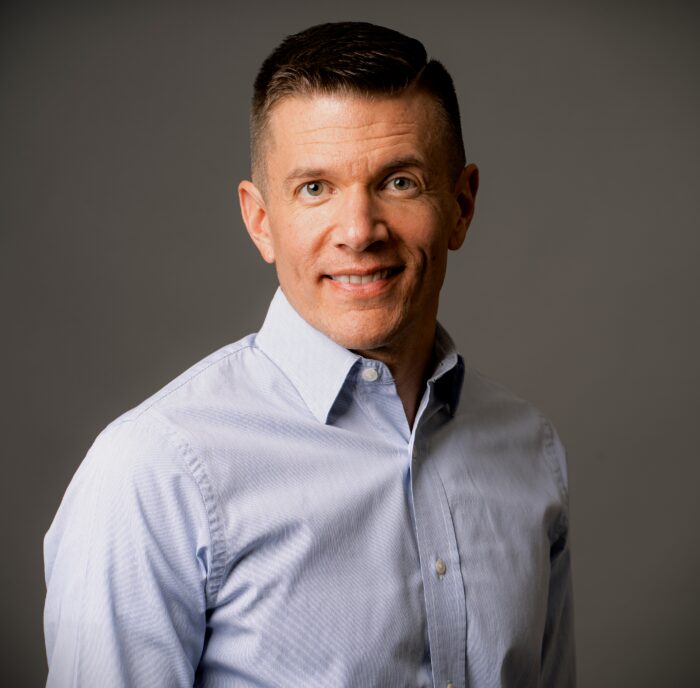
The Northern Panhandle town of Wellsburg dates before the Civil War as an Ohio River port town. State Sen. Ryan Weld, R-Brooke, has written a history of the town through a unique lens -- he focused on 14 homes in the town and the people who lived in them in a book called “The Foundations of Wellsburg: Bringing Our City’s History to Life – One Home At a Time.”
News Director Eric Douglas spoke with Weld to learn more about this project.
This interview has been lightly edited for clarity.
Douglas: You’ve been working on this for at least six years.
Weld: I started writing this book, at least doing the research, in February or March of 2018. You can only write when you have the time, and given my schedule and everything that I’ve got going on, really the times that I could sit and write and really focus on what I needed to do was generally the weekends for a couple hours each morning, and then maybe if I had a day off of work over a holiday, maybe take a few hours in the morning and work on it, and so it just, it took that long. The research part of it, I wanted to make sure I got this right, it was extremely important to me that whatever I put into this book was backed up by research that I had found, documents that I had found, interviews that I did with people that were then backed up by something, and so that’s why just the research alone took a long time, but I’m also just a painfully slow writer as well.
Douglas: Tell me what sparked this desire to do a history of Wellsburg?
Weld: A couple of years ago, I guess I should say more than a couple of years ago, at this point in time, my mom said, “You know, for as long as we’ve lived here, I don’t know anything about who owned the house before the people that we bought it from, or when was it built? I have no clue.” I thought I didn’t either, and so I said, “You know, I’m going to look into that,” and as a lawyer, obviously, I know how to do title work. I do it for my clients and my practice, and so I did a title search for the house to track down the ownership over the years. And then you go downstairs and look at the old land books to see the tax records, and you can figure out when it was built from there.
And then I started researching the names of the people that I found, then I started searching those names in Ancestry and newspapers.com newspaper archives, you know, all kinds of places, and I really was kind of intrigued at the story that I found.
I tracked down the man that would be the builder’s great-grandson, and he doesn’t live in Wellsburg, and he had never lived in Wellsburg, so I emailed him and said, maybe he had some pictures or anything like that. What he told me was that, as what happens becomes kind of disjointed over the years, and you lose track of people, and you don’t know who goes all the way back. He had understood that his great-grandfather, the guy who built my mom’s house, had taken his own life because he had lost all of his money in the Great Depression and the stock market crash of (19)29. Well, that didn’t really jive with my info, and what I had found. I had found that he died of natural causes at a hospital here in Wheeling, several months before the crash. And so I verified everything, looked it up again, just to make sure and tell this guy his own family history, and I was correct, and so I sent him that, and he was, I mean, really kind of surprised, because that’s what had always been kind of passed down. So that was the beginning of it.
I started to think if I found that out just about this house, what other hidden history, untold history, is behind all the other homes in Wellsburg? And I started to think about, I bet I could turn that into a book. I bet I could turn that into a larger project, because I love history. I always have, and that’s what kicked it off.
Douglas: Ultimately, this book is a history of Wellsburg through the histories behind 14 notable homes. How did you select which homes?
Weld: I like the house, and I thought that it was very interesting architecturally, or I knew vaguely that someone lived there that was involved in early Wellsburg. And so at the outset I picked probably 28 or 29 homes. Now there’s going to be a volume two of this.
Wellsburg is bisected right down the middle by State Route 2, and on the east side of Route 2 and Wellsburg are all the homes that are much older than the ones written about in this book, and so, except for one, everything is on the west side of Route 2. I picked those homes and then did the research, and there were only maybe three or four that I just disregarded, that it was a gorgeous home, I really liked how it looked, but really couldn’t find anything on the people who built it or lived there. And so there wasn’t a whole lot of planning that went into it. I just kind of went with it, what I liked and what I thought was interesting,
Douglas: That sounds as good of a theory as anything.
Weld: I was really, really lucky, because just about every home, it seemed the gods of writing a local history book kind of looked down on me. It seemed like the stories just kind of came together naturally as I did the research and as I was working through the writing, like the theme just kind of fell into place, and being able to connect the builder or someone who lived there afterwards to a major event in Wellsburg history, it just came together. It happened organically, almost, and so I’ve always been kind of surprised at the process. Because again it’s my first book, I didn’t know what I was doing.
Douglas: There’s a lot of these homes that are 100 plus years old, but you’re saying volume two is even older houses, right?
Weld: Volume two would focus on things that are along Pleasant Avenue. I live on Pleasant Avenue. Pleasant Avenue is where a lot of the people who lived in town then built their rural homes, their summer homes, despite the fact they live five blocks to the west. The homes are larger, they’re older. I think the oldest one of those dates back to 1860 and then they just kind of go from there.
I have found in my research that there are seven state senators that have lived on Pleasant Avenue that have come from Pleasant Avenue and Wellsburg. I have no way to verify this, but I would think that more state senators have come from Pleasant Avenue than any other street in West Virginia. The homes that are featured in this book, in volume one, one was built in the 1880s but the vast majority of them are late 1890s to late 1910s. I think maybe there’s one in the 20s and then there’s one in the 30s as well.
Wellsburg was kind of developed in two phases. The first was its river days and the wharf being established in Wellsburg, and really was a major embarkation point for goods going south on the Ohio River all the way down to New Orleans. You read about these guys that just got on a flat boat and said, “We’ll see everybody in a couple of months, we’re going to head to New Orleans with a bunch of flour and other cargo.”
So that is what Wellsburg started out as, and then it became an industrial center for glass and paper manufacturing due to its location on the river, but also rail access as well, and so this book focuses a lot, not solely, but a lot of the people featured in the book were involved in its later industries.
Douglas: You said one of the homes you’re looking at for volume two is pre-Civil War. That’s when it was actually still the state of Virginia at that time.
Weld: One tie to our days of being a part of Virginia was, I wanted to write kind of like an early history portion to this book, just a very brief thing to give distinction to what I just laid out to you, Wellsburg’s development.
When I got into it I realized that for the past at least 150 years the wrong man has been identified as the person Wellsburg is named after and was able to verify that.
Wellsburg started out as Charles Town, founded by a guy named Charles Prather in 1791. West Virginia, or Virginia at the time, had another Charles Town out in eastern panhandle, so by 1814 the Virginia legislature was tired of them being confused, and so they renamed it as Wellsburg. And so the thought again, for the past at least 150 years, is that it was named after Charles Wells, who was Charles Prather’s son-in-law, but that is actually not the case. Well, now I gotta write about that, since I found it.
Douglas: Is that public knowledge yet? I mean, have you been talking to people about that?
Weld: I haven’t put that out yet. And so it’s all laid out in the book. I double and triple checked all my research on that, so that’s the case, that it’s clearly not Charles Wells.
Douglas: That covers pretty much everything I wanted to talk about. Is there anything that I’ve missed, or you wanted to add?
Weld: I think that it’s important for me to say that this really isn’t just a story about meetings or club meetings or parties that happened at a house. I mentioned all that stuff, and then write about it, but again, it’s more this house was built by a man who was an architect in town that built all these buildings including Wellsburg’s massive original city building that was destroyed in an incredible fire in 1939. Or this home, a judge lived here that hosted JFK in October of 1959 at his home, as JFK was traversing the state of West Virginia, trying to figure out whether or not a Catholic could win West Virginia, and to enter the primary or not. So there are broader tie-ins in the book to again significant events in Wellsburg’s history, but also to significant events in West Virginia history as well.
Editor’s Note: The answer to the question of who Wellsburg was named for is in the book. It will be available June 18.
Add WVPB as a preferred source on Google to see more from our team

"Mountain Moves” is a new educational board game designed by the West Virginia Department of Tourism and West Virginia Department of Education to engage eighth-grade students in West Virginia history, tourism and career opportunities.
Continue Reading Take Me to More NewsAluminum plates that helped keep astronauts on the Artemis II rocket safe won the first ever Coolest Thing Made In West Virginia competition.
Continue Reading Take Me to More NewsFor LGBTQ youth in Appalachia, estrangement from their families of origin can be a common and heartbreaking experience. So, some LGBTQ people rely on “chosen family." In Roanoke, Virginia, the culture of ballroom offers the safety and stability of family, along with traditions that are handed down — traditions like vogueing. Mason Adams reported this Folkways story, in collaboration with Brad Kutner and Kelley Libby.
Continue Reading Take Me to More NewsMountain Stage is changing locations for its final two live events of 2026. The Sunday, Nov. 15 show will now take place at the Charleston Theater at the Convention Center, and the Sunday, Dec. 6 show will be held at the Capitol Theater in Downtown Charleston.
Continue Reading Take Me to More News