


Aluminum Plates For Deep Space Win W.Va. 'Coolest' Contest
Aluminum plates that helped keep astronauts on the Artemis II rocket safe won the first ever Coolest Thing Made In West Virginia competition.
Continue Reading Take Me to More NewsAlert (09/29/2026): Our Parkersburg TV transmitter is still undergoing maintenance and remains temporarily inoperative. We apologize for the inconvenience.
All our programming is available via our TV livestreams on our website and WVPB Passport. Thank you for your patience!




To Educate, Inform, and Inspire by Telling West Virginia's Story
Mountain Readers Week will be held Oct. 5-9, 2026! Celebrate and foster a love of reading in children across West Virginia.
Nominate an exceptional West Virginia K-12 teacher today!

On Demand

On Demand

Stream original productions from WVPB

Watch locally produced documentaries & more.

On Demand

On Demand






West Virginia Morning

Inside Appalachia

West Virginia Week

Mountain Stage

Us & Them

The Legislature Today

The Legislature This Week

Send us your comments and questions.

Stream our board meetings.

Check out the latest WVPB news.

Sign up for our newsletter and get weekly updates.

Meet the WVPB staff.

WV Educational Broadcasting Commission, the WVPB Foundation, and the Friends of WVPB.

Come work with us!

Read our annual report and learn how we educate, inform and inspire with your support.

Sponsor impactful and engaging media and entertainment.

Use your IRA to make a gift to WVPB.

Become a member with your gift of $1,000 or more.

Make WVPB part of your legacy.

Manage your membership account.

Learn how you can Protect and Sustain West Virginia Public Broadcasting.
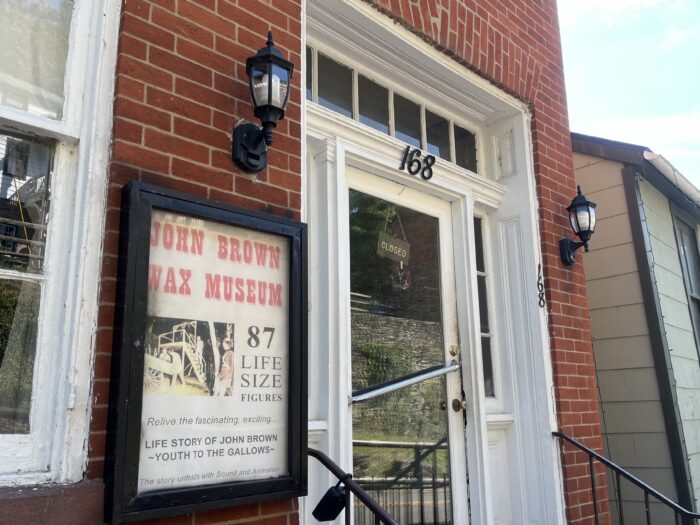
The 92 wax figures that fill the John Brown Wax Museum will soon need a new home.
That’s because the museum’s owner, Ted Staley, sold the venue to a private retailer last week, closing the museum permanently. Staley said the retailer has not made public how it will use the space.
Since it was established by local real estate tycoon Dixie Kilham in 1963, the museum has been a mainstay for tourists visiting downtown Harpers Ferry, visually depicting abolitionist John Brown’s life and 1859 uprising.
But Staley, who bought the museum in 2010, said upkeep has been difficult. He lived in Maryland when he acquired the exhibit, but has since moved to North Carolina and entered “retirement age.”
“Those forces and my proclivity to micromanage makes it difficult,” he said. “So I thought it was time to sell.”
Staley said announcing the museum’s closure brought a mix of anger and understanding from the local community. Many were upset to learn of the tourist attraction’s sudden end, but others had hope for the preservation of the collection.
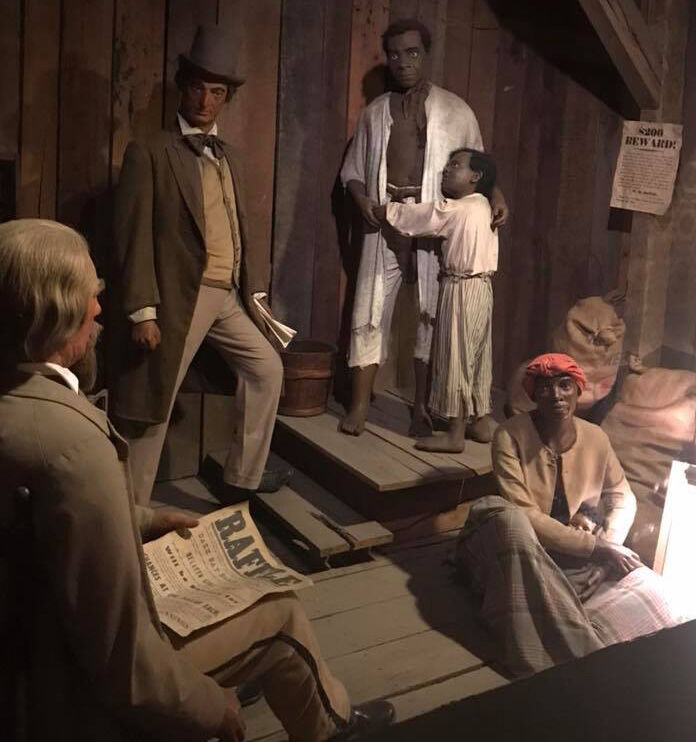
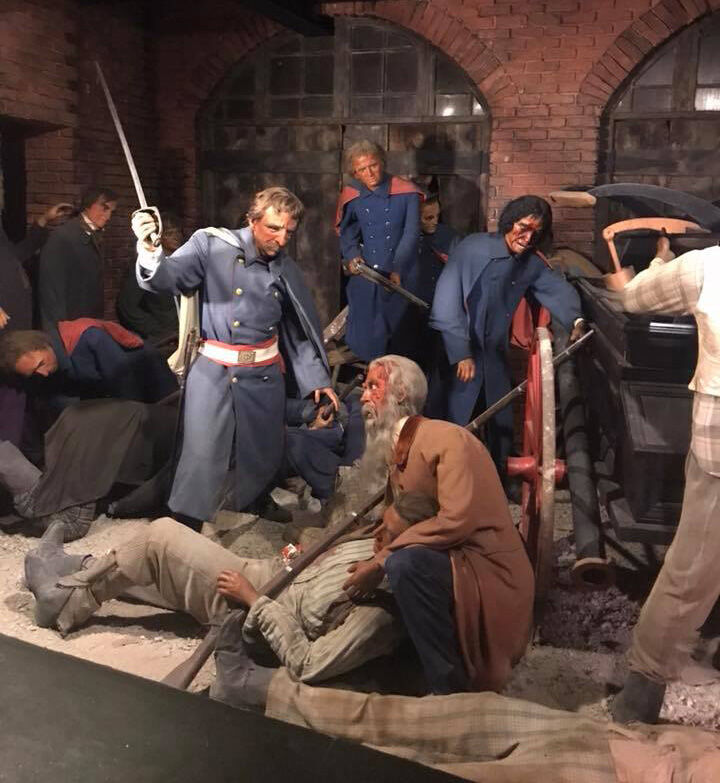
Staley said he is currently in talks with several potential buyers within the greater Harpers Ferry area, as well as Washington, D.C. He hopes to sell the collection in one piece.
Ideally, Staley also wants someone to buy the entire collection outright, but said most interested parties have asked to display the collection on a loan until they can reimburse him for the sale.
Regardless, Staley said he hopes news of the sale can ease concerns that a piece of cultural history will remain accessible to the Harpers Ferry community.
“I’ve given them hope. I made it clear that I’m entertaining other people who are interested in keeping it alive, and there have been a lot of people responding,” he said.
In the 14 years he’s run the museum, Staley said he’s learned a lot about both running a business and local tourism. The wax museum marked the first business he owned, but it also marked a longtime passion project.
“The most enjoyable part is when I would actually work the museum myself, because people from all over the world come to Harpers Ferry,” Staley said.
“You get to talk with them about the museum before they go in,” he continued. “I enjoyed that the most.”
Add WVPB as a preferred source on Google to see more from our team

"Mountain Moves” is a new educational board game designed by the West Virginia Department of Tourism and West Virginia Department of Education to engage eighth-grade students in West Virginia history, tourism and career opportunities.
Continue Reading Take Me to More NewsAluminum plates that helped keep astronauts on the Artemis II rocket safe won the first ever Coolest Thing Made In West Virginia competition.
Continue Reading Take Me to More NewsFor LGBTQ youth in Appalachia, estrangement from their families of origin can be a common and heartbreaking experience. So, some LGBTQ people rely on “chosen family." In Roanoke, Virginia, the culture of ballroom offers the safety and stability of family, along with traditions that are handed down — traditions like vogueing. Mason Adams reported this Folkways story, in collaboration with Brad Kutner and Kelley Libby.
Continue Reading Take Me to More NewsMountain Stage is changing locations for its final two live events of 2026. The Sunday, Nov. 15 show will now take place at the Charleston Theater at the Convention Center, and the Sunday, Dec. 6 show will be held at the Capitol Theater in Downtown Charleston.
Continue Reading Take Me to More News