Alert (09/10/2026): Our Parkersburg TV transmitter is undergoing maintenance for a few days and will not be operational. We apologize for any inconvenience.
All our programming is available via our TV livestreams on our website and WVPB Passport. Thank you for your patience!
This week, one thing about Appalachians: we can get competitive. We’re proud of our local food. Love a good hunt. And enjoy competition with friends. We learn the rules and celebrate our victories. You'll hear these stories and more this week, Inside Appalachia.
Grave Marker Dedication Honors Black Activist Bessie Woodson Yancey
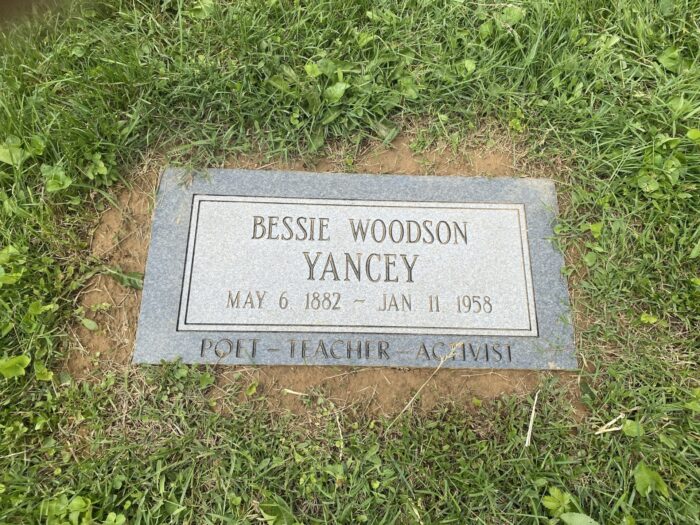
Bessie Woodson Yancey Huntington Spring Hill Cemetery grave marker.Randy Yohe/West Virginia Public Broadcasting
Listen
Share this Article
A gusty breeze blew across Huntington’s Spring Hill Cemetery grounds, as about 40 people gathered for what was termed a long overdue grave marker dedication to the sister of Black History Month founder Carter G. Woodson. Many said that Bessie Woodson Yancey did not ride her sibling’s coattails, but stood strong on her own merits.
Among those in attendance, Crystal Good, the founder and publisher of Black by God the West Virginian. In Good’s hands was Bessie Woodson Yancey’s one and only book, “Echoes From The Hills.” Good read aloud the first stanza of the Yancey poem, “If you live in West Virginia.”
“If you live in West Virginia, where the mountains rise so high, where the tumbling creeks and rivers flow from our founts that are near run dry when you have a noble feeling and you’ll never seek to roam, if you live in West Virginia, Mountain State, beloved home,” she read.
Yancey’s grave marker reads: born 1882, died 1958, poet, teacher, activist. Cicero Fain is an assistant provost of access and opportunity at Marshall University, as well as a board member of the Carter G. Woodson Memorial Foundation. Fain said Yancey’s accomplishments invoke a heartfelt respect.
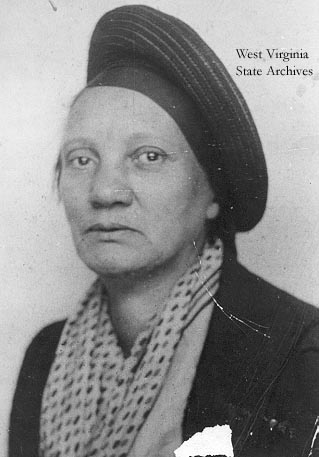
Bessie Woodson Yancey
“She was an educator,” Fain said. “She was a poet, activist. She wrote, I think, 100 articles in the Herald Advertiser. They were editorials commenting on race relations, desegregation, international affairs and community endeavors. She’s an exemplar of the intellectual dynamism that existed in Huntington, Charleston, throughout the southern West Virginia coal fields.”
Good, an accomplished black poet herself, said Yancey’s writings of decades ago are all the more inspiring now.
“They tell a story about a West Virginia that is literally beyond black and white, that it is a place of redemption,” she said. “That is a place where black people came for just a little bit more. You know what I mean, just a little bit more. It wasn’t the best, but a little bit more. “
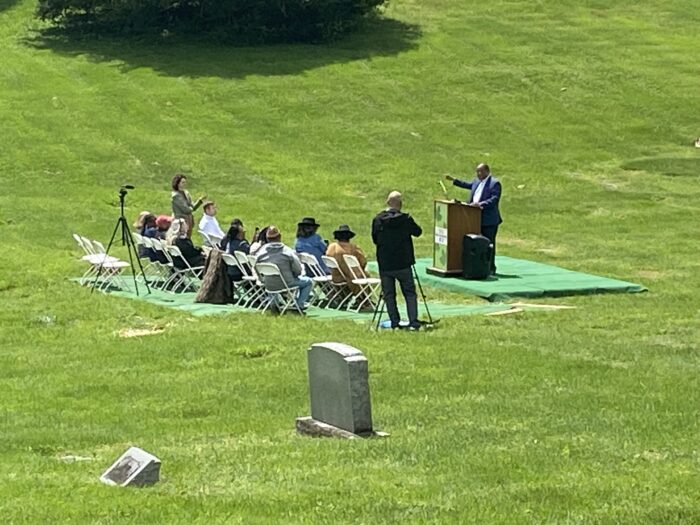
Cicero Fain speaking at Yancey grave marker dedication ceremony.
Fain said Yancey’s legacy sparks a call to continue the embrace of diversity, equity and inclusion.
“This is a time in which we should not be retrenched on or attacking black history and black excellence,” Fain said. “This is a time to be celebrating it because it helps make America great, the contributions of these folks, the stories, the experiences, help build the quilt that makes us what we are.”
To complete the circle at Yancey’s gravemarker dedication, Good read the last stanza of Yancey’s poem.
“But in the words of the deathless glory, far and wide where all may see, write the name of West Virginia, champion of liberty,” she read.
There was no reason given that this grave was left unmarked for so long, but someone said that it needed to be rectified, because Bessie Woodson Yancey seemed to be one of those champions.
Add WVPB as a preferred source on Google to see more from our team
In southern Ohio, there’s a musical tradition that goes back nearly 1,000 years and 4,000 miles. For Inside Appalachia, Folkways Reporter Capri Cafaro has this story.
The student-led team that produces the news for WMUL radio at Marshall University learned in August that they won a collegiate Edward R. Murrow award for Outstanding Newscast for the second year in a row.
News Director Eric Douglas sat down in a classroom studio with Marshall's Chuck Bailey, the student news director Emma Johnson, and the Director of the Marshall School of Journalism and Mass Communications Rob Quicke, to learn more.