Young students at Floyd County, Virginia’s Handmade Music School are compiling a songbook of tunes that have become standards in their community. One of those songs came from influential Virginia bluegrass band The Lost & Found. This summer, Handmade Music School student Rylah Grim spoke with the band’s longtime banjo player Gene Parker, about a song he helped write, called “Brown Hill.”
Franklin County Banjo Player Gene Parker Made His Instrument Sing
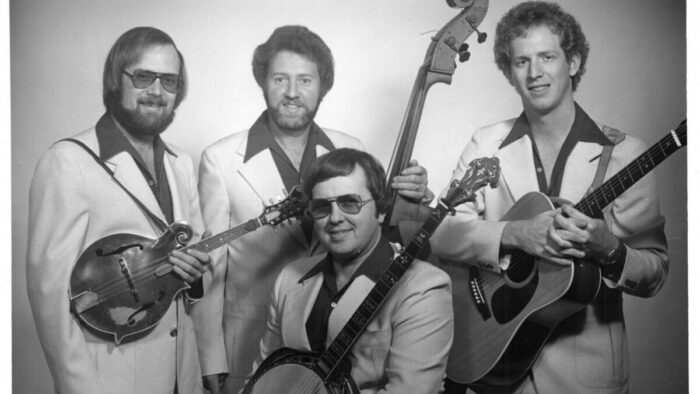
Lost & Found band members (L to R) Dempsey Young, Allen Mills, Gene Parker, Roger Handy. Courtesy of Rebel Records
Listen
Share this Article
This story was originally published by Radio IQ and is part of a series reported by students at the Handmade Music School in Floyd County, Virginia. The students are compiling a songbook of tunes and songs played in their community and telling the stories behind the music.
On Oct. 22, the influential Virginia bluegrass band the Lost & Found was inducted into the International Bluegrass Music Association Hall of Fame. The Lost & Found formed in 1973 in Franklin County and inspired generations of musicians. Early in the band’s history, founding members Gene Parker and Allen Mills co-wrote the song “Brown Hill.” The two were on their way home from a jam when Mills threw out an idea to Parker:
“‘You know, if we’re ever going to get anywhere, we have to have some songs of our own,’” Parker recalled Mills saying. “‘Just start writing songs, like [about] what we see, like that hill where you live up there, that brown hill where you live up there. Write a song about that.’”
So they wrote the song together in the car, on a brown paper bag from a roadside restaurant.
Parker played banjo for the band, and he doesn’t take credit for much of the songwriting.
“I say sometimes, ‘I just held the pen, mostly,’” he said.
Many of the band’s songs were about real people and places. “Brown Hill” tells a story about moonshining in Franklin County.
“That was a big part of our grandfathers’ and so on in the ’20s and ’30s – prohibition days. Making whiskey was a way of life,” Parker said.
The imagery in “Brown Hill” comes from the place where Parker grew up. The song features mountains with “dead wood smoke” overhead. Dead wood makes less smoke than green wood, so it was less detectable by revenue officers looking for moonshine stills.
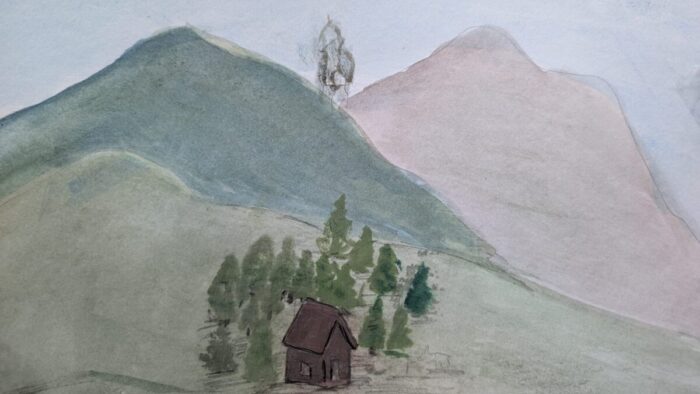
The song “Brown Hill,” features a lyric about “dead wood smoke” coming from a moonshine still in Franklin County.
Illustration by Rylah Grim
“It’s about a real place. It’s not a broad tale about a cabin on the hill. It’s an actual location and a real place that you can pinpoint,” said bluegrass musician Jesse Smathers.
Smathers grew up listening to the Lost & Found and now plays in the renowned Lonesome River Band. He also teaches at the Handmade Music School in Floyd. He says “Brown Hill” stands out because it’s fast and driving.
“And it’s definitely an upbeat dance tune, and kinda has that ‘crooked’ thing where it goes back to the ‘1’ kinda quick at the end of the verses.”
Now, young people and kids in bands like Floyd County’s Shooting Creek Critters play the song in jams and on stage.
For young people who play bluegrass music, Parker has some advice.
“I rely a whole lot on trying to make the instrument sound like the words of the song. I just like to hear it sound like what you’re singing.”
He also has some praise.
“I get some joy out of seeing y’all young folks learning how to play this music, and see you talking, get on the microphone and introduce your songs. That’s great. Because some of y’all are gonna be the next generation of musicians, and you’ll have people coming up to you one of these days doing the same thing you’re doing right now.”
The Floyd Country Store celebrated the Lost & Found with an event on Oct. 25.
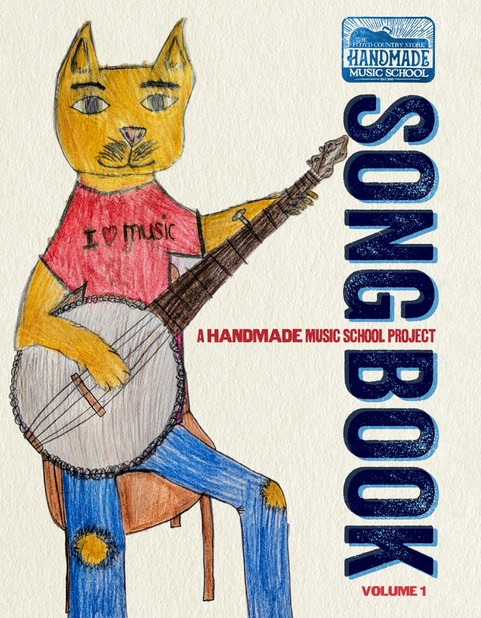
A student-designed cover for the Handmade Music School’s songbook project.
Courtesy of the Handmade Music School
This story was supported by Virginia Humanities.
Add WVPB as a preferred source on Google to see more from our team
A new anthology collects science fiction, fantasy and horror stories from writers across Appalachia. It’s called, These Dreaming Hills. Inside Appalachia Producer Bill Lynch recently spoke with the anthology's editor, Noah Ashley Blooms.
On this West Virginia Week, former governor and longtime U.S. senator Jay Rockefeller has died, West Virginia voted in the general election, and a new anthology explores science fiction and fantasy in Appalachia.
This week, a new generation is learning the story behind "Brown Hill," a song by influential bluegrass band The Lost and Found. Also, data centers are changing the landscape, and one project is planning to plow over an extremely rare stand of seed-producing American chestnut trees. And, small food producers embrace digital technology for the humble farm stand.