Fourth Annual Women Warriors Summit To Feature High Profile Speakers
The fourth annual Women Warriors Summit will take place at the Marshall Health Network Arena in Huntington on Friday, Oct. 23, 2026.
Continue Reading Take Me to More NewsAlert (09/29/2026): Our Parkersburg TV transmitter is still undergoing maintenance and remains temporarily inoperative. We apologize for the inconvenience.
All our programming is available via our TV livestreams on our website and WVPB Passport. Thank you for your patience!




To Educate, Inform, and Inspire by Telling West Virginia's Story
Mountain Readers 2026 has concluded! Please fill out our volunteer post-survey.
Nominate an exceptional West Virginia K-12 teacher today!

On Demand

On Demand

Stream original productions from WVPB

Watch locally produced documentaries & more.

On Demand

On Demand






West Virginia Morning

Inside Appalachia

West Virginia Week

Mountain Stage

Us & Them

The Legislature Today

The Legislature This Week

Send us your comments and questions.

Stream our board meetings.

Check out the latest WVPB news.

Sign up for our newsletter and get weekly updates.

Meet the WVPB staff.

WV Educational Broadcasting Commission, the WVPB Foundation, and the Friends of WVPB.

Come work with us!

Read our annual report and learn how we educate, inform and inspire with your support.

Sponsor impactful and engaging media and entertainment.

Use your IRA to make a gift to WVPB.

Become a member with your gift of $1,000 or more.

Make WVPB part of your legacy.

Manage your membership account.

Learn how you can Protect and Sustain West Virginia Public Broadcasting.
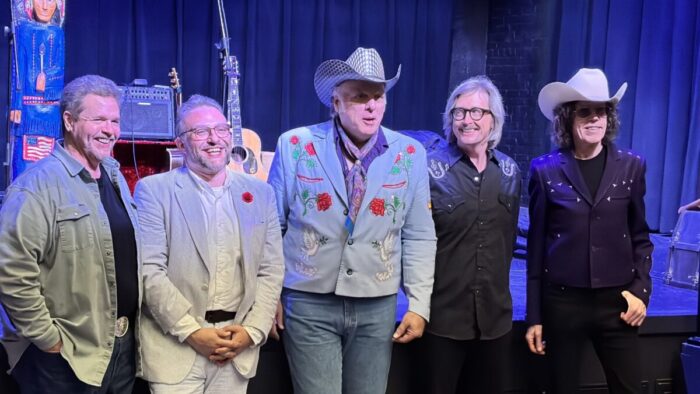
This conversation originally aired in the Oct. 12, 2025 episode of Inside Appalachia.
Rob McNurlin has been called a one-of-a-kind musical artist and a modern-day troubadour.
For decades, Rob McNurlin has played in hole-in-the-wall bars, clubs and coffee houses throughout central Appalachia. He’s recorded songs, made videos and even hosted television programs, but was never able to break into the mainstream. After McNurlin announced plans to retire, filmmaker Colonel Steven Middleton asked to tell his story. That became the recent documentary, The Cowboy’s Boot Heel: The Musical Journey of Rob McNurlin.
Inside Appalachia Producer Bill Lynch spoke with Middleton.
The transcript below has been lightly edited for clarity.
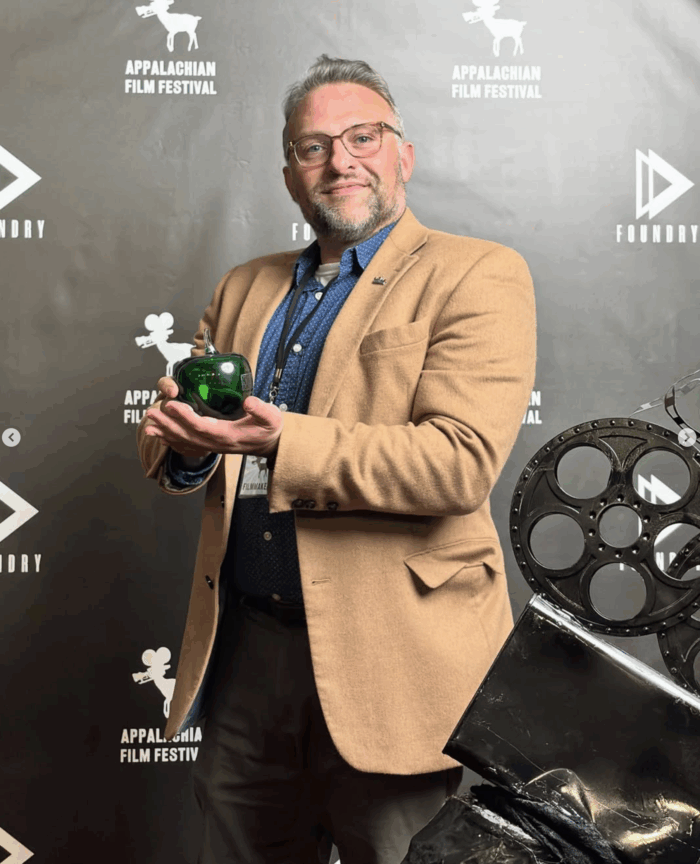
Lynch: How does one become a Kentucky Colonel?
Middleton: So, Kentucky Colonel is the highest title that a Kentuckian can achieve.
It’s through the organization, “The Honorable Order of Kentucky Colonels.” And it goes all the way back to the very first governor of Kentucky, who had his son-in-law as part of his cabinet.
He didn’t have an official title for him. So, they just called him “colonel.” It’s a tradition.
Now, to be a colonel, you have to be nominated by another colonel. And so, I’ve nominated other people before.
You have to provide two things you’ve done for the Commonwealth of Kentucky. Mine, of course, is filmmaking and teaching. So, I’m very honored that someone thought of me, and I like the title. It’s more than fried chicken. That’s what most people think,
Lynch: How did you get into filmmaking?
Middleton: Well, there’s only two things I ever wanted to do in my life. I grew up in rural access Kentucky, in the northeast part of the state, and not that far from the West Virginia border.
Growing up in the 90s the way I did, I watched a lot of movies. You know, I just sit around and watch movies. And that’s kind of my thing is, is staying up late watching movies and TV shows – the more obscure, the better – from “Twin Peaks” to “Northern Exposure” and “The X-Files” on the TV side.
Then, I got into watching the classic movie that everyone watches, but then kind of got down niche roads. And I would get West Virginia Public Broadcasting, where we lived in Kentucky. I would stay up late, especially in the summers, and catch some of those late night documentaries they would air, those Jacob Young films, those “Different Drummer” series from back in the late 1980s and early 1990s.
They would play those, and I thought they were so cool.
Filmmaking itself can be very trepidatious, but I could produce a documentary with very crude camera technology. And that pretty much was it.
I loved music and I loved filmmaking. Those were my two career goals: to do something with either of those.
So, I just got into making films, and you kind of learn as you go. And I still don’t know if I know what I’m doing, but I’m just excited that anyone would remember or want to watch any of my films.
Working with Rob, [I] finally channeled those two areas of music and film into one project. I’m very proud of that. I’m really proud to work with Rob and to have been able to help Rob get back out there on the road because he was at the point of retiring from live music before I made the film, and this is giving a little boost.
So, I’m very proud of that, Bill.
Lynch: As far as you as a filmmaker, what attracts you to a project or to a story?
Middleton: From growing up in this region and being from this region, there are so many fascinating people. I’ve always been fascinated by people and people’s stories. And in a lot of ways, Appalachia people are natural storytellers, whether we realize it or not.
My grandmother would speak to me like old school Hemingway novels, like, give you all the facts, just the situation, you know… “Debbie and them, they’re having a big time.” Well, it’s just the way of talking that Appalachian people did.
So, I always liked people’s stories. And growing up, I always found it interesting when I would run into people who had been to far off places, people who had been to Europe and Asia and places. I just found their story so fascinating.
Early on, I learned that I’m not the guy to tell stories of issues – larger Appalachian issues, you know? Especially with environment and labor and things.
I could teach a class on that, but as a filmmaker, I’d much rather focus on a personal story, an individual story. Our region is filled with so many good stories that don’t get told. So, I always hope, that in my filmmaking, I could help get stories out there. That’s why those films, like those Jacob Young “Different Drummer” films spoke to me, because they were about just interesting people. Telling people stories.
Lynch: If you don’t mind, talk a little about your relationship with Rob McNurlin and how you first met.
Middleton: Well, OK, so I worked at a coffee shop. At the coffee shop, you were a jack of all trades. You had to make drinks and food. And then when we had live music, we also had to run sound.
Sometimes it could be very precarious, running between three positions. And, I, of course, love music. I always liked folk music. I loved Bob Dylan, The Grateful Dead, The Band and Neil Young.
That was kind of my wheelhouse back in the early 2000s.
We had a lot of bluegrass artists then, and a lot of country singers. I remember very specifically I got yelled at the week before I first met Rob, because I honestly didn’t know exactly what I was doing, running live sound. It was learning on the fly, and no one gave us any instructions.
I got yelled at. They didn’t like the sound. There was feedback happening, and their vocals weren’t heard.
And the next week, this very tall man in a duster jacket and a cowboy hat and a western suit that I’d only ever seen Marty Stuart or Porter Wagoner wear, walks in.
I was intimidated by him, and he was followed by this guy that, at the time, looked like Captain Caveman. That was Dave Prince, who’s now “The Laid Back Country Picker.”
Well, he comes in and I immediately said, “Hey, I’m Steven. I’m here on sound tonight. How can I help you?”
And he said, “Well, this is what we need. We need three mics. We need one, here, one, here, one, here, and I’m going to sing here.”
And he goes, “How about we set up and we do a test song and see how it is?”
And I said, “OK.”
So, we set it up and there were some things that weren’t great. He comes over and he says, “Well, here’s what you need to do. Just do this and this and this.”
He was showing me how to run sound, essentially.
He played. He liked it and he was just the nicest guy. After that first show, I just chit-chatted with him. He’s playing harmonica and I talked to him about the harmonica.
Well, I told him I could play harmonica. “What harmonica do you play?”
“Well, these are Hohner Special 20s. I like these. They’re a little expensive.”
I said, “Well, hey, what did, Dylan play on “Blonde On Blonde?”
He knew exactly and I was like, “Well, what about Neil Young? What did he play?” He knew exactly. And then we went down the rabbit hole talking about Jerry Garcia, and we’ve been pals ever since. A friendship of life on the road.
I played in the string band for a while, and sometimes we would see Rob as we were traveling around, but, a lot of times it was two ships in the night.
And then I saw his Facebook post that said he was retiring. And it floored me. Because I thought, “Man, this guy did what I always wanted to do, like tour the world, playing music and songs you wrote.”
And that’s kind of how the film began. I just sent a cold message, “Hey, pal. Hate to hear this. Want to do a film about your life and career?” And that’s kind of how it all started.
Lynch: With your film, what do you want people to know? What do you want them to take away from this, this piece on Rob?
Middleton: I think a lot of people take for granted the people in their world and in their life. The more media we consume, especially with negative social media, the more bitter we’re becoming as a people, and more jaded. And I don’t think a lot of times people realize there’s people in our world right now that are good human beings and souls that bring peace to us and others. You don’t always think about them.
There’s people in our world right now that you don’t even realize that we saw this morning on our way to work, or we’ll see this weekend. But just think about how there’s positive people around us and good people around us, and how sometimes we don’t always notice what’s right under our nose.
Lynch: So, the toughest part for doing a film like this: Was it difficult knowing as much as you know about the man?
Middleton: Yeah, the one good thing was, the last time I really interacted with Rob was about 2009 and 2010. That’s when he moved to Nashville.
I kept up with him on social media here and there, but I hadn’t really hung out with him and spent time with him in a while. So, that was good. I knew all of his early stories, but I didn’t necessarily know all the stuff from 2009 and 2010 up till about COVID. So, that was good.
Rob’s a great storyteller. Rob has been a TV host. He had some shows there in Huntington, West Virginia, on the air, “The Beatnik Ranch Party.” I knew he would be a great interview, but I also wanted to make sure that we got all these good stories out.
It’s more than just his stage show or where he talks about his personal life. When you do anything for 30 years, whether it’s a teacher or a postman, any trade, you hope people remember you. You worry about that.
That’s one thing I noticed about Rob. I think he worried that he never left an impact on people. And so, I wanted to make sure we got that part of the story out there.
In the majority of the film, there are some pretty heavy hitters in the music industry talking about Rob, what Rob has meant to them, and sort of the good side of what he has brought to people – not just music, commercially, but just just being a kind person.
Lynch: So, what’s next?
Middleton: Well, that’s a good question. We’ve been so busy with this film. We debuted it in April, and did showings all over. We did screenings in Nashville and Lexington, Kentucky and Huntington. We kept doing all of this all summer. So, I’ve been very busy, in the sense of, it’s hard for my mind to think a lot about projects, but I really like telling these Appalachian stories and things that people don’t necessarily always know but I do.
It’s going to be Appalachian themed. I’ll say that. Also, Rob and I are writing a sci-fi film.
Lynch: You’re writing a sci-fi film?
Middleton: Yeah. It’s called Wagon Wheels From Space.
It’s a Rob McNurlin story that he wrote himself, and we’re trying to slowly write that into a screenplay form. But that’s on the horizon at some point, but, yeah, I’ve got some ideas and hopefully moving forward. But more than anything, I’m just kind of enjoying this recent film.
Lynch: Awesome, Steven. Thank you very much.
Middleton: Thank you so much, Bill.
Add WVPB as a preferred source on Google to see more from our team

The fourth annual Women Warriors Summit will take place at the Marshall Health Network Arena in Huntington on Friday, Oct. 23, 2026.
Continue Reading Take Me to More NewsThe West Virginia Mine Wars Museum is getting a sizable donation from retired union leader Cecil Roberts.
Continue Reading Take Me to More NewsA giant troll made of scraps and trash has been commissioned by Huntington-area economic developers as a way to increase tourism.
Continue Reading Take Me to More NewsMiddle Tennessee’s Dickson County is known for being the filming location for Ernest Goes to Camp, which grossed upwards of $20 million in the late 1980s. For the Appalachia + Mid-South Newsroom, WPLN’s Jewly Hight looked into the area’s earlier lore about mysterious creatures of the night.
Continue Reading Take Me to More News