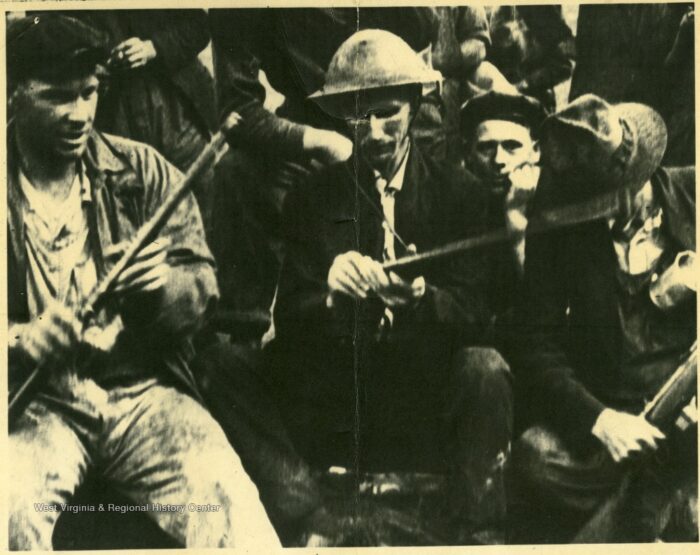
Since Aug. 25, the West Virginia Mine Wars Museum has been recounting day by day on social media the events of the largest labor uprising in United States history.
The miners who took up arms in 1921 to fight against injustice both down in the mines and in the coal company’s camps were ultimately unsuccessful when they laid down their guns at the arrival of federal troops on Sept. 4.
But Taylor Hankins, the museum’s communications director, said the Battle of Blair Mountain remains an important story of solidarity.
“These miners, these men, were tried to be divided and pitted against one another by the coal companies, but they all came together because they had this common binder of class,” she said. “I think that is a powerful story in itself, especially when it comes to the national image of what West Virginia is. I think a lot of people don’t expect that kind of class solidarity against all other odds such as nationality and race and things like that.”
Hankins said the armed uprising alone is not what exemplifies the true spirit of Appalachia, but more so how hard miners tried to find other solutions through striking and pleading their case directly to Gov. Ephraim Morgan. But she said that then, as now, national perception of the Appalachian laborers was less than favorable.
“They literally said mountain folk just have this in their blood, like the Hatfields and McCoys, totally disregarding labor or what they were going through that led up to this point. I think that kind of still happens with Appalachians today,” Hankins said. “One of the reasons I even work for the museum is I think it’s really important for people to have pride in the place that we live in, and I think that the story of the mine wars is a piece of that.”
Hankins called the battle “a stepping stone to labor progress nationwide.” Although the Battle of Blair Mountain and the broader Mine Wars are now part of West Virginia’s curriculum, the events are not taught or generally well known in the rest of the country.
The West Virginia Mine Wars Museum is undertaking a project to memorialize the 50-mile march of militant coal miners in 1921 from Marmet to Blair.
Add WVPB as a preferred source on Google to see more from our team